
Abraham Joshua Heschel
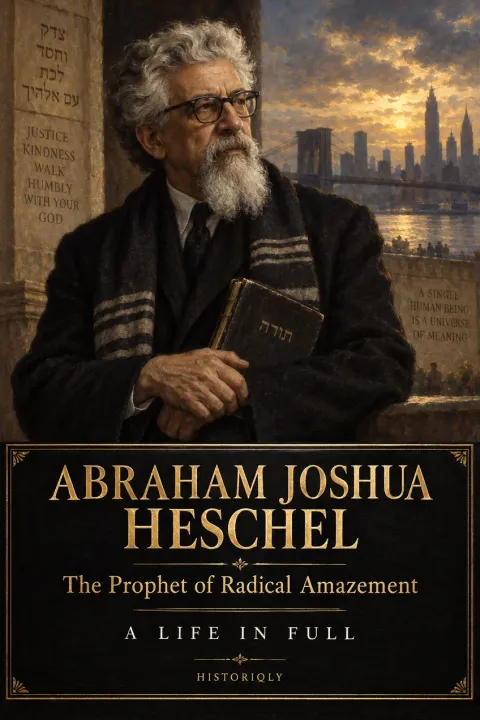
The Prophet of Radical Amazement
Get the full EPUB
Drop your email and the EPUB downloads straight to your device. We'll also ping you when the next chronicle lands — unsubscribe any time.
Your email is already on file — enjoy the read.
Download the EPUBOn March 21, 1965, Abraham Joshua Heschel walked at the front of a march from Selma to Montgomery, Alabama, his white beard flowing, his feet keeping pace with Martin Luther King Jr., Ralph Bunche, and Ralph Abernathy. He had come from the marble halls of the Jewish Theological Seminary in New York to the dusty roads of the American South, driven by the same prophetic fire that had consumed Isaiah and Amos. For Heschel, the march was not merely political. It was liturgical. "I felt my legs were praying," he later said. In that sentence lies the essence of a man who spent his life insisting that faith without justice is blasphemy.
“I felt my legs were praying.”
1907–1972
Born into Hasidic royalty in Warsaw, Poland. Died in New York City at sixty-five. A life that spanned the destruction of European Jewry and the rebirth of prophetic Judaism in America.
16+
Major works including The Sabbath (1951), Man Is Not Alone (1951), God in Search of Man (1955), The Prophets (1962), and Who Is Man? (1965). His writings reshaped modern Jewish theology.
Nearly all
His mother and three sisters were murdered in the Holocaust. Of the vibrant Hasidic world of Warsaw where he grew up, almost nothing survived. He carried this loss in every word he wrote.
1965
Joined the opening day of the Selma-to-Montgomery march on 21 March 1965 alongside Martin Luther King Jr. His participation became a widely recognised expression of religious commitment to civil rights.
Jewish theologian, philosopher, civil rights activist, prophetic voice of the twentieth century
Defining Events
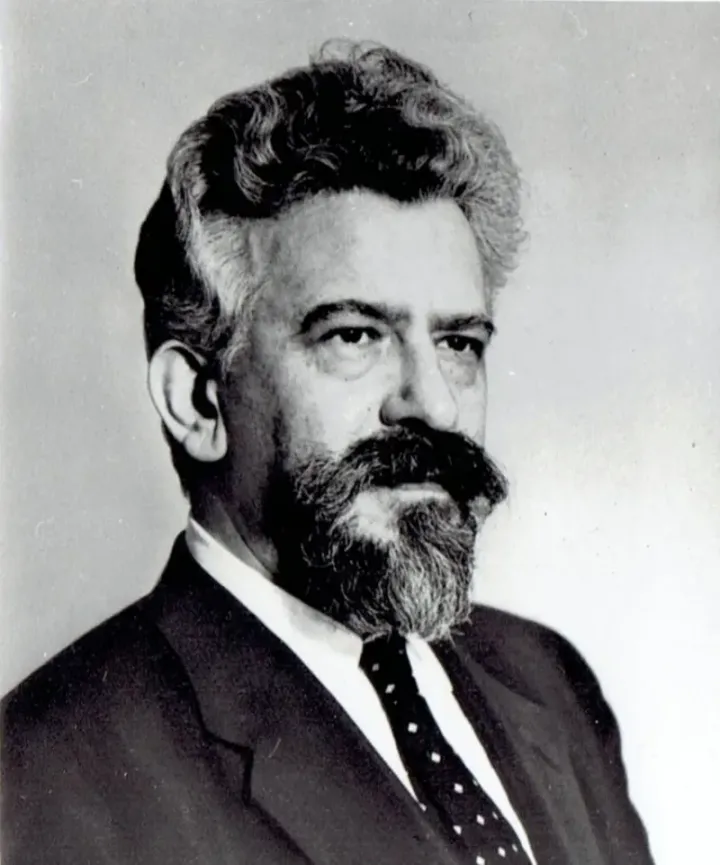
The Prophets
Heschel’s masterwork, originally his doctoral dissertation at the University of Berlin in 1933, transformed the study of biblical prophecy. He argued that the prophets were not fortune-tellers but men seized by divine pathos — God’s own suffering at human injustice. The prophet does not predict; the prophet feels what God feels. This idea — that God is not indifferent to human affairs but is passionately concerned with justice — became the foundation of Heschel’s entire theology and his justification for political activism. The book was published the year before the March on Washington and became a manual for religious engagement with the civil rights movement.
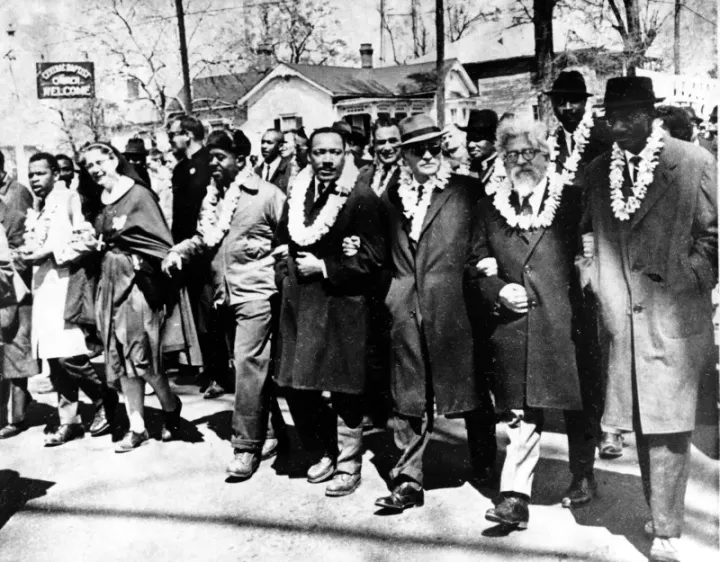
The March from Selma
Heschel marched at the front of the Selma-to-Montgomery march alongside Martin Luther King Jr., Ralph Bunche, and other civil rights leaders. The photograph of the white-bearded rabbi in his yarmulke striding beside King became one of the defining images of the movement. For Heschel, marching was not merely a political act but a form of worship — “my legs were praying,” he said. His presence represented the commitment of American Judaism to the Black freedom struggle and embodied his lifelong teaching that prayer without action is incomplete.
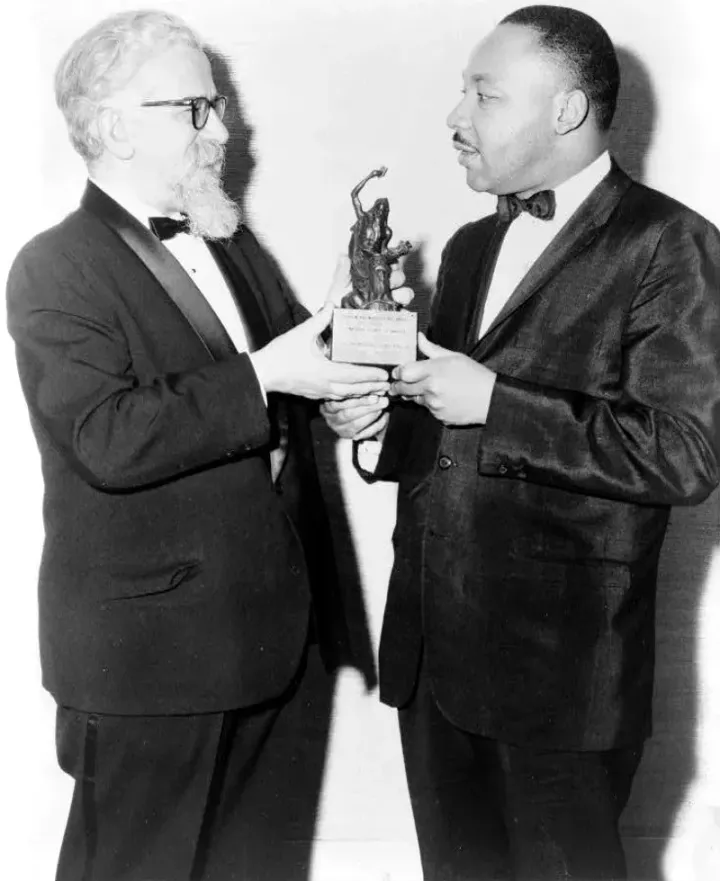
Vatican II and Interfaith Dialogue
Heschel played a pivotal role in shaping Nostra Aetate, the Second Vatican Council’s declaration on the Church’s relationship with non-Christian religions. He lobbied Cardinal Augustin Bea and met with Pope Paul VI, arguing against the centuries-old charge of deicide against the Jewish people and opposing any Catholic document that called for the conversion of Jews. His efforts helped produce one of the most consequential documents in modern interfaith history, fundamentally changing the Catholic Church’s relationship with Judaism after nearly two thousand years of theological hostility.
Timeline
Born in Warsaw
Born on January 11 in Warsaw, Poland, into one of the most distinguished Hasidic dynasties in Europe. His father, Rabbi Moshe Mordechai Heschel, was a direct descendant of the Apter Rebbe. Young Abraham was expected to become a Hasidic master, a rebbe in the tradition of his forebears.
Enters the University of Berlin
After studies at a Yiddish gymnasium in Vilna, Heschel enters the University of Berlin and the Hochschule für die Wissenschaft des Judentums. Secular philosophy and Jewish learning both become part of his intellectual formation.
Doctoral Dissertation on the Prophets
Heschel completes his doctoral examination in Berlin in 1933. The formal doctorate follows in 1935 and the dissertation is published in 1936. His later English work The Prophets expands this study of prophetic consciousness and divine concern.
Deported from Germany
Arrested and deported to Poland in October 1938. He left Poland for London before the German invasion in 1939, then reached the United States in 1940.
Learns of His Family’s Murder
Confirmed that his mother and three sisters had been murdered in the Holocaust. The Warsaw he had known — the world of Hasidic courts, synagogues, study houses — was annihilated. He carried this grief in silence for the rest of his life, channelling it into his theological work.
The Sabbath Published
Published The Sabbath: Its Meaning for Modern Man, a meditation on the holiness of time rather than space. The book argued that Judaism’s great innovation was the sanctification of time itself — the Sabbath as a ‘cathedral in time’ rather than in space.
Selma March
Joined the march from Selma on 21 March 1965 alongside Martin Luther King Jr. The image became a symbol of Jewish participation in the civil rights movement; it does not establish that Heschel walked the entire five-day route.
Death in New York
Died on December 23 in New York City at the age of sixty-five. He had spent his final years opposing the Vietnam War and deepening his interfaith work. His daughter Susannah would become a distinguished scholar who preserved and extended his legacy.
Key Figures
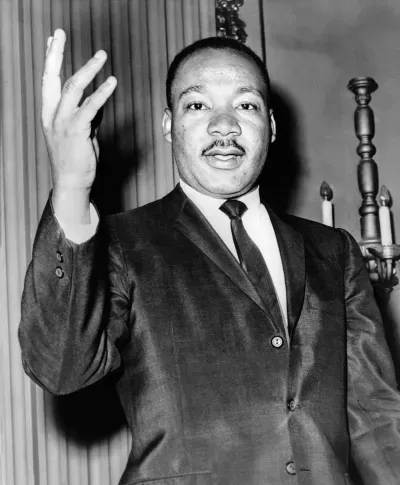
Martin Luther King Jr.
Heschel and King forged one of the most consequential interfaith partnerships of the twentieth century. They first met at a conference on religion and race in Chicago in 1963, where Heschel declared that ‘racism is Satanism.’ King invited Heschel to march at Selma in 1965, and Heschel became one of King’s most vocal Jewish supporters, defending the civil rights movement as a religious obligation rooted in biblical prophecy. Ten days before King’s assassination, Heschel introduced him at a rabbinical assembly, calling him ‘a voice, a vision, and a way.’
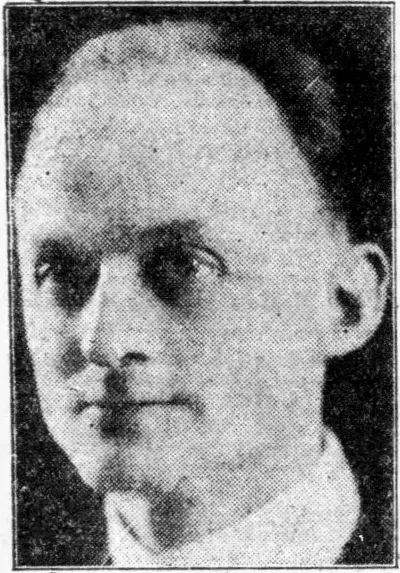
Reinhold Niebuhr
The Protestant theologian Reinhold Niebuhr was Heschel’s closest Christian intellectual partner. Both taught on Seminary Row in New York — Heschel at the Jewish Theological Seminary, Niebuhr at Union Theological Seminary across the street — and shared a conviction that faith demanded political engagement. Niebuhr’s Christian realism and Heschel’s prophetic Judaism were different languages for the same insight: that religion which ignores injustice betrays its own foundations. Their friendship demonstrated that interfaith dialogue could be intellectually rigorous, theologically honest, and politically consequential.
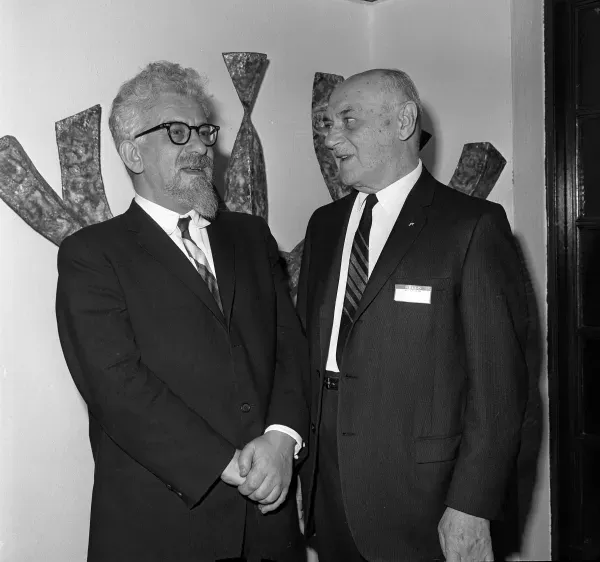
The Legacy of Abraham Joshua Heschel
Heschel died in 1972, but his influence has only deepened. His insistence that God is not indifferent — that the divine is passionately concerned with human suffering and human justice — speaks to an age that has grown suspicious of both dogma and detachment. He taught that “radical amazement” — the capacity to be astonished by the mere fact of existence — is the beginning of all wisdom. He taught that the Sabbath is a palace built in time, a weekly revolution against the tyranny of things. He taught that prayer without justice is hollow, and justice without prayer is rootless.
In a century defined by genocide, his life was a refusal to let horror have the last word. Read his story in his own words — the first-person ePub brings you inside the mind of the man who prayed with his feet.
Get the Full Book
Read the story of Abraham Joshua Heschel — 8 chapters of historical narrative.
Dramatised first-person narrative; not an autobiography.
Continue the Conversation
You've heard my story. Now ask me anything.
Talk to Abraham Joshua Heschel