
Al-Khwarizmi
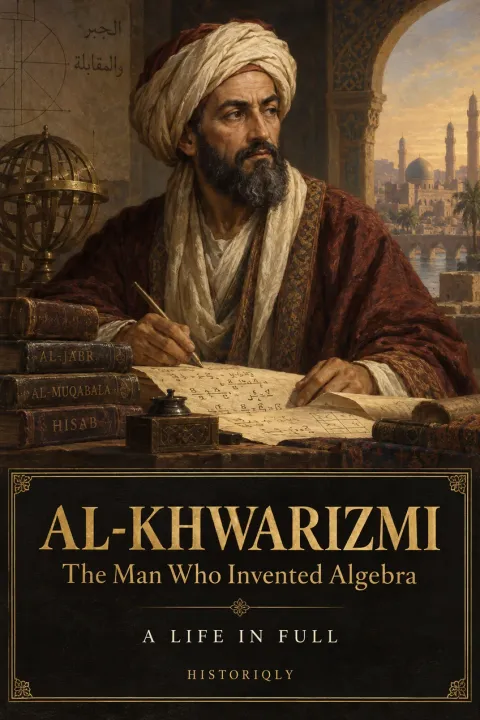
The Man Who Invented Algebra
Get the full EPUB
Drop your email and the EPUB downloads straight to your device. We'll also ping you when the next chronicle lands — unsubscribe any time.
Your email is already on file — enjoy the read.
Download the EPUBAround 820 CE, a scholar in Baghdad completed a short treatise that would quietly reorganise the mathematics of the entire world. Muḥammad ibn Mūsā al-Khwārizmī worked in the House of Wisdom — the great translation and research institution of the Abbasid Caliphate — under the patronage of Caliph al-Ma'mun. His book, Kitāb al-mukhtaṣar fī ḥisāb al-jabr wal-muqābala, introduced systematic methods for solving equations. Two words embedded in its title entered every European language: al-jabr became "algebra," and al-Khwārizmī's own name, Latinised to Algoritmi, became "algorithm." The man is largely forgotten outside specialist circles. His words are used billions of times a day.
“What is easiest and most useful in arithmetic, such as men constantly require in cases of inheritance, legacies, partition, lawsuits, and trade.”
c. 780–850 CE
Born in Khwarezm (modern Uzbekistan or Turkmenistan) around 780 CE. Died in Baghdad around 850 CE, having spent most of his productive life in the Abbasid capital during the Islamic Golden Age.
2
His algebra book gave us the word 'algebra' (from <em>al-jabr</em>, meaning completion or restoration). The Latin transliteration of his own name — <em>Algoritmi</em> — gave us the word 'algorithm'. Few individuals have contributed two such fundamental terms to the vocabulary of mathematics.
2,402
His geographical treatise, <em>Kitāb Ṣūrat al-Arḍ</em> (Book of the Image of the Earth), listed coordinates for 2,402 locations — cities, mountains, seas, and islands — correcting and expanding Ptolemy's second-century Geography with data gathered across the Islamic world.
12+
His algebra book was translated into Latin in the twelfth century and remained a standard university text in Europe for centuries. His work on Hindu-Arabic numerals, transmitted via the Latin translation <em>Algoritmi de numero Indorum</em>, helped displace Roman numerals and make modern arithmetic possible.
Father of algebra, originator of the word 'algorithm', pioneer of Hindu-Arabic numerals in the Islamic world
Defining Events
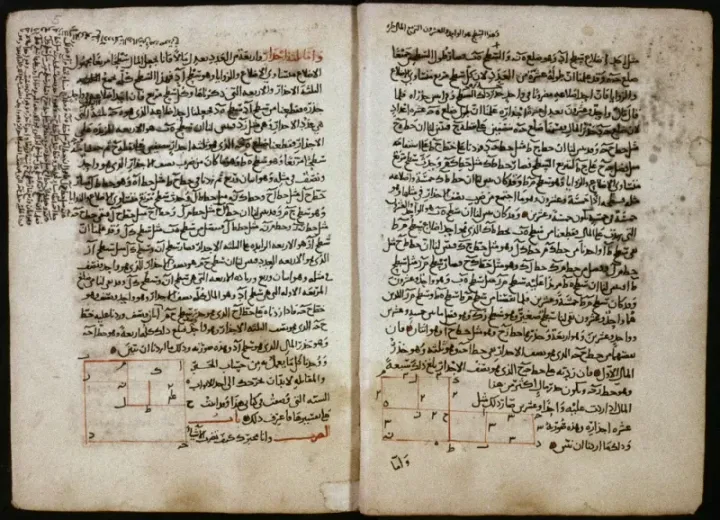
The Algebra Book
Al-Khwārizmī's Kitāb al-mukhtaṣar fī ḥisāb al-jabr wal-muqābala was the first systematic treatise on solving linear and quadratic equations. Where earlier mathematicians solved specific problems, al-Khwārizmī created a method — procedures that could be applied universally. The book's practical orientation was explicit: it was designed for use in inheritance disputes, commercial transactions, land surveying, and legal judgements. The word al-jabr (restoration) described the operation of moving a subtracted term to the other side of an equation. When the book was translated into Latin in the twelfth century, al-jabr became algebra.
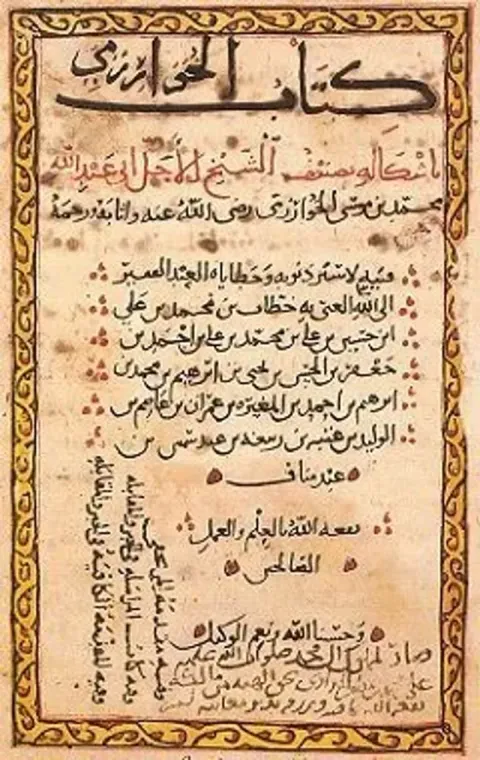
The Language of Number
Al-Khwārizmī's treatise on Hindu numerals — known in Latin as Algoritmi de numero Indorum — introduced the Indian decimal positional system to the Islamic world and, eventually, to Europe. The key insight was that the position of a digit determines its value, and that a placeholder zero makes the system work. Roman numerals — MCCXLVII — are laborious to compute with. The Hindu-Arabic system he described made written arithmetic practical. The Latin text's opening word, Algoritmi (his name in transliteration), passed into medieval Latin as a common noun meaning a calculation procedure, and thence into English as 'algorithm'.
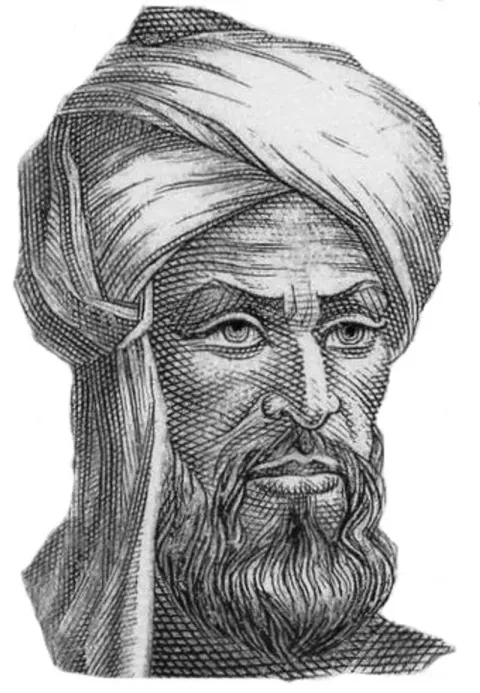
The House of Wisdom
Al-Khwārizmī spent his most productive years at the Bayt al-Ḥikma — the House of Wisdom in Baghdad — under the patronage of Caliph al-Ma'mun, the most intellectually ambitious ruler of the Abbasid dynasty. The institution translated Greek, Persian, Indian, and Syriac texts into Arabic, and then built upon them. Al-Khwārizmī worked alongside astronomers, geographers, physicians, and philosophers. His own output reflects this breadth: he wrote on algebra, Hindu numerals, geography, astronomy, the astrolabe, sundials, and the Jewish calendar. He was not a specialist. He was the synthesiser of an age.
Timeline
Born in Khwarezm
Al-Khwārizmī was born in the region of Khwarezm — the area around the Amu Darya river delta, in what is today Uzbekistan or Turkmenistan. His name, al-Khwārizmī, means simply 'from Khwarezm'. Little is known of his early life or education, but the region had been under Abbasid rule since the mid-eighth century and was integrated into the intellectual networks of the Islamic world.
Arrives in Baghdad
Baghdad was founded in 762 CE as the Abbasid capital and grew with extraordinary speed into one of the largest cities on earth — by some estimates, a population of over a million by the ninth century. It was the commercial and intellectual centre of the Islamic world. Al-Khwārizmī arrived in the city likely in his twenties, drawn to the concentration of scholars, libraries, and patronage that Baghdad offered.
Al-Ma'mun Becomes Caliph
After a brutal civil war against his brother al-Amin, the scholarly al-Ma'mun seized the caliphate. He was intellectually curious to a degree unusual even among Abbasid rulers, and he expanded the House of Wisdom — transforming it from a translation bureau into a research institution. Al-Ma'mun reportedly dreamed of Aristotle, who told him that 'the rational is the beautiful', and thereafter made the promotion of Greek learning a project of state.
The Algebra Book
Al-Khwārizmī completed Kitāb al-mukhtaṣar fī ḥisāb al-jabr wal-muqābala — the Compendious Book on Calculation by Completion and Balancing. He dedicated it to Caliph al-Ma'mun. The book addressed six canonical forms of linear and quadratic equations, provided worked examples, and included practical applications to inheritance law and surveying. It was the first work to treat algebra as an independent discipline rather than a collection of specific solved problems.
Hindu Numerals
Al-Khwārizmī wrote a treatise on the Indian positional number system — the decimal system using nine digits and zero. The original Arabic text has not survived, but its twelfth-century Latin translation, beginning with the words Dixit Algoritmi ('Al-Khwārizmī says'), transmitted the Hindu-Arabic numerals to European mathematics. This system made long multiplication, division, and written calculation vastly more efficient than any existing European system.
Book of the Image of the Earth
Al-Khwārizmī's Kitāb Ṣūrat al-Arḍ revised Ptolemy's second-century Geography using Islamic-era data. It listed 2,402 geographical locations with corrected coordinates, updated the locations of rivers, mountains, coastlines, and cities, and produced a world map for Caliph al-Ma'mun with the help of seventy other geographers. The corrections were significant: the Mediterranean and Indian Ocean dimensions were substantially more accurate than Ptolemy's estimates.
Death of Al-Ma'mun
Caliph al-Ma'mun died on campaign in Anatolia. His successor al-Mu'taṣim continued the patronage of the House of Wisdom, and al-Khwārizmī continued his work through this period. But the era of the most intense intellectual investment had passed. Al-Khwārizmī likely outlived his patron by nearly two decades, continuing to work on astronomy and mathematics in Baghdad.
Death in Baghdad
Al-Khwārizmī died in Baghdad around 850 CE. His exact burial place is unknown. The scale of his influence would not become apparent for centuries — not until his algebra book was translated into Latin by Robert of Chester in 1145 CE, not until his numerals displaced Roman numerals across Europe, not until the twentieth century, when the word 'algorithm' became the organising concept of the digital age.
Key Figures
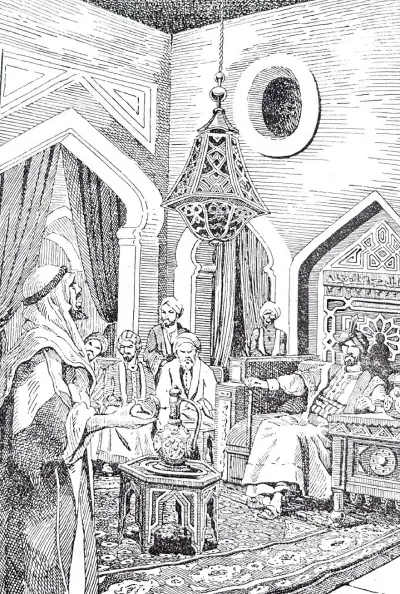
Caliph al-Ma'mun
The seventh Abbasid Caliph (r. 813–833 CE) was arguably the most intellectually ambitious ruler of the medieval world. He expanded the House of Wisdom, funded mass translation of Greek scientific and philosophical texts, and personally engaged with mathematicians and theologians. Al-Khwārizmī dedicated his algebra book to al-Ma'mun, noting that the Caliph had encouraged him to write 'what is easiest and most useful in arithmetic'. Without al-Ma'mun's patronage, al-Khwārizmī's work might never have been written, or at least never preserved.
Euclid & Brahmagupta
Al-Khwārizmī's achievement was synthesis. He drew on Euclid's geometric proofs (using them to justify his algebraic operations), on Diophantus's arithmetical problem-solving, and crucially on Indian mathematical traditions — particularly Brahmagupta's seventh-century work on the decimal system and rules for operating with zero and negative numbers. He was not working in isolation but standing at the intersection of three great mathematical traditions: Greek, Indian, and Persian — and from that confluence, constructing something new.
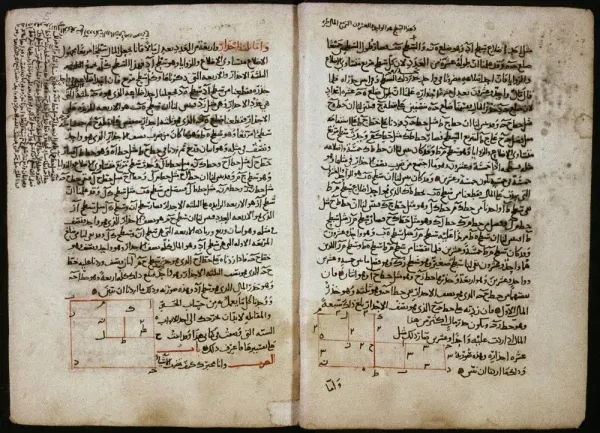
The Legacy of Al-Khwarizmi
The irony of al-Khwārizmī's legacy is its invisibility. Almost no one who uses the word 'algorithm' knows where it came from. Fewer still know that the algebra they learned in school descends directly from a short practical manual written in ninth-century Baghdad for the purpose of settling inheritance disputes. His name — corrupted, Latinised, eventually stripped of its context — became a technical term. His method became the foundation of every calculation performed by every computer ever built.
He did not seek immortality. He sought utility. In the opening lines of his algebra book, he wrote that he had compiled what was 'easiest and most useful in arithmetic, such as men constantly require in cases of inheritance, legacies, partition, lawsuits, and trade.' A practical man, solving practical problems — and in doing so, building the architecture of modern mathematics.
Read his story in his own words — the first-person ePub follows al-Khwārizmī from Khwarezm to Baghdad to the House of Wisdom, through the writing of the books that quietly changed the world.
Get the Full Book
Read the story of Al-Khwarizmi — 8 chapters of historical narrative.
Dramatised first-person narrative; not an autobiography.