
Chandragupta Maurya
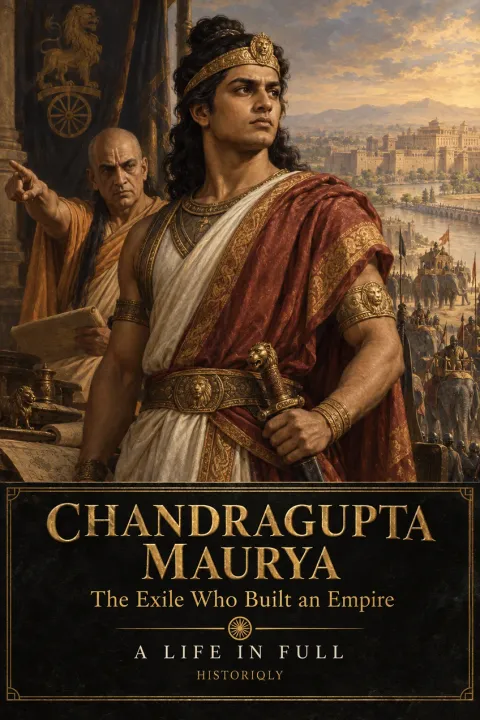
The Exile Who Built an Empire
Get the full EPUB
Drop your email and the EPUB downloads straight to your device. We'll also ping you when the next chronicle lands — unsubscribe any time.
Your email is already on file — enjoy the read.
Download the EPUBIn 322 BC, a young exile with no kingdom, no army, and no title did what no one in the history of the Indian subcontinent had ever done — he unified it. Chandragupta Maurya, guided by the brilliant strategist Chanakya, overthrew the mighty Nanda dynasty, filled the power vacuum left by Alexander the Great's retreating armies, and built the Maurya Empire — the first state to rule from the Hindu Kush to the Bay of Bengal. At its height, his empire governed fifty million people across five million square kilometres, administered by the most sophisticated bureaucracy the ancient world had seen. His treaty with Seleucus Nicator, Alexander's successor, secured India's northwestern frontier and sent five hundred war elephants west to reshape the Mediterranean. His grandson Ashoka would expand it further still. But it was Chandragupta who laid every foundation.
c. 340–297 BC
Born into obscurity — possibly of the Moriya clan, possibly of humble origins (the sources disagree). Rose to become the first emperor of a unified India. According to Jain tradition, he abdicated his throne and fasted to death at Shravanabelagola in Karnataka, following the path of the ascetic Bhadrabahu. He was approximately forty-three years old.
5M km²
The Maurya Empire at its peak stretched from modern Afghanistan and Balochistan in the west to Bangladesh in the east, from the Himalayas in the north to the Deccan plateau in the south. It was the largest empire in Indian history until the British Raj — and the first to unite the subcontinent under a single administration.
600,000+
According to Megasthenes, the Greek ambassador who lived at Chandragupta's court in Pataliputra, the Mauryan army comprised 600,000 infantry, 30,000 cavalry, 9,000 war elephants, and 8,000 chariots. It was one of the largest military forces in the ancient world.
9,000
The Mauryan war elephant corps was the most feared in the ancient world. Chandragupta traded 500 of these elephants to Seleucus Nicator in exchange for the northwestern provinces — those elephants later won Seleucus the Battle of Ipsus in 301 BC, reshaping the entire Hellenistic world.
Founding the Maurya Empire, unifying India, defeating Seleucus Nicator, Arthashastra statecraft
Defining Events
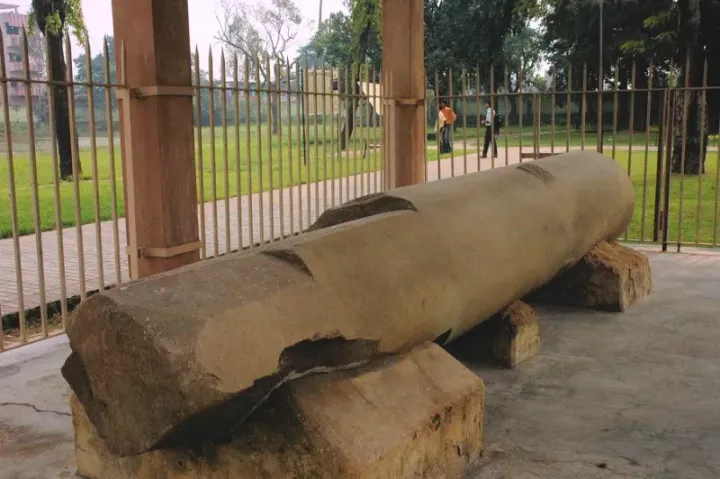
Overthrow of the Nanda Dynasty
The Nanda dynasty controlled the Gangetic plain with an army of 200,000 infantry and 80,000 cavalry — the largest military force in India. Chandragupta and Chanakya, working from the northwestern frontier, built a coalition of disaffected kingdoms and rebel forces, then marched on the Nanda capital of Pataliputra. The campaign was a masterpiece of strategic sequencing — securing the periphery before striking the centre. The last Nanda king, Dhana Nanda, fell, and Chandragupta claimed the throne of the most powerful city in India.
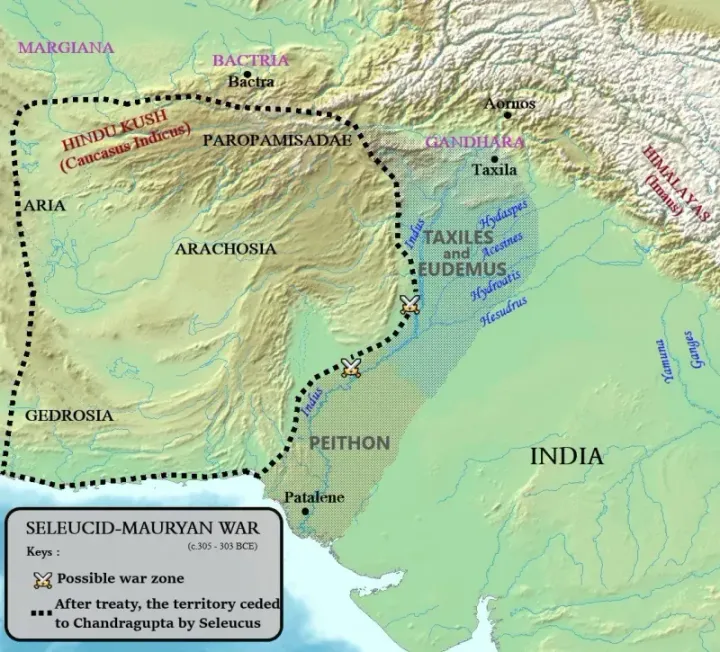
Treaty with Seleucus Nicator
When Seleucus I Nicator, heir to Alexander's eastern conquests, marched into India to reclaim the lost satrapies, he found not a collection of warring kingdoms but a unified empire under Chandragupta. The two forces met — and Chandragupta prevailed. Rather than pursue a costly war, they negotiated a treaty that ceded Gandhara, Parapamisadae, Arachosia, and Gedrosia to the Maurya Empire in exchange for 500 war elephants and a marriage alliance. It was diplomacy at its most pragmatic — and it reshaped two continents.
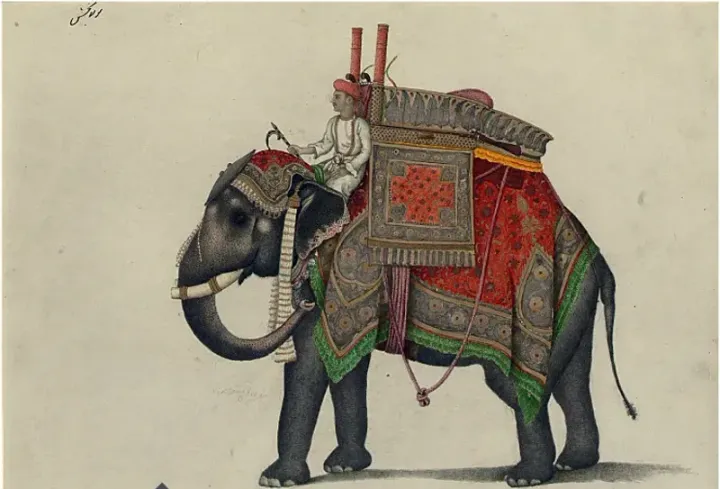
The Arthashastra Administration
Chandragupta's empire was not held together by military force alone. Guided by the principles codified in Chanakya's Arthashastra — the most comprehensive treatise on statecraft, economics, and military strategy produced in the ancient world — the Mauryan state developed regulated taxation, provincial governance, a network of royal roads, standardised weights and measures, a system of courts, and an elaborate intelligence apparatus. Megasthenes, who witnessed it firsthand, described a city and a bureaucracy that rivalled anything in the Mediterranean world.
Timeline
Birth
Born into disputed origins — Buddhist texts claim royal Moriya lineage, while other traditions suggest humbler beginnings. What is certain is that Chandragupta grew up outside the centres of power, in a world shaped by the collapse of the Mahajanapadas and the distant thunder of Alexander's campaigns in Persia.
Encounter with Alexander
According to Plutarch, the young Chandragupta met Alexander the Great during the Macedonian invasion of the Punjab. He reportedly urged Alexander to march on the Nanda capital — advice Alexander's exhausted army refused to follow. Whether the meeting happened as described, it placed Chandragupta at the hinge of history: watching Alexander's power recede and seeing the vacuum it would leave.
Alliance with Chanakya
The young exile found his strategist. Chanakya — also known as Kautilya or Vishnugupta — was a Brahmin scholar and political theorist who had been humiliated by the Nanda court. Together they began building an army and a coalition from the northwestern frontier, recruiting disaffected chiefs, mercenaries, and tribal warriors. The partnership between the warrior and the scholar would change the course of Indian history.
Founding of the Maurya Empire
Chandragupta's forces overthrew the Nanda dynasty and captured Pataliputra, the largest and richest city in India. He established the Maurya dynasty and began the systematic conquest and consolidation of the subcontinent — from the Indus to the Ganges delta, from the Himalayas to the central Deccan.
War and Treaty with Seleucus
Seleucus Nicator crossed the Indus with a Hellenistic army, seeking to reclaim Alexander's Indian conquests. The campaign ended in negotiation rather than destruction. Chandragupta received the northwestern provinces — Gandhara, Arachosia, Gedrosia, and Parapamisadae — in exchange for 500 war elephants and a marriage alliance. The Greek ambassador Megasthenes was sent to reside at Pataliputra.
Imperial Consolidation
With external threats neutralised, Chandragupta turned to administration. He divided the empire into provinces governed by appointed officials, built a network of royal roads, standardised taxation, and established the intelligence apparatus described in the Arthashastra. Megasthenes described Pataliputra as a city of astonishing size — nine miles long and nearly two miles wide, surrounded by a timber palisade with 570 towers and 64 gates.
Abdication
According to Jain tradition, Chandragupta abdicated his throne in favour of his son Bindusara. He became a disciple of the Jain monk Bhadrabahu and travelled south to Shravanabelagola in Karnataka. There, following the Jain practice of sallekhana — the ritual fast unto death — he renounced the world he had conquered. The warrior-emperor died as an ascetic.
Key Figures
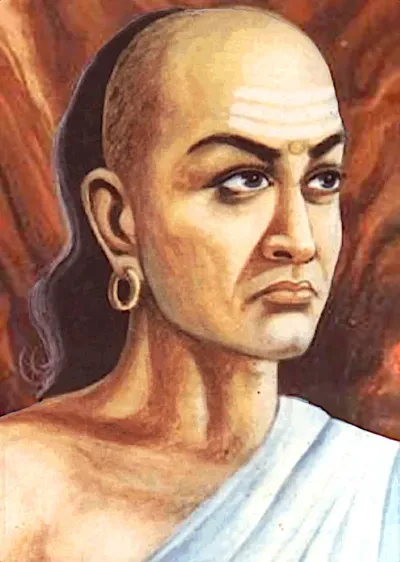
Chanakya (Kautilya)
The Brahmin scholar who made Chandragupta an emperor. Chanakya was a political theorist of extraordinary ruthlessness and brilliance — the author (or inspirer) of the Arthashastra, a treatise on statecraft that makes Machiavelli look sentimental. Humiliated by the Nanda court, he found in Chandragupta the instrument of his revenge and his vision. He trained the young exile in warfare, diplomacy, and administration, then guided the campaign that overthrew the Nandas. He served as Chandragupta's chief minister, building the bureaucratic machinery that held the empire together. Without Chanakya, Chandragupta might have remained an exile. Without Chandragupta, Chanakya's theories would have remained ink on palm leaves.
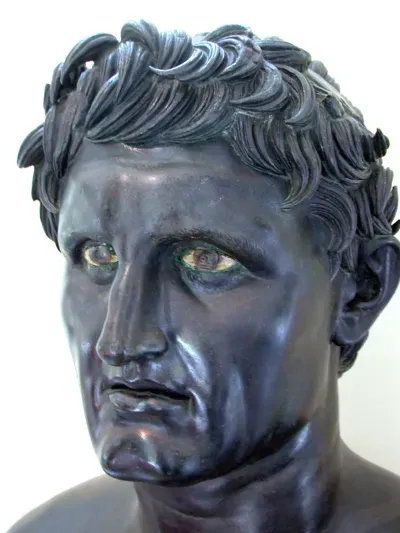
Seleucus I Nicator
The Macedonian general who inherited the eastern portion of Alexander's empire and found that India was no longer his to claim. Seleucus marched east expecting to reclaim the satrapies Alexander had conquered. Instead he met a unified empire under Chandragupta. The resulting treaty was one of the great diplomatic exchanges of the ancient world — provinces for elephants, war for peace, rivalry for alliance. Seleucus sent Megasthenes as his ambassador to Pataliputra, establishing the first sustained diplomatic contact between India and the Hellenistic world. The 500 war elephants he received helped him win the Battle of Ipsus, which decided the fate of Alexander's empire.
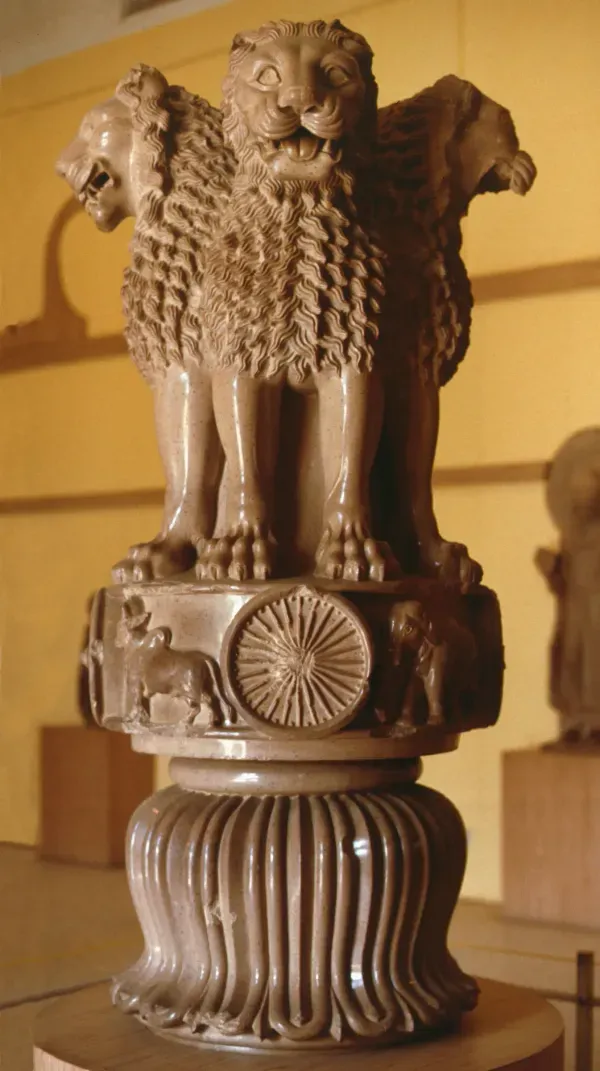
The Legacy of Chandragupta Maurya
Chandragupta Maurya did what no one before him had done — he took a subcontinent of warring kingdoms, rival dynasties, and fractured tribal territories and forged them into a single state. The Maurya Empire he founded would endure for nearly a century and a half, reaching its zenith under his grandson Ashoka, whose edicts of non-violence and dharma are carved into stone across the subcontinent to this day. The Lion Capital of Ashoka — four lions standing back to back atop a pillar — became the national emblem of modern India. It sits on every rupee coin, every government document, every passport. The empire Chandragupta built still echoes in the symbols of a nation of 1.4 billion people.
He began with nothing — an exile, a scholar's faith, and a vision of unity. He ended as an ascetic, fasting to death in the hills of Karnataka, having renounced the greatest empire the subcontinent had ever known. Read his story in his own words in the first-person ePub.
Get the Full Book
Read the story of Chandragupta Maurya — 8 chapters of historical narrative.
Dramatised first-person narrative; not an autobiography.