
Hai Gaon

The Last Light of Babylon
Get the full EPUB
Drop your email and the EPUB downloads straight to your device. We'll also ping you when the next chronicle lands — unsubscribe any time.
Your email is already on file — enjoy the read.
Download the EPUBHai Gaon led the academy of Pumbedita and answered legal questions sent from distant communities. His surviving writings provide firmer ground than imagined meetings or private conversations. This biography reconstructs a scholarly life while distinguishing known correspondence from invented scenes.
“Observe every custom not in direct opposition to law.”
939–1038 CE
Born in Pumbedita, Babylonia, and died on Passover eve at approximately ninety-nine years of age — one of the longest-lived scholars in Jewish history, holding the gaonate for forty years.
~1,000
Hai's surviving responsa — legal answers to questions sent from Jewish communities worldwide — number approximately one thousand, roughly equal to all other Geonim combined.
40 years
From 998 CE when his father Sherira resigned, until his death in 1038, Hai served as head of the Pumbedita academy — the longest continuous gaonate in the institution's history.
Across the diaspora
Hai corresponded with Jewish communities in Europe, Africa, Asia, and the Near East — from Germany and France to India and Ethiopia — writing in Hebrew, Aramaic, and Arabic as required.
Gaon of Pumbedita, master of Talmudic law, author of nearly one thousand responsa, last and greatest of the Geonim
Defining Events
The Responsa Network
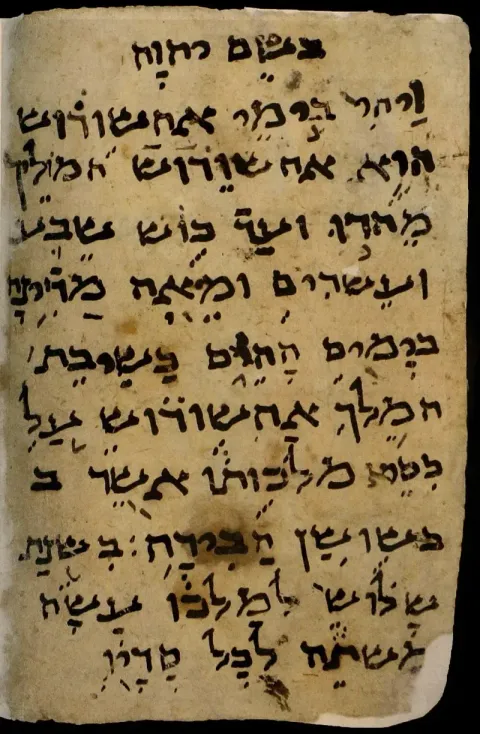
In the ancient world, law was local. Hai Gaon made it universal. For forty years, his responsa — written rulings on questions of Jewish law — circulated from Pumbedita to every corner of the diaspora. Questions arrived by courier from Germany, Spain, North Africa, Egypt, and as far as India, written in the language of the community: Hebrew, Judeo-Arabic, or Aramaic. Hai answered all of them, citing Talmudic precedent with exacting clarity and a mastery that no contemporary could match. His nearly one thousand surviving responsa represent approximately half of all extant Geonic legal literature — a single man's output equal to three centuries of collective Geonic scholarship. His rulings on commercial law, Sabbath observance, marriage, and prayer became the bedrock on which later medieval authorities built, and Maimonides cited them as among the most authoritative precedents in all of Jewish law.
The Legal Treatises
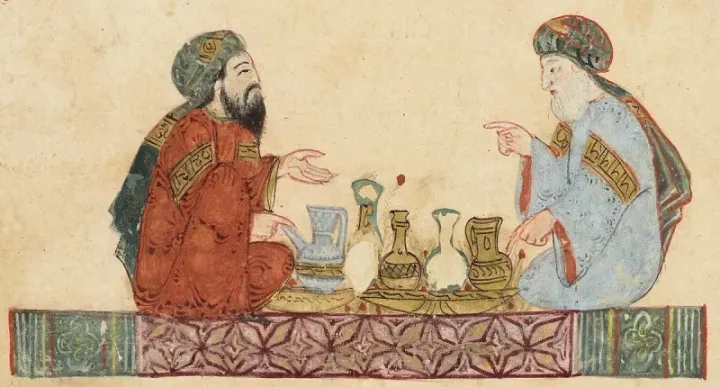
Hai’s legal monographs organize subjects including trade, oaths, and pledges. His lexicographical work also influenced later scholars. Musar Haskel is attributed to him, but that attribution is disputed; neither its authorship nor a precise composition date is certain.
The End of an Era
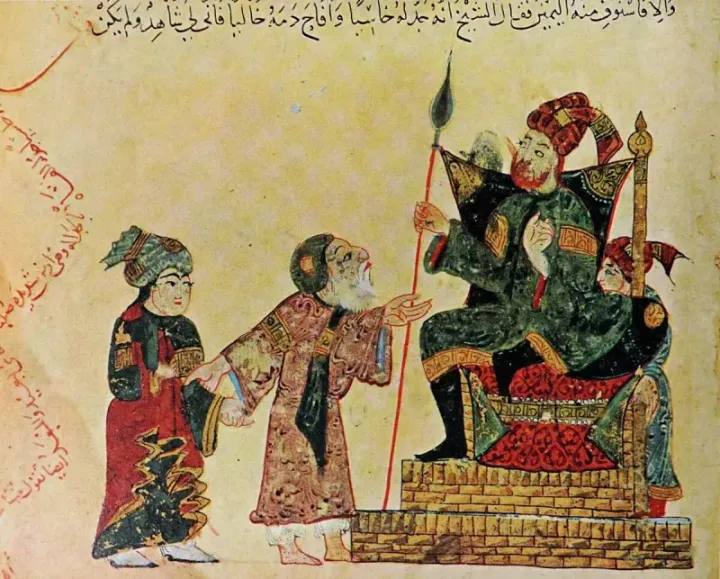
Hai’s death in 1038 marked a change in the authority of the Babylonian academies. Samuel ben Hofni died in 1013, and successors continued at Sura. Hezekiah is documented alive in 1055, contradicting the older account of his execution around 1040. Scholarship continued both in Iraq and in other Jewish centres.
Timeline
Born in Pumbedita
Hai ben Sherira is born in Pumbedita, Babylonia — the ancient city of Talmudic scholarship, now relocated to Baghdad, capital of the Abbasid Caliphate. His father Sherira is already a leading figure in the academy. The boy enters a world at its intellectual zenith: the Islamic Golden Age, the House of Wisdom nearby, and the Babylonian yeshivot at the height of their global influence.
Sherira Becomes Gaon
Hai's father Sherira ben Hanina is appointed Gaon of the Pumbedita academy. The gaonate — the presidency of the great Talmudic academies — carries immense authority over Jewish communities worldwide. Questions pour in twice yearly during the Yarchei Kallah study months; the Gaon's rulings are binding. Hai, now twenty-nine, begins working alongside his father, absorbing the vast Talmudic tradition in which he has been immersed since childhood.
Co-Gaon with His Father
Hai is appointed ab bet din — head of the rabbinical court — effectively serving as co-Gaon alongside Sherira. Already renowned across the Jewish world, he has begun receiving questions from European and North African communities in his own right. His marriage to the daughter of Samuel ben Hofni, Gaon of the rival Sura academy, ties the two great institutions together through family alliance, transforming rivalry into uneasy partnership.
The Iggeret
Sherira’s Iggeret of 987 responds to questions from Kairouan about the development of rabbinic literature. It is Sherira’s epistle; Hai’s precise participation in its composition is not established.
Imprisoned by the Caliph
Jewish adversaries denounce both Hai and his father to the Abbasid Caliph al-Qadir. The charges are obscure; the motives appear to be internal Jewish politics. Both are arrested, their property confiscated. The imprisonment is brief — the Caliph is persuaded to release them — but it shocks the diaspora. Sherira, now in his nineties, does not recover his full authority. The following year, he formally resigns and appoints Hai as his sole successor.
Gaon of Pumbedita
Hai becomes sole Gaon of Pumbedita. The Jewish community celebrates his installation with the reading of the Torah portion about Moses choosing a successor. For the next forty years, he is the unchallenged authority of Babylonian Jewry and, by extension, of the entire Jewish diaspora. Questions arrive from Germany, France, Spain, North Africa, Egypt, the Byzantine Empire, Persia, and India. He answers all of them — in Hebrew, Aramaic, or Arabic — with a precision and depth that astonishes even his contemporaries.
Sura after Samuel ben Hofni
Samuel ben Hofni dies in 1013. Successors continue at Sura, while Hai remains prominent at Pumbedita. The loss does not leave the entire Jewish world with no other scholars to consult.
Passover Eve
Hai dies in 1038 and is commemorated by poets including Samuel ha-Nagid and Solomon ibn Gabirol. His death is a conventional endpoint for the Geonic period, but scholarship and institutions continue. Hezekiah is documented alive in 1055, contradicting older accounts of his death around 1040.
Key Figures
Sherira Gaon
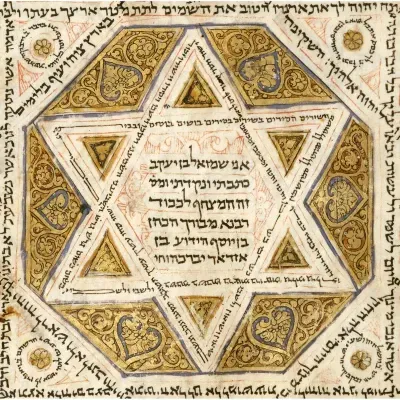
Sherira ben Hanina (c. 906–c. 1006) was Hai's father and teacher — himself one of the greatest Geonim, remembered above all for the Iggeret, the historical epistle that remains the primary source for the entire Talmudic and Geonic period. He lived to approximately one hundred years of age, resigning the gaonate in 998 after their shared imprisonment. He had shaped Hai from birth, transmitting not merely legal knowledge but the bearing of a man who understood that he stood in a chain stretching back to Sinai. Their imprisonment together, and Sherira's quiet resignation afterward, was the hinge on which Hai's forty-year gaonate turned.

Samuel ben Hofni
Samuel ben Hofni (c. 920–1013), Gaon of the Sura academy, was Hai's father-in-law and his most formidable intellectual interlocutor. Their marriage alliance ended the competition for the Pumbedita gaonate; their scholarly disputes defined the theological debates of the Geonic period. Samuel inclined toward philosophical rationalism in the mode of Islamic kalam — he doubted miracles, explained away biblical supernatural events, and interpreted the Witch of Endor as a fraud. Hai pushed back at every turn, insisting on the literal truth of the tradition. Their disagreements, preserved in their correspondence, reveal two brilliant minds shaping the boundaries of Jewish theology from opposite poles of reason and faith.
The Legacy of Hai Gaon
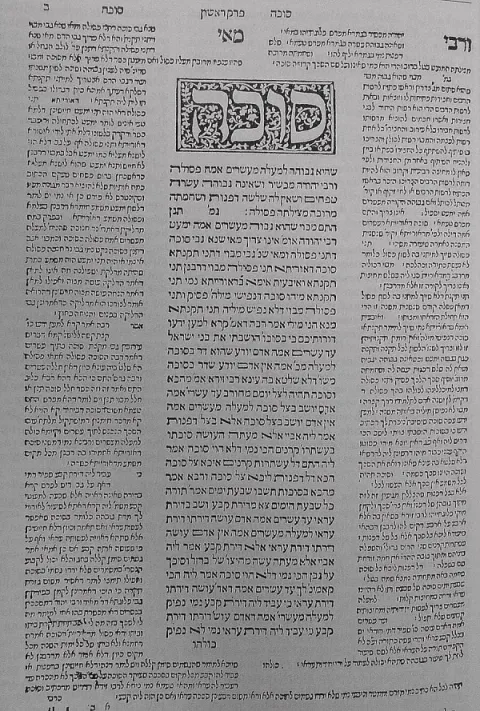
Hai’s responsa and legal writings remained influential long after his death. His career belongs to the changing relationship between Babylonian scholarship and communities elsewhere. The first-person book reconstructs that life; its private conversations and scenes are not Hai’s surviving words.
Get the Full Book
Read the story of Hai Gaon — 8 chapters of historical narrative.
Dramatised first-person narrative; not an autobiography.