
Nāgārjuna
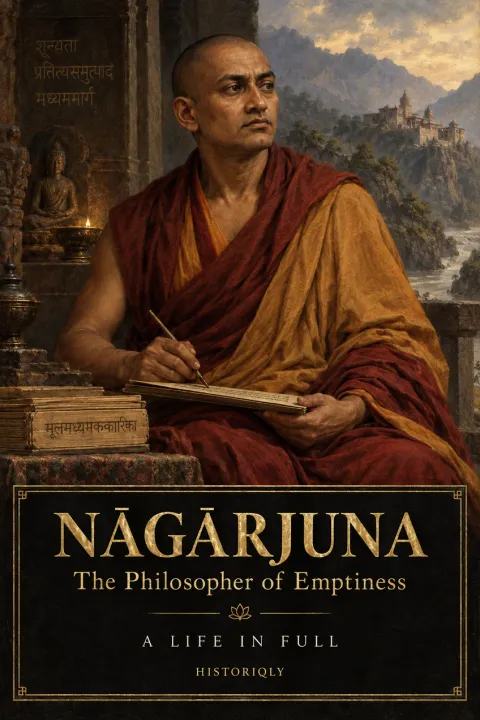
The Philosopher of Emptiness
Get the full EPUB
Drop your email and the EPUB downloads straight to your device. We'll also ping you when the next chronicle lands — unsubscribe any time.
Your email is already on file — enjoy the read.
Download the EPUBIn the second century of the Common Era, a Brahmin scholar from the Vidarbha region of South India turned his extraordinary intellect toward the deepest question in Buddhist philosophy: what does it mean for something to exist? Nāgārjuna’s answer — that all phenomena are “empty” of inherent existence, arising only in dependence on other phenomena — did not destroy meaning but revealed its very possibility. His masterwork, the Mūlamadhyamakakārikā, dismantled every philosophical position his opponents held, not to replace them with his own, but to free the mind from the grasping that binds it to suffering. No single thinker after the Buddha himself has shaped the course of Buddhist philosophy more profoundly.
“Whatever is dependently arisen, that is explained to be emptiness.”
c. 150–250 CE
Nagarjuna is generally placed around 150–250 CE and associated with southern India. Later biographies supply Brahmanical origins, named places and elaborate stories. Those details do not form a securely documented childhood.
~450
The Mūlamadhyamakakārikā (Fundamental Verses on the Middle Way) contains approximately 450 verses across 27 chapters — each one a logical scalpel applied to our deepest assumptions about reality.
27
Twenty-seven chapters examining causation, motion, time, the self, perception, the Buddha, and nirāṇa — systematically demonstrating that none can withstand rigorous logical analysis.
1
The Madhyamaka (“Middle Way”) school became one of the two great philosophical traditions of Mahāyāna Buddhism, alongside Yogācāra. It spread from India to Tibet, China, Korea, and Japan, shaping Buddhist thought for nearly two millennia.
Founder of Madhyamaka Buddhism, philosopher of emptiness and dependent arising
Defining Events
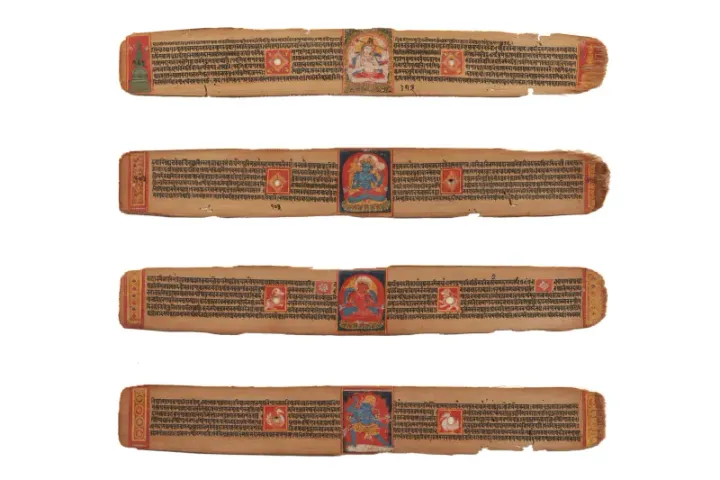
The Mūlamadhyamakakārikā
Nāgārjuna’s masterwork — roughly 450 verses that systematically examine the concepts we take for granted: causation, motion, time, self, perception, and the nature of the Buddha. Using the method of prasaṅga (reductio ad absurdum), he showed that every philosophical position, when pushed to its logical conclusion, collapses into contradiction. But this was not nihilism — it was liberation. By demonstrating that all phenomena are ‘empty’ (śūnya) of inherent existence, he revealed that emptiness is identical with dependent arising: things exist only in relation to other things, and because nothing has fixed essence, everything is possible.
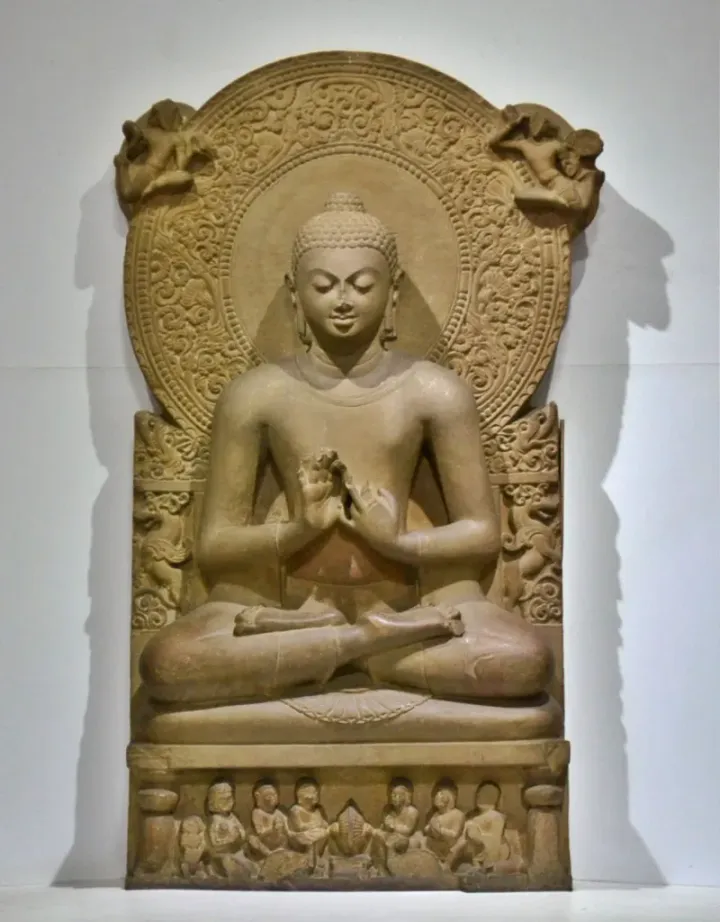
The Doctrine of Two Truths
Perhaps Nāgārjuna’s most practically important teaching was his distinction between saṃvṛti-satya (conventional truth) and paramārtha-satya (ultimate truth). Conventional truth governs the everyday world — names, categories, cause and effect work perfectly well for navigating life. Ultimate truth reveals that none of these conventions have inherent existence. The genius of the two truths is that they do not conflict: we can use conventional language and live conventional lives while understanding, at the deepest level, that all of it arises in dependence and is therefore empty. Without conventional truth, the Buddha could not have taught; without ultimate truth, there would be nothing to teach.
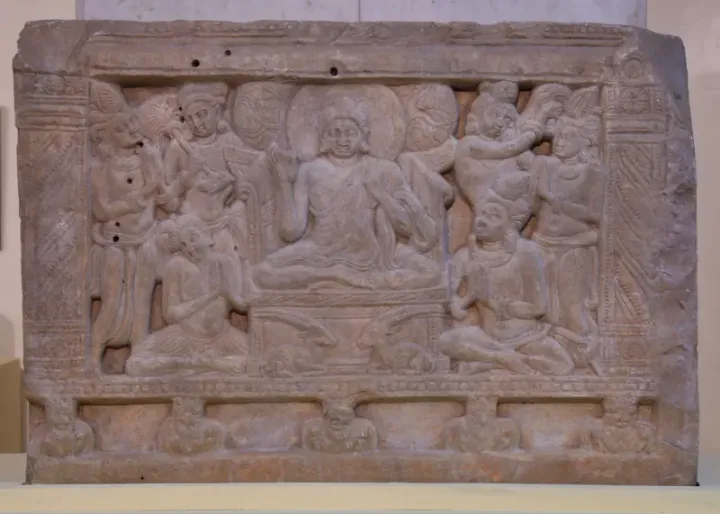
Nāgārjunakoṇḍa — The Hill of Nāgārjuna
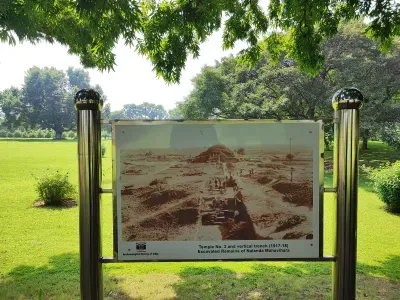
The ancient Buddhist centre at Nāgārjunakoṇḍa in modern Andhra Pradesh bears his name — testimony to his enduring connection to the region. Archaeological excavations have uncovered extensive monastery ruins, stūpas, and some of the finest examples of early Andhra Buddhist sculpture. The Ikṣvāku dynasty, which patronised the site after the Satavahanas, maintained it as a major centre of Buddhist learning. Though the precise nature of Nāgārjuna’s association with the site is debated, the naming itself reflects how deeply his legacy was woven into the religious geography of South India.
Timeline
Origins and Later Traditions
Nagarjuna is generally placed around 150–250 CE and associated with southern India. Later biographies supply Brahmanical origins, named places and elaborate stories. Those details do not form a securely documented childhood.
Ordained as a Buddhist Monk
Later traditions describe Nagarjuna’s ordination and associate him with Nalanda. His early biography is poorly documented. His surviving philosophical works provide firmer evidence of engagement with Buddhist and Brahmanical arguments than a precise reconstruction of his education.
Writes the Mūlamadhyamakakārikā
Composes his masterwork — approximately 450 verses across 27 chapters that systematically dismantle the concept of svabhāva (inherent existence). Using the method of prasaṅga, he demonstrated that causation, motion, time, the self, and even the Buddha and nirvāṇa cannot be established as having independent, fixed natures. The work became the foundational text of the Madhyamaka school.
Composes the Vigrahavyāvartanī
Writes the Vigrahavyāvartanī (The Dispeller of Disputes), a defence of his emptiness philosophy against objections. Critics had argued that if all statements are empty, then Nāgārjuna’s own statements must be empty too and therefore meaningless. His response — that emptiness applies to itself, and that this self-application is precisely what makes it liberating rather than self-defeating — remains one of the most sophisticated moves in the history of philosophy.
Teaches and Gathers Disciples
Establishes himself as one of the foremost Buddhist thinkers in India. His chief disciple, Āryadeva, became the second patriarch of the Madhyamaka school and wrote the Catuḥśataka (Four Hundred Verses), extending Nāgārjuna’s dialectical method. Together, they are revered as the two great founders of Madhyamaka — depicted side by side in Tibetan thangka paintings for centuries.
Writes the Suhṛllekha
The Letter to a Friend offers Buddhist ethical guidance to a royal addressee whose identity remains uncertain. The text joins advice for conduct with the pursuit of liberation; it should not be read simply as a programme for state administration.
Writes the Ratnāvalī
Composes the Ratnāvalī (Precious Garland), another royal advisory text that weaves together ethical instruction, political philosophy, and Madhyamaka metaphysics. It presents the Bodhisattva path — the aspiration to achieve enlightenment for the benefit of all beings — as inseparable from the understanding of emptiness. Compassion, Nāgārjuna argues, flows naturally when one sees that all beings are interdependent and that no fixed boundary separates self from other.
Death and Legacy
The circumstances of Nāgārjuna’s death are unknown historically, though Tibetan hagiographies describe elaborate legendary accounts. What is certain is the philosophical revolution he left behind. The Madhyamaka school he founded became one of the two pillars of Mahāyāna Buddhist philosophy. His influence spread to Tibet through Śāntideva, Candrakīrti, and Tsongkhapa; to China through Kumārajīva’s translations; and to Japan through the Sanron school. Today, he is revered across all Mahāyāna traditions as a ‘Second Buddha’.
Key Figures
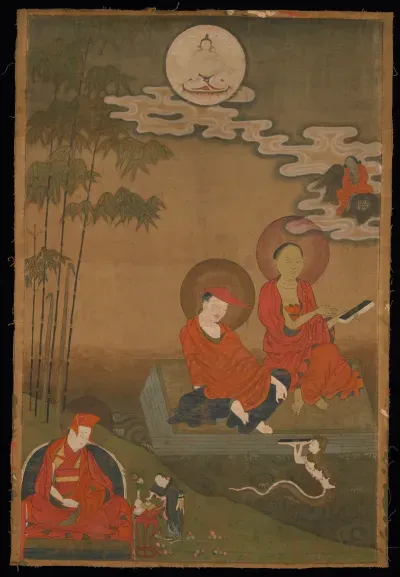
Āryadeva
Āryadeva was Nāgārjuna’s most brilliant student and the second patriarch of the Madhyamaka school. Traditionally said to have come from Sri Lanka, he became Nāgārjuna’s intellectual heir and extended the dialectical method with his own masterwork, the Catuḥśataka (Four Hundred Verses). Where Nāgārjuna dismantled metaphysical categories, Āryadeva turned the same logic on ethical and soteriological questions — showing that attachment to pleasure, self, and permanence are equally unfounded. Tibetan tradition depicts the two side by side as inseparable pillars of the Middle Way, and Āryadeva’s writings became essential reading in every Madhyamaka curriculum.
Royal correspondent (identity uncertain)
Tradition associates Nagarjuna with a Satavahana ruler, but the identification of his royal correspondent is uncertain. The Letter to a Friend and Precious Garland preserve advice addressed to kingship, without securely identifying every occasion or recipient.
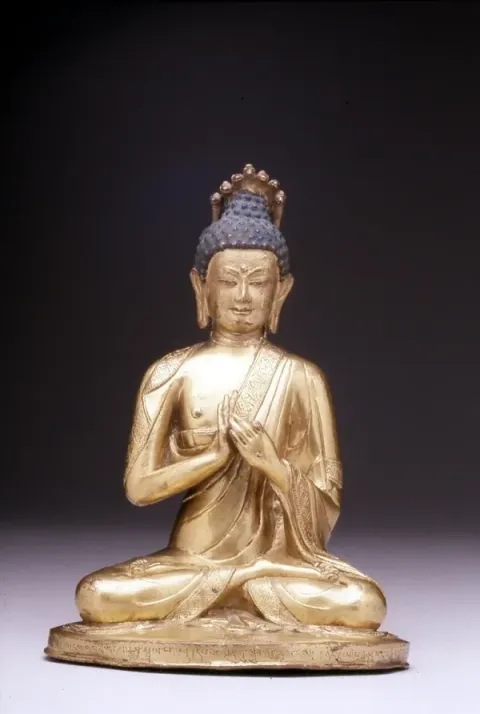
The Legacy of Nāgārjuna
Nāgārjuna’s revolution was not one of destruction but of liberation. By demonstrating that nothing possesses inherent, independent existence, he did not plunge the world into meaninglessness — he revealed why the world is possible at all. If things had fixed essences, they could never change, connect, or be transformed. Emptiness is the ground of dependent arising, and dependent arising is the ground of compassion: because no boundary is ultimately fixed, the suffering of others is never truly separate from our own.
His influence stretches from the monasteries of ancient Nālandā to the debating courtyards of Tibet, from the translation bureaux of Tang Dynasty China to modern Western philosophy departments that find in his work anticipations of Wittgenstein, Derrida, and the philosophy of language. Nearly two millennia after his death, the verses of the Mūlamadhyamakakārikā continue to challenge, provoke, and liberate. Read his story in his own words — the first-person ePub brings you inside the mind of the philosopher who proved that emptiness is not void but possibility itself.
Get the Full Book
Read the story of Nāgārjuna — 8 chapters of historical narrative.
Dramatised first-person narrative; not an autobiography.