
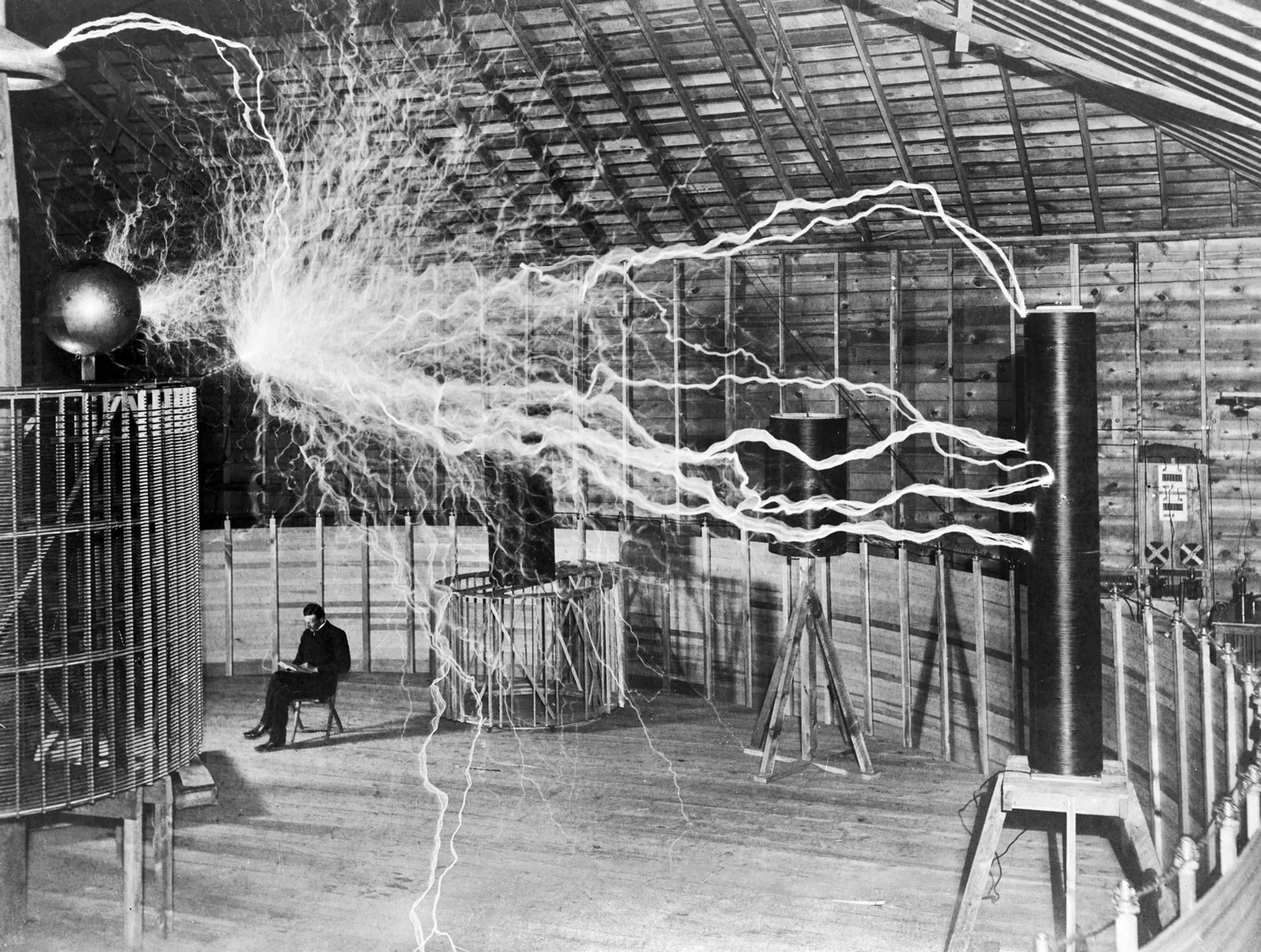
Nikola Tesla
The Man Who Lit the World
In 1884, a twenty-eight-year-old Serbian engineer stepped off a ship in New York with four cents in his pocket, a book of poetry, and a vision that would power the modern world. Within a decade, Nikola Tesla would defeat Thomas Edison in the War of Currents, illuminate the Chicago World's Fair with two hundred thousand lightbulbs, and harness Niagara Falls to transmit electricity twenty-six miles overland — something Edison's direct current could never do. Within a lifetime, he would die alone in a hotel room, penniless, feeding pigeons on the windowsill. Tesla's story is the most dramatic arc in the history of invention — from the dirt of a Budapest park where he sketched his first motor to the electrification of an entire planet.
Serbia / United States
Alternating current, Tesla coil, radio pioneer, visionary inventor
1856–1943
Born during a lightning storm in Smiljan, Croatia (then the Austrian Empire). His mother said the lightning was a bad omen. The midwife disagreed: 'He will be a child of light.' She was right. He died eighty-six years later in Room 3327 of the Hotel New Yorker, alone and forgotten.
300+
Over three hundred patents across twenty-six countries — covering everything from alternating current motors and transformers to radio transmission, remote control, and the rotating magnetic field that powers every electric motor on earth.
8
Serbo-Croatian, Czech, English, French, German, Hungarian, Italian, and Latin. Tesla read voraciously in all of them, memorised entire books, and could recite passages of Goethe from memory decades later.
~2/night
Tesla claimed to sleep no more than two hours per night, supplemented by occasional naps. He worked through the night as a matter of routine, and his assistants learned not to expect normal hours. Whether this was discipline or pathology is a question biographers still debate.
The present is theirs; the future, for which I really worked, is mine.
Defining Events
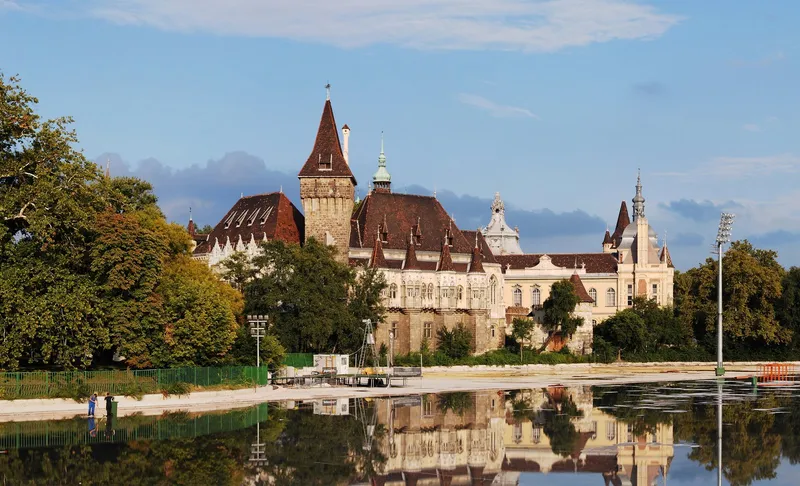
The Budapest Vision
While walking through a park in Budapest at sunset, reciting Goethe's Faust from memory, Tesla experienced a flash of insight so vivid and complete that he stopped in the middle of the path and drew the entire design of an alternating current motor in the dirt with a stick. Not a sketch. Not a concept. A complete, working design — the rotating magnetic field, the polyphase system, the architecture that would power the modern world. He had been thinking about the problem for six years, turning it over in his mind with the obsessive intensity that characterised everything he did. The solution arrived whole. Six years later, that diagram in the dirt would change the course of human civilisation.
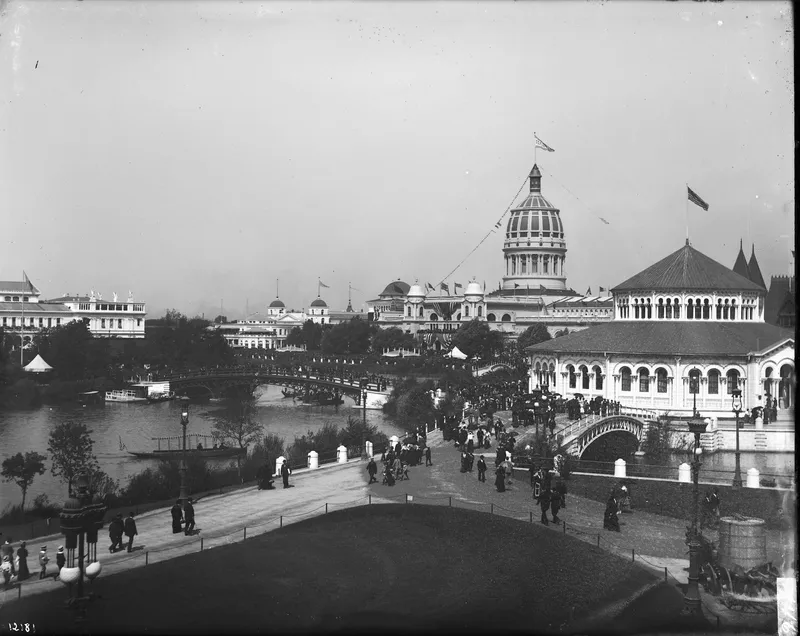
The Chicago World's Fair
The 1893 World's Columbian Exposition was supposed to showcase the future, and Tesla and Westinghouse made sure the future ran on alternating current. Two hundred thousand lightbulbs powered by AC illuminated the 'White City' — a temporary metropolis of neoclassical buildings on the shores of Lake Michigan. Twenty-seven million visitors walked through halls blazing with electric light at a time when most American homes were still lit by candles and gas. Edison had bid for the contract and lost. The War of Currents was decided not in a laboratory but in front of the largest audience in American history.
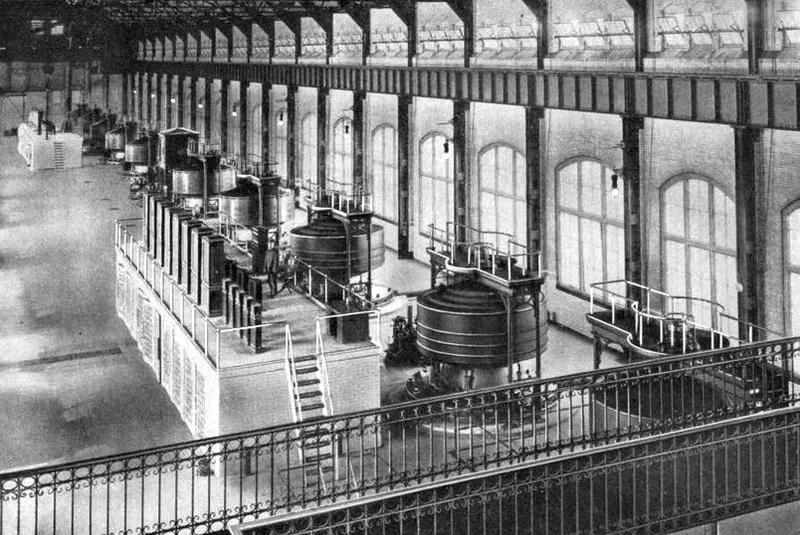
Harnessing Niagara Falls
The Adams Power Plant at Niagara Falls was the proof of concept that silenced every remaining critic. Tesla's polyphase AC system converted the kinetic energy of the falls into electricity and transmitted it twenty-six miles to the city of Buffalo, New York — a distance that would have been impossible with Edison's direct current, which lost power over anything more than a mile. When the switch was thrown on November 16, 1896, Buffalo lit up. The age of long-distance power transmission had begun. Within a decade, AC power lines were crossing the continent. Every one of them carried Tesla's invention.
Timeline
Born During a Lightning Storm
Born in Smiljan, a village in the Military Frontier of the Austrian Empire (modern Croatia). His father, Milutin, was a Serbian Orthodox priest. His mother, Đuka, was an inventor in her own right — she built household tools and mechanical devices from memory, despite never having learned to read. Tesla credited her with his gift for visualisation.
The AC Motor Vision
While walking through a Budapest park at sunset, reciting Goethe, Tesla visualised a complete rotating magnetic field motor in a single flash of insight. He drew the design in the dirt with a stick. It was the invention that would power the modern world, and it arrived in his mind fully formed — six years of obsessive thought compressed into a single moment of clarity.
Arrives in America
Landed in New York with four cents in his pocket, a book of poetry, a few articles of clothing, and a letter of introduction to Thomas Edison. He had been working for Edison's European operations in Paris and had been told the great man would welcome him. He was wrong about the welcome — but he was right about America.
Breaks with Edison
Edison promised Tesla fifty thousand dollars to redesign his inefficient DC generators. Tesla worked for months, delivered the improvements, and asked for his money. Edison laughed. 'Tesla, you don't understand our American humour,' he said. Tesla quit on the spot. He spent the next year digging ditches to survive. The rivalry that would define the age of electricity had begun.
Westinghouse Partnership
George Westinghouse — industrialist, inventor, and the only man in America with the resources and courage to challenge Edison — licensed Tesla's AC patents for sixty thousand dollars plus royalties. The War of Currents entered its most intense and vicious phase. Edison electrocuted dogs, horses, and eventually an elephant in public demonstrations to prove AC was dangerous. Tesla and Westinghouse proved it was the future.
Chicago World's Fair
Two hundred thousand lightbulbs powered by alternating current illuminated the White City. Twenty-seven million visitors witnessed the future of electricity. Edison had bid on the contract and lost. The War of Currents was decided — not in a courtroom or a laboratory but in front of the largest audience the world had ever assembled.
Niagara Falls Harnessed
The first long-distance AC power transmission: Niagara Falls to Buffalo, New York, twenty-six miles. The power of the falls, converted to electricity by Tesla's polyphase system, lit an entire city. Edison's dream of a nation powered by direct current was finished. Every power line on earth would carry Tesla's invention.
Death in Room 3327
Died alone in the Hotel New Yorker, age eighty-six. He had spent his final years feeding pigeons in Bryant Park and writing letters to heads of state that were never answered. He was penniless. The FBI seized his papers within hours of his death, fearing his work on directed-energy weapons. But the real legacy was not in the papers. It was in every light switch, every power line, every electric motor on the planet — all running on the rotating magnetic field he drew in the dirt of a Budapest park sixty-one years earlier.
Key Figures
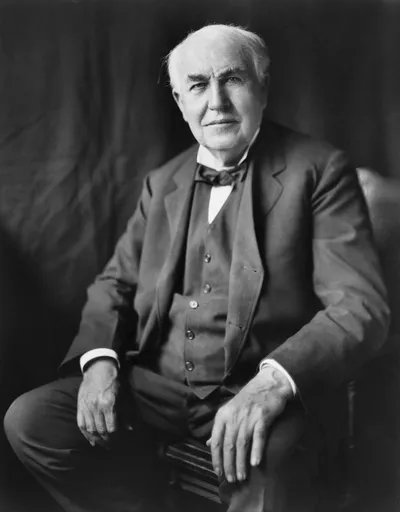
Thomas Edison
America's most famous inventor and Tesla's nemesis. Edison was a genius of a different kind — a relentless experimenter who tested thousands of possibilities until something worked. Tesla, who could design complete machines in his mind before drawing a single line, found Edison's methods baffling. 'If Edison had a needle to find in a haystack,' Tesla wrote, 'he would proceed at once with the diligence of the bee to examine straw after straw.' Edison championed direct current and waged a ruthless propaganda campaign against AC — publicly electrocuting animals, lobbying for AC to power the electric chair, and spreading fear in every newspaper that would print his claims. He lost the War of Currents. He never admitted it.
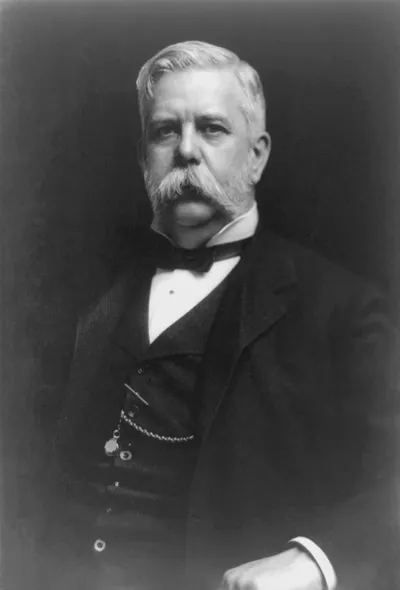
George Westinghouse
The Pittsburgh industrialist who believed in Tesla's AC system when almost no one else did. Westinghouse licensed Tesla's patents, funded the development of AC infrastructure, and fought Edison's propaganda machine with engineering results. When Westinghouse faced bankruptcy in 1897 — crushed by the financial costs of the current wars — Tesla tore up his royalty contract. The contract was worth an estimated twelve million dollars. Tesla sacrificed a fortune to save the man who had saved his invention. He never recovered financially. Westinghouse never forgot the gesture.
The Real Question
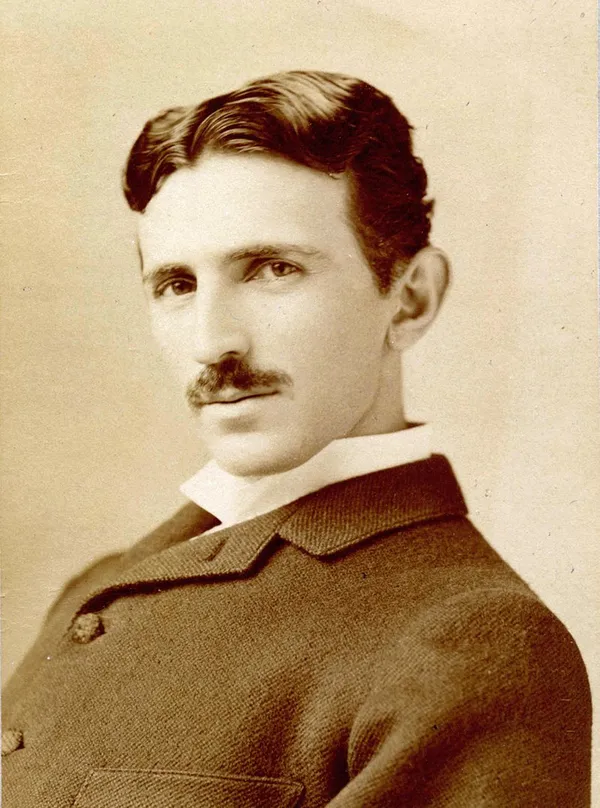
Tesla died penniless and alone, but every light you turn on, every motor that spins, every power line that crosses the horizon runs on the rotating magnetic field he drew in the dirt of a Budapest park. He held over three hundred patents. He spoke eight languages. He slept two hours a night and visualised complete machines in three dimensions before drawing a single line.
The present was theirs — Edison's, Morgan's, the men of money and influence who controlled the age. But the future, for which Tesla really worked, was his. Every time you flip a switch, you are using his invention. Every time alternating current flows through a wire, it follows the path he saw in a flash of light on a Budapest evening in 1882. The man who lit the world died in the dark — but the world stayed lit. Read his story in his own words in the first-person ePub.
Get the Full First-Person Biography
Read Nikola Tesla's story told in their own voice — 8 chapters of cinematic, first-person narrative.