
Queen Nzinga
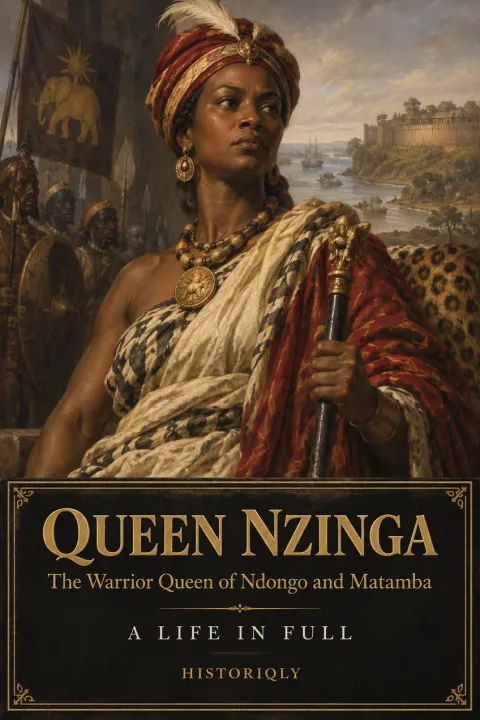
The Warrior Queen of Ndongo and Matamba
Get the full EPUB
Drop your email and the EPUB downloads straight to your device. We'll also ping you when the next chronicle lands — unsubscribe any time.
Your email is already on file — enjoy the read.
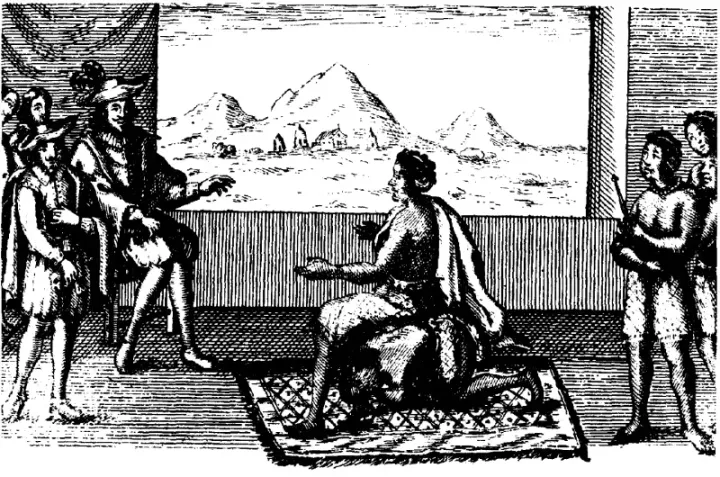
Download the EPUBIn 1622, a woman walked into the Portuguese governor's reception hall in Luanda and found no chair waiting for her — only a floor mat, placed beneath the governor's raised seat. Without hesitation, she gestured to one of her attendants, who knelt on all fours, and she sat upon the human throne with the composure of a queen addressing an equal. That woman was Nzinga Mbandi, and for the next four decades she would wage the most sustained campaign of anti-colonial resistance in African history — as diplomat, general, queen, and ultimately, king.
“He who is born free should maintain himself in freedom.”
c. 1583–1663
Born in Kabasa, capital of the Kingdom of Ndongo, in present-day Angola. Died in Matamba at approximately eighty years old — an extraordinary lifespan for the seventeenth century.
40+
From the 1620s to her death in 1663, Nzinga waged continuous diplomatic and military resistance against the Portuguese Empire — one of the longest anti-colonial campaigns in African history.
2
Queen (later King) of both Ndongo and Matamba. After being driven from Ndongo by Portuguese-backed rivals, she conquered Matamba and built it into a formidable commercial and military state.
3
Negotiated alliances with the Dutch West India Company, the Kingdom of Kongo, and eventually the Portuguese themselves — the first formal Afro-European alliance against another European power.
Anti-colonial resistance, military strategist, diplomat, Queen of Ndongo and Matamba
Defining Events
The Human Chair
Sent by her brother as envoy to negotiate peace with the Portuguese governor in Luanda, Nzinga found no chair waiting — only a floor mat beneath the governor's elevated seat. She ordered an attendant to kneel as her throne, negotiating the entire treaty from a position of absolute equality. She secured the withdrawal of Portuguese forces from Ndongo territory, the return of captured subjects, and recognition of Ndongo sovereignty. The moment became one of the most iconic acts of diplomatic defiance in African history.
Conquest of Matamba
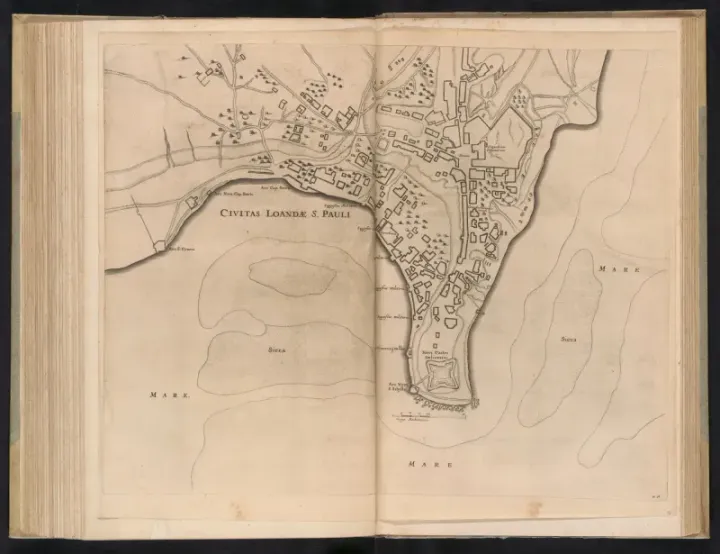
Driven from Ndongo by Portuguese forces and their puppet king Ngola a Hari, Nzinga allied with the fearsome Imbangala warrior bands, underwent their brutal initiation rituals, and led her forces westward. By 1635, she had conquered the Kingdom of Matamba — a territory with a tradition of female rulers that gave her a more legitimate base of power. From Matamba, she waged guerrilla warfare against the Portuguese for decades, offering sanctuary to escaped slaves and building a hybrid army that combined Mbundu heritage with Imbangala military traditions.
Alliance with the Dutch
When the Dutch West India Company captured Luanda from the Portuguese in 1641, Nzinga formed what historians describe as the first formal Afro-European military alliance against another European power. With Dutch weapons, soldiers, and naval support, she routed Portuguese forces at the Battle of Kombi in 1647. The alliance collapsed when Portuguese reinforcements from Brazil recaptured Luanda in 1648, but it demonstrated Nzinga's extraordinary diplomatic range — a seventeenth-century African queen playing European powers against each other on the global chessboard of colonial rivalry.
Timeline
Born in Kabasa
Born with her umbilical cord wrapped around her neck — named 'Nzinga' from the Kimbundu verb meaning 'to twist.' A wise woman predicted she would one day become queen. Her father, King Mbandi a Ngola Kiluanji, allowed her to sit in on court sessions and trained her in military arts.
Brother Seizes Power
Ngola Mbandi overthrows their father and seizes the throne. He has Nzinga's infant son murdered and orders her forcibly sterilised. Portuguese Governor Mendes de Vasconcellos invades and sacks the Ndongo capital Kabasa, forcing Mbandi to flee.
The Luanda Negotiations
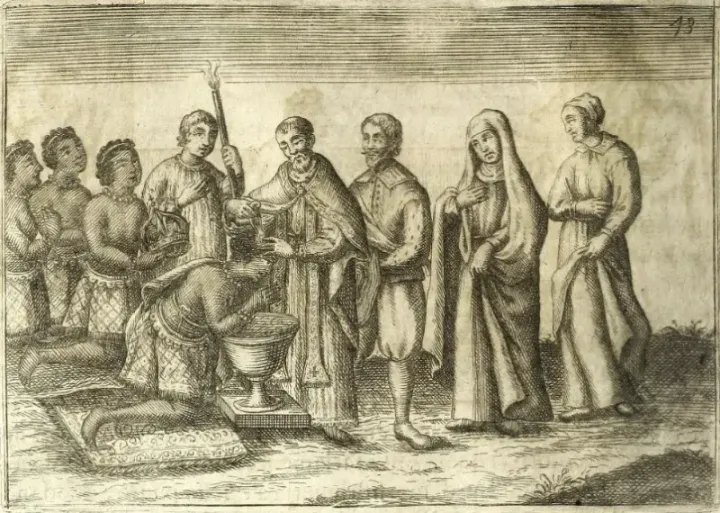
Despite their bitter personal history, Mbandi sends Nzinga as envoy to negotiate peace with the Portuguese governor. Speaking fluent Portuguese, she secures a treaty recognising Ndongo sovereignty. She converts to Catholicism, baptised as Ana de Sousa, with the governor as her godfather and his wife Ana da Silva as her godmother.
Queen of Ndongo
Brother Ngola Mbandi dies — accounts vary between suicide, murder, and poisoning. Nzinga serves briefly as regent before declaring herself Queen of Ndongo, claiming the throne in her own right despite being the daughter of a concubine.
War and Exile
Portugal breaks its peace treaty and resumes slave raids. A Portuguese-backed rival, Ngola a Hari, challenges her claim. Nzinga is driven from Ndongo. She allies with the Imbangala warrior bands, marries warlord Kasanje, and begins a thirty-year war against the Portuguese.
Conquest of Matamba
After conquering the kingdoms of Kidonga and Matamba, Nzinga establishes her new capital. Matamba's tradition of female rulers gives her a more stable base. She builds it into a formidable military and commercial state, offering sanctuary to escaped slaves.
The Dutch Alliance
When the Dutch capture Luanda, Nzinga forms a military alliance — the first formal Afro-European pact against another European power. Together they rout Portuguese forces at the Battle of Kombi in 1647. The alliance ends when Portuguese reinforcements from Brazil recapture Luanda in 1648.
Peace and Conversion
Signs a peace treaty with Portugal in 1656 recognising her sovereignty over Matamba. Reconverts to Catholicism, publicly burns traditional ritual objects, builds the church of Santa Maria de Matamba, and has four thousand people baptised. Writes to Pope Alexander VII requesting more priests and schools.
Death of a Queen
Dies on December 17, aged approximately eighty, after a deathbed confession administered by Father Cavazzi. Her funeral combines Catholic and Mbundu traditions. Her sister Kambu (Dona Barbara) succeeds her as Queen of Matamba — a succession Nzinga had carefully arranged.
Key Figures
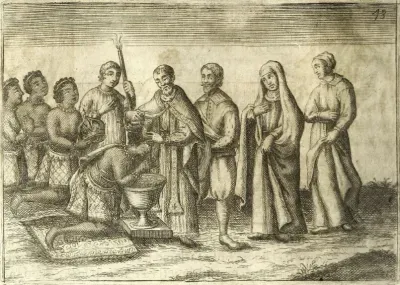
Father Giovanni Antonio Cavazzi
The Italian Capuchin missionary who lived at Nzinga's court from 1658 to 1663, administered her last rites, and wrote one of the primary historical accounts of her life. His Istorica descrizione de' tre regni Congo, Matamba, ed Angola (1687) is the most detailed European source on Nzinga's final years. His illustrations and descriptions shaped how Europe imagined Central Africa for centuries — and his deathbed account of the warrior queen who died clutching a crucifix became one of the most powerful conversion narratives of the Counter-Reformation.
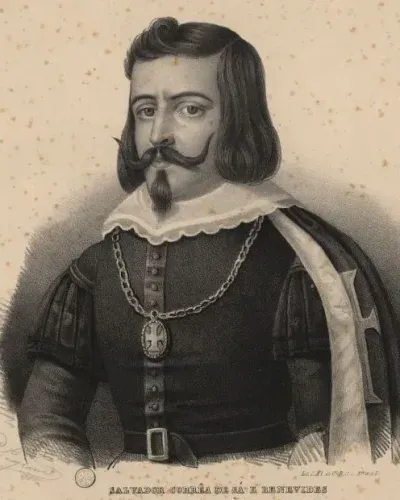
Salvador Correia de Sá
The Portuguese military leader who recaptured Luanda from the Dutch in 1648, destroying Nzinga's most powerful European alliance. Born in Rio de Janeiro, he led a fleet from Brazil that expelled the Dutch and restored Portuguese control over Angola's slave trade. His victory was a devastating blow to Nzinga — it eliminated her Dutch allies and forced her to negotiate from a position of diminished strength. The eventual peace treaty of 1657 was shaped by the military reality he had imposed.
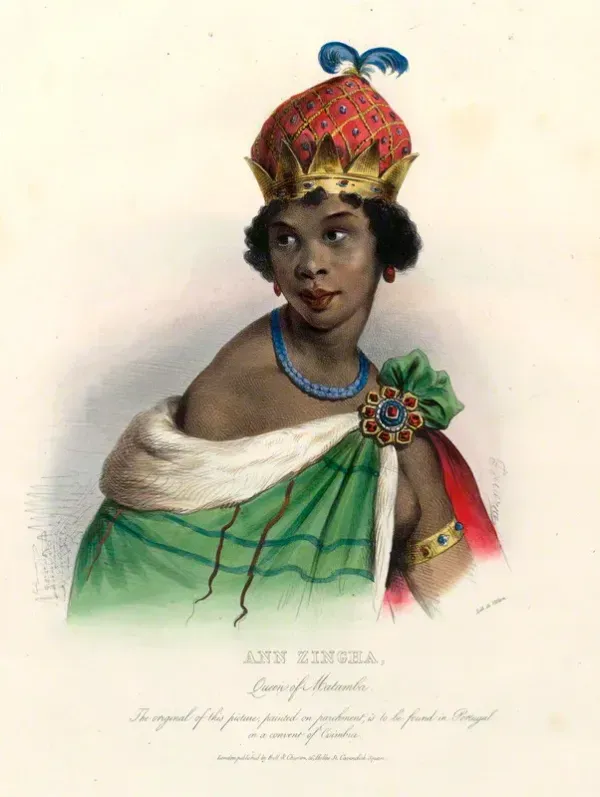
The Legacy of Queen Nzinga
Nzinga Mbandi ruled for nearly four decades, fought the Portuguese Empire to a standstill, played the Dutch and the Kingdom of Kongo against her enemies, conquered a kingdom, built an army, and negotiated her sovereignty in a world that granted none to African rulers. She declared herself a man when it served her power, kept a harem of male concubines dressed as women, appointed female generals, and corresponded directly with the Pope. She was, by any measure, one of the most extraordinary political figures of the seventeenth century.
Today, a bronze statue stands in Kinaxixi Square in Luanda — the capital of the nation her resistance helped to define. Angolan women marry near it. Independence fighters cited her as inspiration. And the guerrilla tactics she pioneered against Portuguese colonialism in the 1600s were studied by the liberation movements that finally produced an independent Angola in 1975. Read her story in her own words — the first-person ePub brings you inside the mind of the warrior queen who would not kneel.
Get the Full Book
Read the story of Queen Nzinga — 8 chapters of historical narrative.
Dramatised first-person narrative; not an autobiography.