
Sundiata Keita
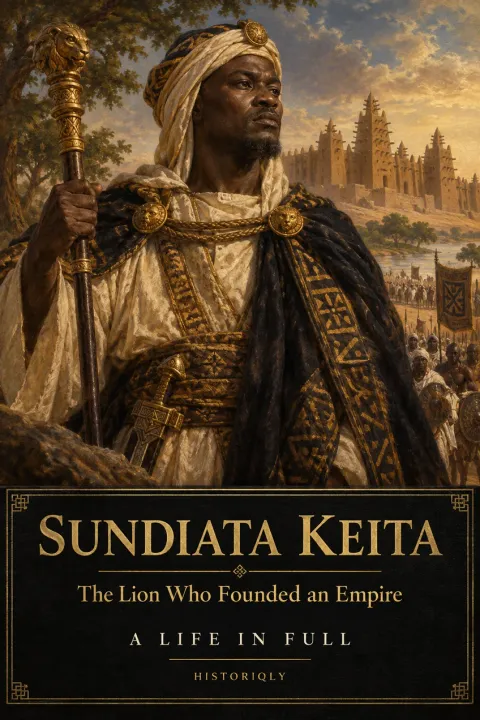
The Lion Who Founded an Empire
Get the full EPUB
Drop your email and the EPUB downloads straight to your device. We'll also ping you when the next chronicle lands — unsubscribe any time.
Your email is already on file — enjoy the read.
Download the EPUBSundiata’s victory over Soumaoro, conventionally dated around 1235, became the founding event of Mali’s imperial history. The epic preserves stories of disability, exile, alliance and return through differing performances. Charter traditions associate his rule with obligations among communities; neither those traditions nor Mali’s later maximum extent should be treated as a complete contemporary record of his reign.
“As long as I breathe, Mali will never be in thrall: rather death than slavery. We will live free because our ancestors lived free.”
c. 1217–1255
Sundiata’s early life and death are known through traditions with differing details. His death is commonly placed around 1255; an exact age, birthplace and drowning location should not be presented as settled.
~10 years
Driven from Niani by his half-brother Dankaran Touman and his mother Sassouma Bérété, Sundiata spent roughly a decade as a wandering prince — passing through the kingdoms of Djedeba, Tabon, Wagadou, and finally Mema. The exile did not break him. It educated him: in statecraft, military tactics, and the art of building alliances across ethnic lines.
1.2M km²
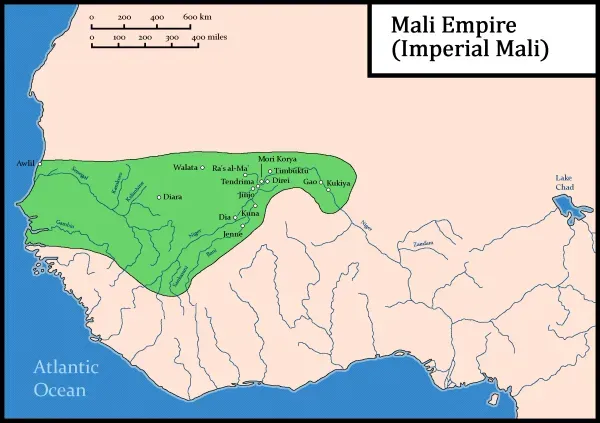
At its height after Sundiata's founding, the Mali Empire covered an estimated 1.2 million square kilometres — encompassing the territory of twelve modern nations, from Senegambia in the west to the Niger Bend in the east, and from the Saharan trade ports of Walata in the north to the forest fringes of what is now Sierra Leone in the south.
Oral tradition
Oral traditions connect the founding of Mali with commitments at Kurukan Fuga. Modern recorded formulations differ. UNESCO recognised the transmitted Manden Charter as intangible heritage in 2009; this does not authenticate a single medieval text of forty-four clauses.
Founder of the Mali Empire, victor at the Battle of Kirina, father of the Manden Charter
Defining Events
The Battle of Kirina
On the plain of Kirina in the Koulikoro region, Sundiata's coalition of Mandinka clans, allied kingdoms, and defected Sosso generals shattered the army of Soumaoro Kanté — the Sorcerer King who had subjugated the Manden. The turning point was an arrow tipped with the spur of a white rooster, the one substance that could break Soumaoro's supernatural protection. When the arrow grazed him, his power collapsed. He fled into the hills of Koulikoro and was never seen again as a force. The Mali Empire was born that afternoon.
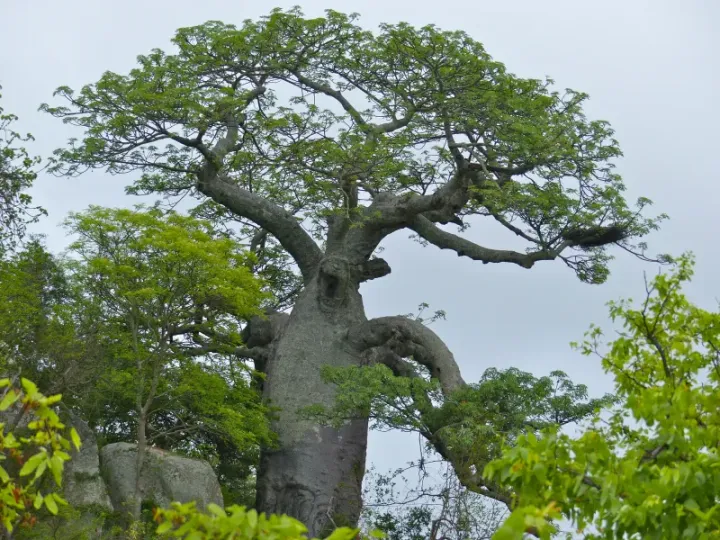
The Miracle of the Baobab
The moment that defined everything that followed: Sundiata, who had not walked in seven years of life, drove an iron rod into the ground — and the iron bent. He seized a great baobab tree — and rose to standing, uprooting the entire tree as he lifted himself from the earth for the first time. He carried the baobab's leaves to his mother's doorway, fulfilling a taunt that had been designed to humiliate her. In Mande cosmology, the rising was not merely physical — it was the revelation of a nyama, a life force so immense it had spent seven years accumulating before it could find its expression.
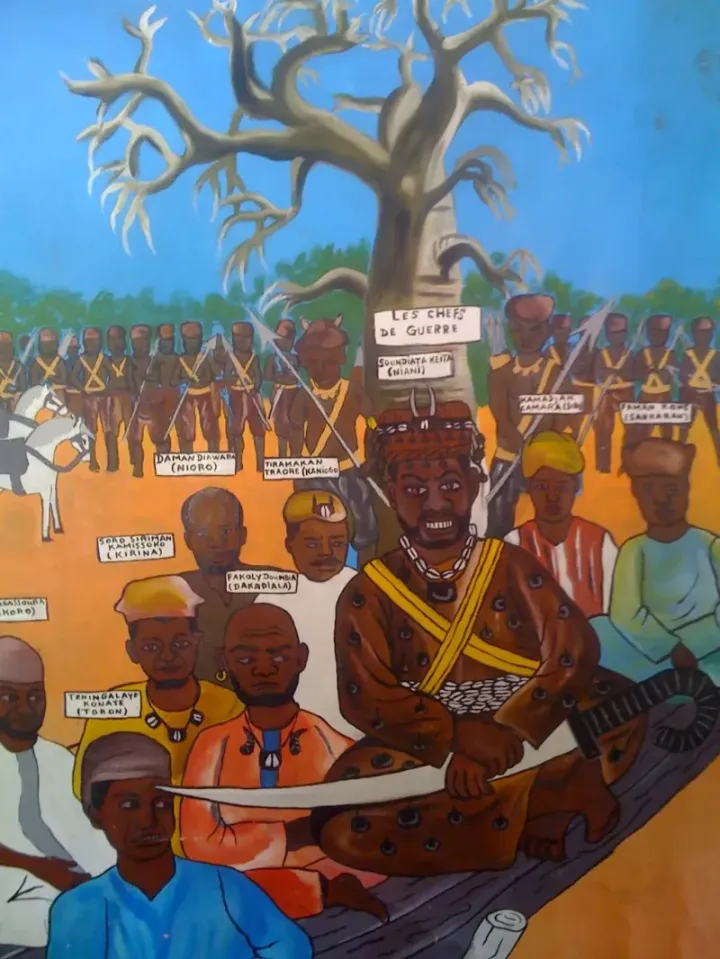
The Manden Charter
The Charter tradition associates Sundiata’s victories with a founding assembly and obligations among communities. It preserves concerns including peace and opposition to slave raiding. Modern formulations and their historical transmission require careful distinction; they cannot be treated as a surviving transcript of a medieval constitutional convention.
Timeline
Born in Niani
Sundiata Keita — born Mari Jata Keita — comes into the world at Niani, the Mandinka capital near the confluence of the Niger and Sankarani rivers. His birth fulfills a prophecy delivered to his father Naré Maghann Konaté by a traveling hunter: that an ugly woman would bear him a son greater than all the kings of the Sudan. His mother Sogolon Condé, already the object of court mockery for her appearance, receives neither celebration nor kindness from the senior wife Sassouma Bérété.
The Lion Rises
After seven years in which Sundiata cannot walk — dragging himself across the compound on his hands while the court mocks his mother — the crisis arrives. Sassouma Bérété taunts Sogolon publicly, noting that her own son fetches baobab leaves while Sogolon's child cannot rise from the ground. Sundiata demands an iron rod from the royal blacksmith Nounfari, bends it in his grip, seizes a great baobab tree, and rises to standing for the first time — uprooting the tree and carrying its leaves to his mother's door. He never crawls again.
The Exile
Following his father's death, Dankaran Touman — Sundiata's half-brother, installed as king by his mother Sassouma — makes life at court intolerable for Sogolon and her children. The family departs Niani in darkness. Over the following decade they pass through Djedeba, where Sundiata outwits a king bribed to kill him; Tabon, where his childhood friend Fran Kamara shelters them and pledges troops; the remnant Ghana Empire at Wagadou; and finally Mema, where Sundiata trains under the general Moussa Tounkara and becomes so distinguished a warrior that the king names him heir.
The Return
A delegation of twelve Mandinka elders travels for months across West Africa searching for the exiled prince. They find Sundiata in Mema, prostrate themselves in the dust, and tell him what Soumaoro Kanté has done to the Manden. Sundiata sits alone through the night — his mother Sogolon Condé has died in exile, and he never saw her again after leaving for the northern garrison where the news reached him. By morning, he gives his answer. Moussa Tounkara provides him with an army, a horse, horses, and his own iron spear. The journey south begins.
Battle of Kirina
On the plain of Kirina, Sundiata's coalition — Mandinka forces, Mema's warriors, Fran Kamara's Tabon fighters, and crucially the defected forces of Fakoli Koroma (Soumaoro's own nephew, whose wife the sorcerer king had abducted) — faces the full Sosso army. Intelligence from Sundiata's sister Nana Triban, who had been sent to Soumaoro's court and discovered his weakness, leads to an arrow tipped with a white cock's spur. The arrow grazes Soumaoro. His power breaks. He flees into the hills. By midday, the plain belongs to Sundiata.
The Manden Charter
Traditions connect Kurukan Fuga with the settlement after Sundiata’s victories. The Charter is preserved through later transmission and modern formulations, not a surviving contemporary document. Its conventional thirteenth-century setting does not predate Magna Carta of 1215.
Kumbi Saleh Falls
Sundiata's forces raze Kumbi Saleh — the former capital of the Ghana Empire that Soumaoro had seized — ending the last symbol of Sosso power and cementing Mali's dominance of the western Sudan. The old Ghana Empire, already diminished to a fraction of its former authority, is absorbed into the new order. Sundiata now controls the goldfields of Bambuk and Buré, the trade routes to the Saharan salt cities, and the great Niger river cities of Timbuktu and Djenné.
Death at the Sankarani
Sundiata Keita dies at approximately age thirty-eight. The oral tradition preserves three accounts: drowning in the Sankarani River near Niani (the most widely accepted, with a shrine called Sundiata-dun — 'Sundiata's deep water' — still visited today); an accidental arrow at a public ceremony (recorded by the French historian Maurice Delafosse); and assassination at a public assembly. Mandinka tradition forbids revealing the burial place of great kings, so uncertainty is itself a sign of respect. He is succeeded by his son Mansa Wali, who expands the empire further.
Key Figures

Sogolon Condé
The woman the griots describe as ugly beyond ordinary comprehension — hunchbacked, with a face associated with the buffalo totem — was the most formidable person in Sundiata's life. She married Naré Maghann Konaté after a prophecy said an ugly woman would bear the greatest king in the Sudan. She endured years of mockery from Sassouma Bérété and raised her children through that mockery into something that mockery could not touch. She survived the exile but not long enough to see the victory: Sogolon Condé died in Mema, far from the Sankarani, before Kirina. Sundiata's name — Sogolon-Jata, the Lion of Sogolon — means she travels with him in every syllable.
Balla Fasséké Kouyaté
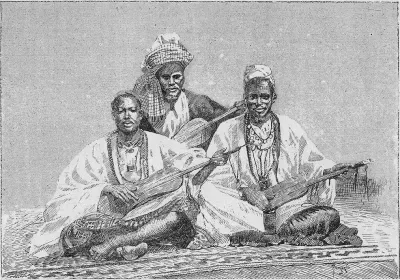
Assigned to Sundiata by his father as his personal jeli — griot, advisor, keeper of memory — Balla Fasséké was seized by Soumaoro Kanté as an act of deliberate humiliation. He spent years at the sorcerer king's court, where he found the fetish chamber, played Soumaoro's sacred balafon without permission, and kept Sundiata's story alive in his memory through every year of the sorcerer's occupation. When he was finally restored to Sundiata, he had not wasted a single day. The Kouyaté dynasty of griots — hereditary keepers of the Keita clan's story — descends from Balla Fasséké and continues to this day. It is his descendant Djeli Mamadou Kouyaté whose telling forms the basis of D.T. Niane's transcription of the Sundiata epic.
The Legacy of Sundiata Keita
Sundiata’s victories became a foundation of Mali’s imperial history and the centre of an enduring epic tradition. Later reigns, including Mansa Musa’s, had achievements of their own. The Charter associated with Kurukan Fuga remains a living transmitted heritage, recognised by UNESCO in 2009. This reconstructed first-person account follows the historical ruler through the traditions that preserve and interpret his life.
Get the Full Book
Read the story of Sundiata Keita — 8 chapters of historical narrative.
Dramatised first-person narrative; not an autobiography.