
Adolf Hitler
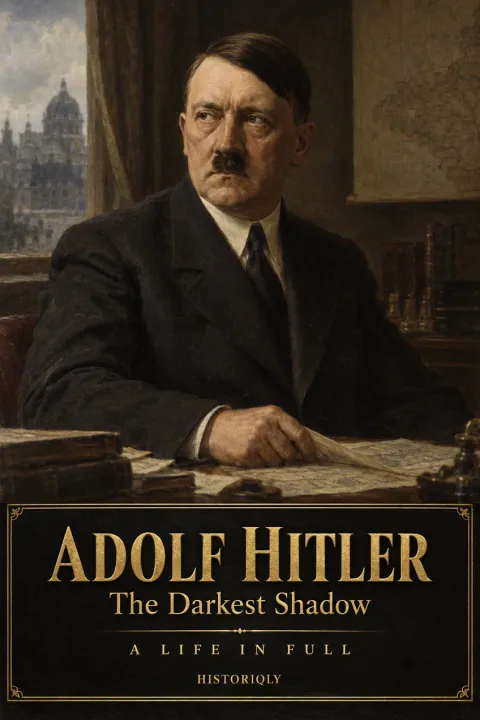
The Darkest Shadow
Get the full EPUB
Drop your email and the EPUB downloads straight to your device. We'll also ping you when the next chronicle lands — unsubscribe any time.
Your email is already on file — enjoy the read.
Download the EPUBOn April 30, 1945, in a concrete bunker beneath the burning ruins of Berlin, Adolf Hitler shot himself. He was fifty-six years old. Behind him lay twelve years of absolute power, a war that killed over seventy million people, and the systematic murder of six million Jews in the Holocaust — the most meticulously documented genocide in human history. No figure of the twentieth century casts a longer shadow. Understanding how a failed Austrian watercolour painter became the architect of industrial-scale atrocity is not an exercise in sympathy — it is a warning that democracies ignore at their peril.
“The great masses of the people will more easily fall victims to a big lie than to a small one.”
1889–1945
Born in Braunau am Inn, Austria-Hungary, to a customs official and his younger wife. Died by suicide in the Führerbunker, Berlin, as Soviet forces closed in. Fifty-six years that left the deepest scar on the modern world.
12
From his appointment as Chancellor on January 30, 1933, to his death on April 30, 1945. In just over a decade, he dismantled the Weimar Republic, launched a world war, and orchestrated the Holocaust.
70M+
World War II, which Hitler instigated, killed an estimated 70–85 million people — approximately 3% of the global population. The Eastern Front alone claimed over 30 million lives.
6 million
Six million Jews murdered in a systematic, industrialised genocide, along with millions of Roma, disabled people, political prisoners, Soviet POWs, and others deemed undesirable by the Nazi regime.
Dictator of Nazi Germany, orchestrator of the Holocaust, instigator of World War II
Defining Events
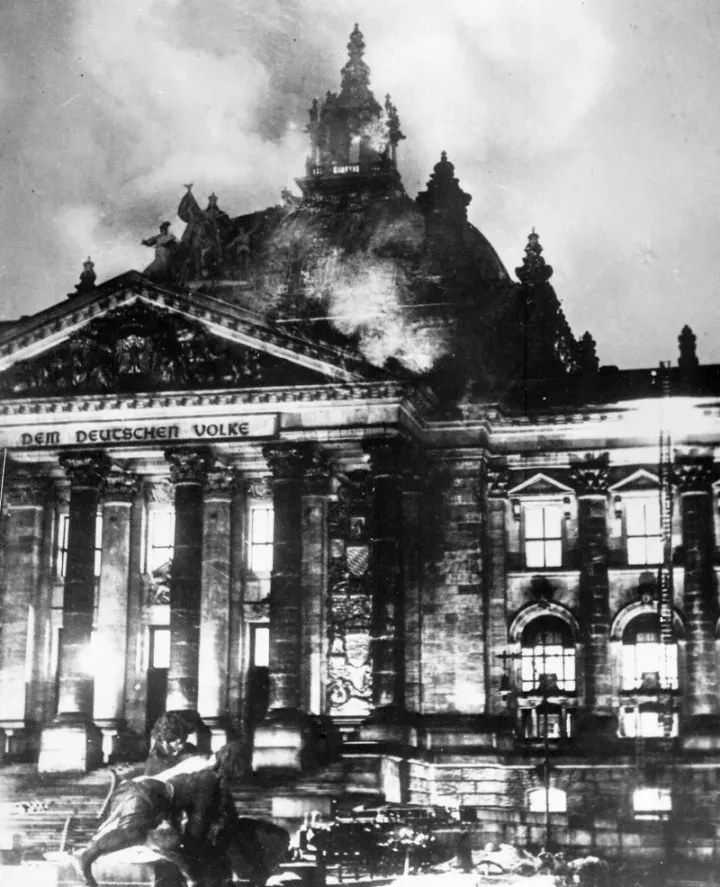
Rise to Power
Hitler’s appointment as Chancellor is followed by emergency decrees, arrests and political violence. The Enabling Act passes under coercive conditions, and independent organizations are suppressed. Formal legal measures and terror work together to destroy the republic; describing the process as simply legal conceals that coercion.
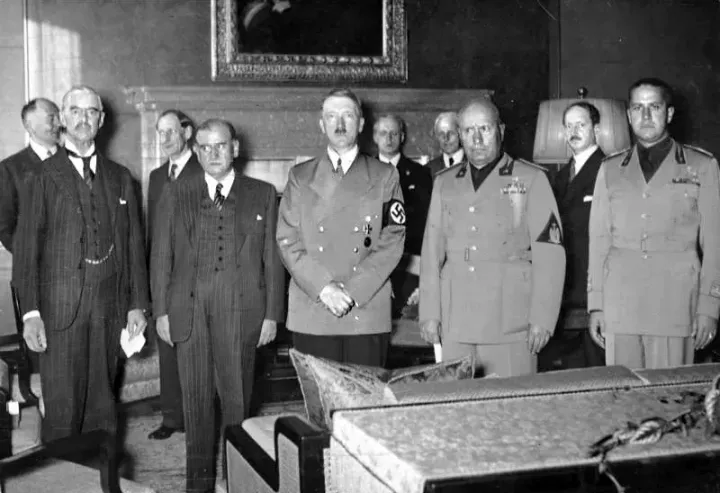
The Munich Agreement
At Munich, the leaders of Britain, France, and Italy ceded the Sudetenland to Germany in exchange for Hitler's promise of "peace for our time." British Prime Minister Neville Chamberlain returned to London waving the signed agreement. Within six months, Hitler had annexed the rest of Czechoslovakia. Within a year, he had invaded Poland and plunged Europe into the deadliest war in human history. Munich became the defining lesson in the failure of appeasement — proof that concessions to expansionist dictators do not prevent war but merely postpone it on worse terms.
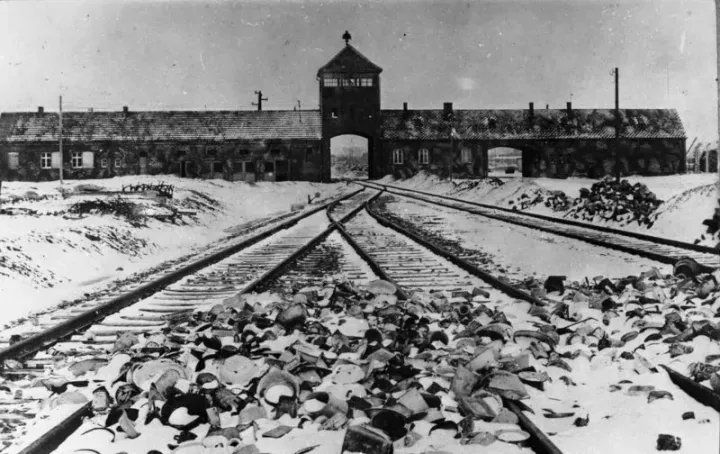
The Holocaust
Nazi persecution escalated into genocide during the war. The January 1942 Wannsee Conference coordinated a murder programme already underway. Six million Jews were killed through mass shootings, killing centres and other forms of persecution; Nazi policies also caused mass death among Roma, disabled people, Soviet prisoners of war and other groups.
Timeline
Born in Braunau am Inn
Born on April 20 in the Austrian border town of Braunau am Inn, the fourth of six children of Alois Hitler, a customs official, and his third wife Klara Pölzl. His father was domineering and short-tempered; his mother gentle and devout. Young Adolf was an unremarkable student who clashed constantly with his father over his refusal to pursue a civil service career.
Vienna Years
Twice rejected by the Vienna Academy of Fine Arts, Hitler drifted through the Austrian capital, living in flophouses and selling postcards of his watercolour paintings. It was in Vienna that he absorbed the virulent antisemitism of politicians like Karl Lueger and the racial pseudoscience of pan-German nationalists — ideas that would form the toxic foundation of his worldview.
World War I
Enlisted in the Bavarian Army with evident enthusiasm. Served as a regimental messenger on the Western Front, was wounded twice, temporarily blinded by a mustard gas attack in October 1918, and was awarded the Iron Cross First Class — an unusual decoration for a corporal. Germany's defeat and the November 1918 armistice shattered him. He would later call it the formative experience of his life.
The Beer Hall Putsch
Hitler’s attempted coup in Munich on November 8–9 fails. He is tried and imprisoned, then uses the trial and his writing to promote his politics. Mein Kampf combines autobiographical claims with antisemitism and expansionist ideology; it is propaganda rather than a neutral record of his early life.
Appointed Chancellor
After years of electoral gains fuelled by the Great Depression, Hindenburg appointed Hitler Chancellor on January 30. Conservative elites believed they could control him. They were catastrophically wrong. Within eighteen months, Hitler had banned all other political parties, purged his own movement in the Night of the Long Knives, and declared himself Führer after Hindenburg’s death.
The Nuremberg Laws
The Nuremberg Laws stripped Jews of German citizenship and banned marriages between Jews and non-Jews. They were the legal architecture of persecution — the bureaucratic scaffolding on which the Holocaust would be built. Thousands of Jewish professionals, academics, and artists were expelled from public life. Among them was Albert Einstein, who had already fled Germany in 1933.
Anschluss and Kristallnacht
In March, Germany annexed Austria in the Anschluss, fulfilling a long-standing pan-German ambition. In November, the regime orchestrated Kristallnacht — a nationwide pogrom in which over 1,400 synagogues were destroyed, 30,000 Jewish men were sent to concentration camps, and nearly 100 Jews were murdered. The international community condemned it. The international community did nothing.
Invasion of Poland
On September 1, the Wehrmacht invaded Poland, triggering declarations of war from Britain and France. World War II had begun. Within weeks, Poland was overrun. A secret protocol in the Molotov–Ribbentrop Pact with Stalin divided Eastern Europe between Germany and the Soviet Union — a cynical alliance between two totalitarian regimes that neither intended to honour.
Key Figures
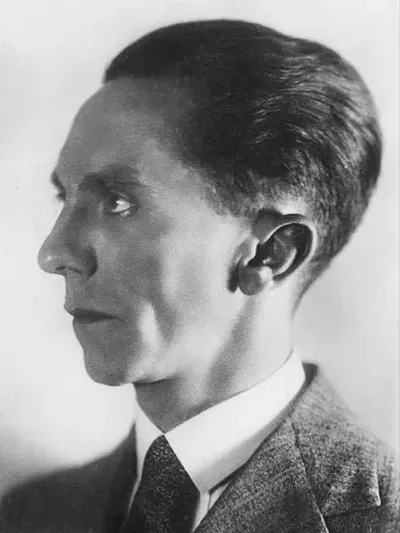
Joseph Goebbels
Hitler's most devoted follower and the architect of the Nazi propaganda machine. A failed novelist with a PhD in literature, Goebbels controlled Germany's press, radio, cinema, and public messaging with ruthless efficiency. His skill at manufacturing consent and demonising enemies made the regime's crimes possible on a mass scale. He remained with Hitler to the end — poisoning his six children and killing himself and his wife in the bunker on May 1, 1945, one day after Hitler’s suicide.
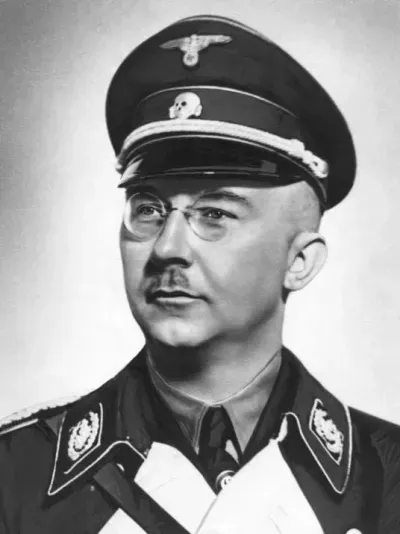
Heinrich Himmler
The bureaucrat of genocide. As Reichsführer-SS, Himmler oversaw the concentration camp system, the Einsatzgruppen death squads, and the administrative machinery of the Holocaust. A former chicken farmer with an obsession for racial pseudoscience and Germanic mysticism, he transformed the SS from Hitler's personal bodyguard into a state within a state. He attempted to negotiate secretly with the Allies in the war's final weeks, was captured, and killed himself with a cyanide capsule on May 23, 1945.
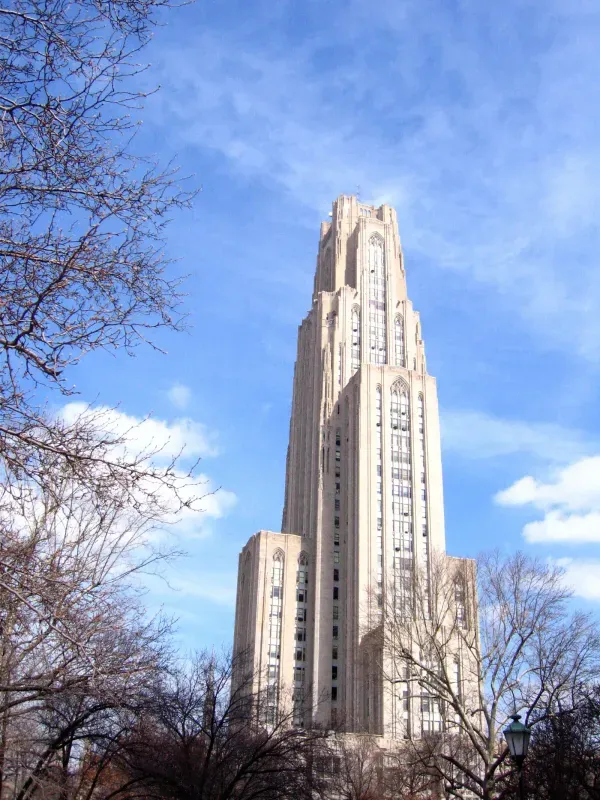
The Legacy of Adolf Hitler
Hitler's legacy is measured in graves. The war he started killed over seventy million people. The genocide he ordered murdered six million Jews and millions more. The ideology he championed — racial supremacy, violent nationalism, the cult of the leader — did not die with him in that Berlin bunker. It persists in diminished but dangerous forms wherever democratic norms are weakened, scapegoats are manufactured, and institutions of accountability are dismantled.
Understanding Hitler is not about granting him complexity or sympathy. It is about recognising the conditions — economic despair, institutional failure, compliant elites, and a public willing to trade liberty for certainty — that allowed one mediocre man to become the most destructive force in modern history. Read his story not to understand him, but to recognise the warning signs.
Get the Full Book
Read the story of Adolf Hitler — 8 chapters of historical narrative.
Dramatised first-person narrative; not an autobiography.