
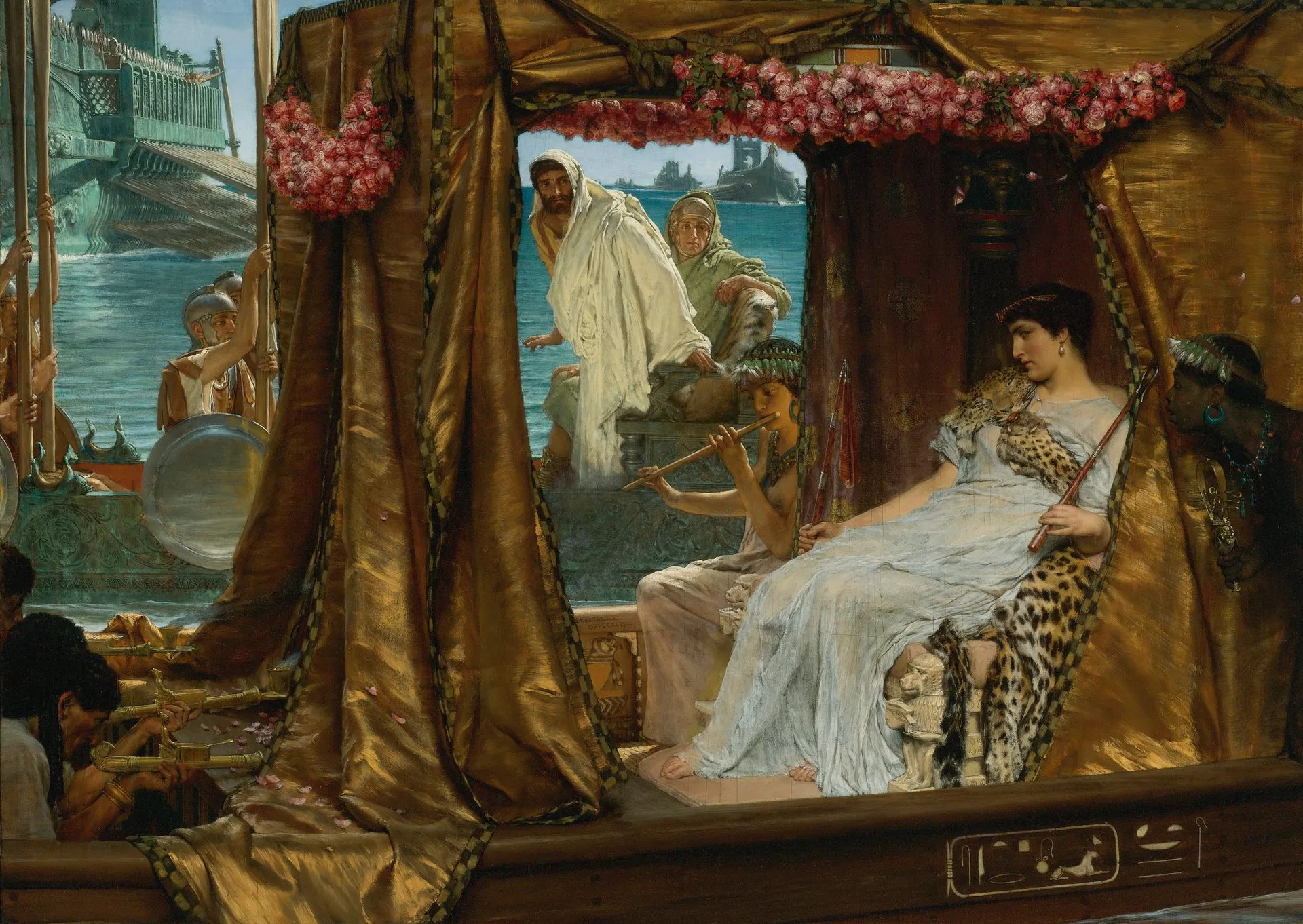
Cleopatra
The Last Pharaoh
For two thousand years, Rome told Cleopatra's story — and Rome lied. She was not a seductress who slept her way to power. She was the most capable monarch in the Mediterranean: a polyglot who spoke nine languages without an interpreter, a diplomat who outmanoeuvred the Roman Senate for two decades, a naval commander, an economist who reformed Egypt's currency, and a ruler who kept her kingdom independent while every other state in the ancient world bent the knee to Rome. That she ultimately lost does not diminish what she was. It only reveals how much was stacked against her.
Egypt
Last pharaoh of Egypt, polyglot, political strategist, lover of Caesar and Antony
69–30 BC
Born into the Ptolemaic dynasty — a Greek family that had ruled Egypt since Alexander the Great's general claimed the throne. Died by her own hand rather than be paraded in chains through Rome. Thirty-nine years that ended three millennia of pharaonic civilization.
9
Egyptian, Greek, Hebrew, Aramaic, Syriac, Median, Parthian, Ethiopian, and Troglodyte. She was the first Ptolemaic ruler in nearly three hundred years to bother learning Egyptian — and her subjects loved her for it.
21
From 51 BC to 30 BC, Cleopatra held the throne through civil war, foreign invasion, famine, plague, and the assassination of her most powerful ally. No other Ptolemaic ruler lasted as long under comparable pressure.
Ptolemaic
Founded by Ptolemy I, one of Alexander the Great's generals, in 305 BC. By Cleopatra's time, the dynasty had ruled Egypt for 275 years — longer than the United States has existed. She was its last sovereign.
I will not be triumphed over.
Defining Events
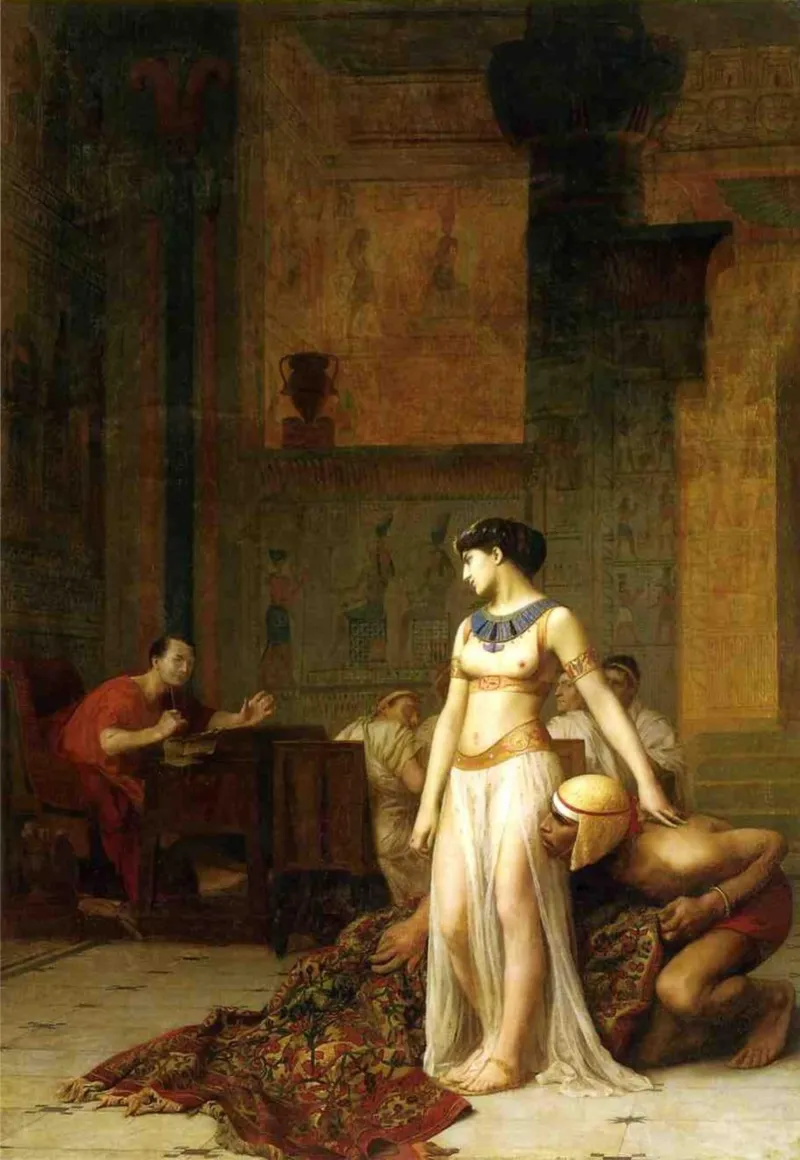
The Carpet Introduction
With her brother Ptolemy XIII controlling Alexandria and his soldiers hunting her, Cleopatra needed to reach Julius Caesar — the most powerful man in the world, who had just arrived in Egypt pursuing Pompey. She could not walk through the palace gates. So she had herself wrapped in a linen sack (later romanticised as a carpet) and smuggled past enemy lines into Caesar's private quarters. She was twenty-one years old. Within hours, she had secured the alliance that would restore her throne. It was not seduction — it was strategy. Caesar needed Egypt's grain. Cleopatra needed Rome's legions. They both got what they wanted.
The Golden Barge at Tarsus
When Mark Antony summoned Cleopatra to the city of Tarsus to explain her loyalties during the recent civil war, she did not come as a supplicant. She arrived on a golden barge with purple sails, silver oars keeping time to the music of flutes and harps, while she reclined beneath a gilded canopy dressed as Aphrodite. The scent of perfume drifted across the water to the crowds lining the harbour. Antony, who had prepared a formal banquet, found himself abandoned — the entire city had gone to the waterfront to see the queen. It was the most theatrical diplomatic entrance in ancient history, and it worked. By the end of the evening, Antony was at her table, not she at his.
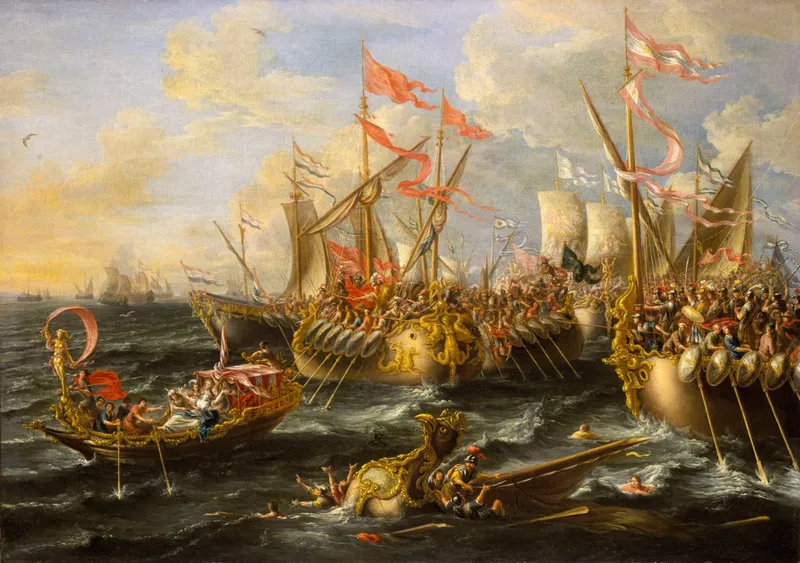
The Battle of Actium
The naval battle that decided the fate of the ancient world. Cleopatra and Antony's combined fleet of five hundred warships met Octavian's forces off the western coast of Greece. But the campaign had already been lost — desertion, disease, and betrayal had gutted their forces before the fighting began. Antony's Roman allies defected one by one. When Cleopatra broke through the blockade with sixty Egyptian ships, Antony abandoned his fleet to follow her. The remaining ships surrendered. Within a year, both would be dead, and Egypt would be a Roman province.
Timeline
Born in Alexandria
Born into the Ptolemaic dynasty, a Macedonian Greek family that had ruled Egypt since Alexander the Great's general Ptolemy I claimed the throne in 305 BC. She grew up in the Mouseion — the great library and research complex of Alexandria — surrounded by scholars, philosophers, and the accumulated knowledge of the ancient world.
Becomes Co-Ruler
Took the throne at eighteen alongside her ten-year-old brother Ptolemy XIII, as was Ptolemaic custom. Within two years, his regents — led by the eunuch Pothinus and the general Achillas — drove her into exile. She fled to the Syrian border and raised an army. She was twenty years old, without allies, and she refused to accept defeat.
Alliance with Caesar
Smuggled herself past her brother's army into the royal palace to meet Julius Caesar. He was fifty-two, the most powerful man alive, and in need of Egypt's wealth to fund his wars. She was twenty-one and in need of Rome's legions to reclaim her throne. The alliance was political before it was personal — and it was devastatingly effective. Caesar's soldiers defeated Ptolemy XIII, who drowned in the Nile.
Birth of Caesarion
Gave birth to Ptolemy XV Caesar — 'Little Caesar' — the only known biological son of Julius Caesar. The child was heir to both Egypt and, Cleopatra hoped, to Rome. Caesar never publicly acknowledged him, but he never denied him either. Caesarion's existence was a political bomb waiting to detonate.
Caesar Assassinated
Cleopatra was in Rome, living in Caesar's villa across the Tiber, when he was murdered on the Ides of March. She had been there for nearly two years — scandalising the Senate, receiving Roman nobles, and waiting for Caesar to formally recognise Caesarion. His death erased her plans overnight. She fled Rome with her son within weeks and sailed back to Alexandria to rebuild from nothing.
Alliance with Antony
Formed a political and romantic alliance with Mark Antony, who controlled Rome's eastern territories. Together, they ruled the eastern Mediterranean — Egypt's wealth funding Antony's armies, Antony's legions protecting Egypt's borders. They had three children. Antony formally acknowledged Caesarion as Caesar's son and heir. It was everything Octavian feared.
Defeat at Actium
Their combined fleet was destroyed by Octavian's forces at the Battle of Actium. Allies deserted. The dream of an independent eastern empire, ruled jointly from Rome and Alexandria, died on the water. Cleopatra and Antony retreated to Egypt to wait for the end they both knew was coming.
Death in Alexandria
Rather than be paraded in chains through Rome in Octavian's triumph — the ultimate humiliation for a defeated monarch — Cleopatra took her own life. The method is traditionally said to be an asp, but the truth is unknown. Octavian had Caesarion hunted down and executed. Egypt became a Roman province. Three thousand years of pharaonic civilization ended in a single afternoon.
Key Figures
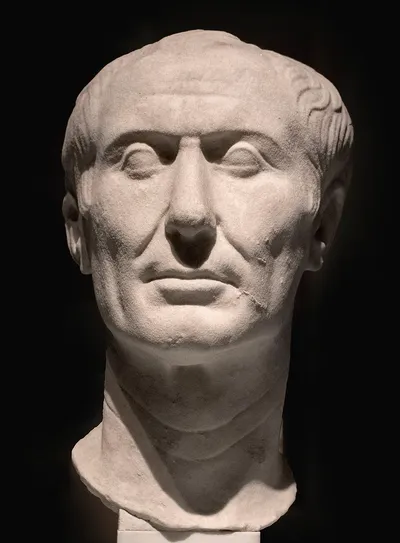
Julius Caesar
Rome's most powerful man became Cleopatra's protector, lover, and the father of her son Caesarion. Their alliance was forged in mutual need — he wanted Egypt's grain and gold, she wanted Rome's legions — but the relationship became something more. Caesar placed a golden statue of Cleopatra in the Temple of Venus Genetrix, the most provocative gesture a Roman could make. His assassination in 44 BC shattered everything. Cleopatra lost not just an ally but the only Roman powerful enough to protect Egypt from Rome itself.
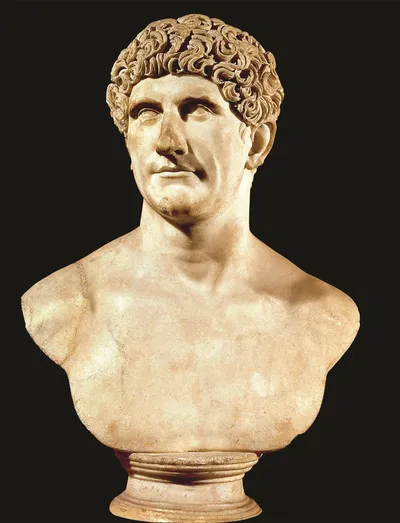
Mark Antony
The Roman general who controlled the eastern Mediterranean became Cleopatra's partner for eleven years, father of three of her children, and co-architect of the most ambitious political experiment in the ancient world: an independent eastern empire ruled jointly from Rome and Alexandria. Where Caesar had been brilliant but cold, Antony was warm, impulsive, and brave — a soldier's general who inspired devotion the way Caesar inspired awe. Together they staged the Donations of Alexandria, proclaimed their children rulers of half the known world, and challenged Octavian for supremacy. His defeat at Actium and his death in Cleopatra's arms ended everything.
The Real Question
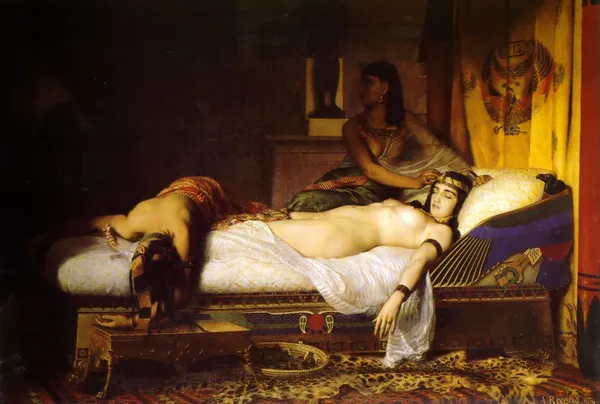
Cleopatra's death ended the longest-running civilisation in human history. Egypt had endured for three thousand years — from the construction of the pyramids to the founding of the Library of Alexandria — and it ended with her. The pharaonic line that had survived invasion by Persians, Greeks, and Nubians could not survive Rome.
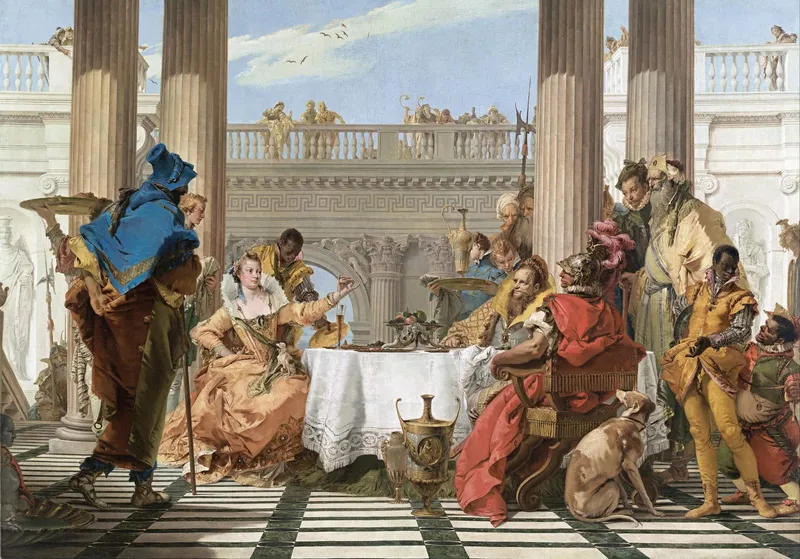
But Octavian could conquer the country without conquering the story. Two millennia later, every child knows her name. She has been a play by Shakespeare, a painting by Tiepolo, an opera by Handel, a film by Mankiewicz. She is the most famous woman in ancient history — and the most misrepresented. She was not merely a queen. She was the last pharaoh, a polyglot, a strategist, and a ruler who held the most powerful empire on earth at bay for twenty-one years. She was enough. Read her story in her own words in the first-person ePub.
Get the Full First-Person Biography
Read Cleopatra's story told in their own voice — 8 chapters of cinematic, first-person narrative.