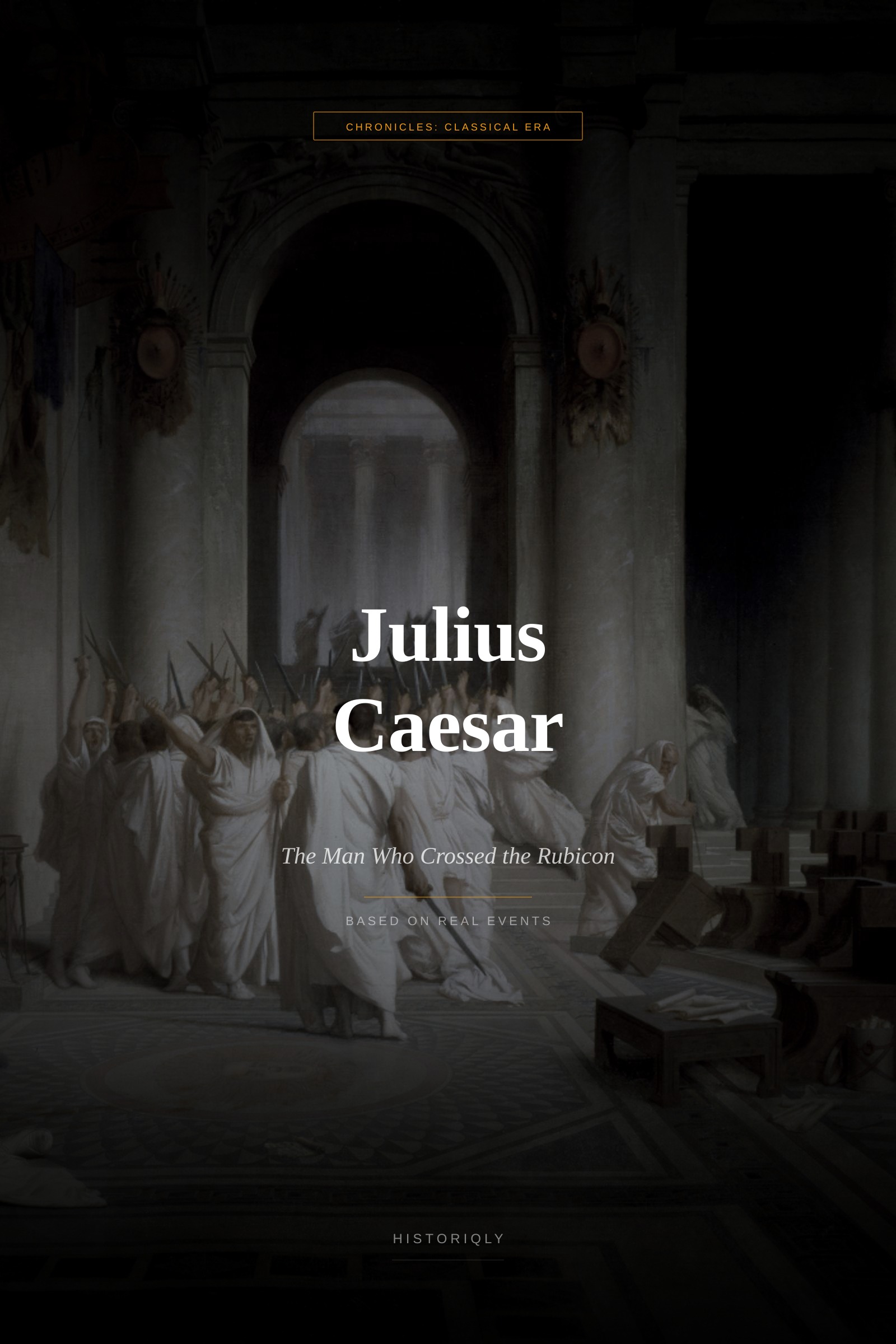
Julius Caesar
The Man Who Crossed the Rubicon
On January 10, 49 BC, Gaius Julius Caesar stood on the southern bank of a shallow river called the Rubicon. Behind him: eight years of conquest, a battle-hardened army, and the kind of fame that makes senators nervous. Ahead: civil war, absolute power, and twenty-three stab wounds on the floor of the Senate. No single figure in Western history bridges the gap between republic and empire quite like Caesar — a man who was simultaneously Rome's greatest champion and the architect of its transformation into something its founders would not have recognised.
Rome
Roman dictator, military genius, political reformer, conqueror of Gaul
100–44 BC
Born into the ancient but impoverished Julii family in the Subura, one of Rome's roughest neighbourhoods. Murdered on the Ides of March at the height of his power. Fifty-six years that reshaped the Western world.
8 years
From 58 to 50 BC, Caesar waged relentless war across modern France, Belgium, and parts of Germany — the largest territorial conquest in Roman history.
300+
An estimated one million Gauls killed, another million enslaved. Three hundred tribes brought under Roman rule. The numbers are Caesar's own — and even his enemies did not dispute them.
23
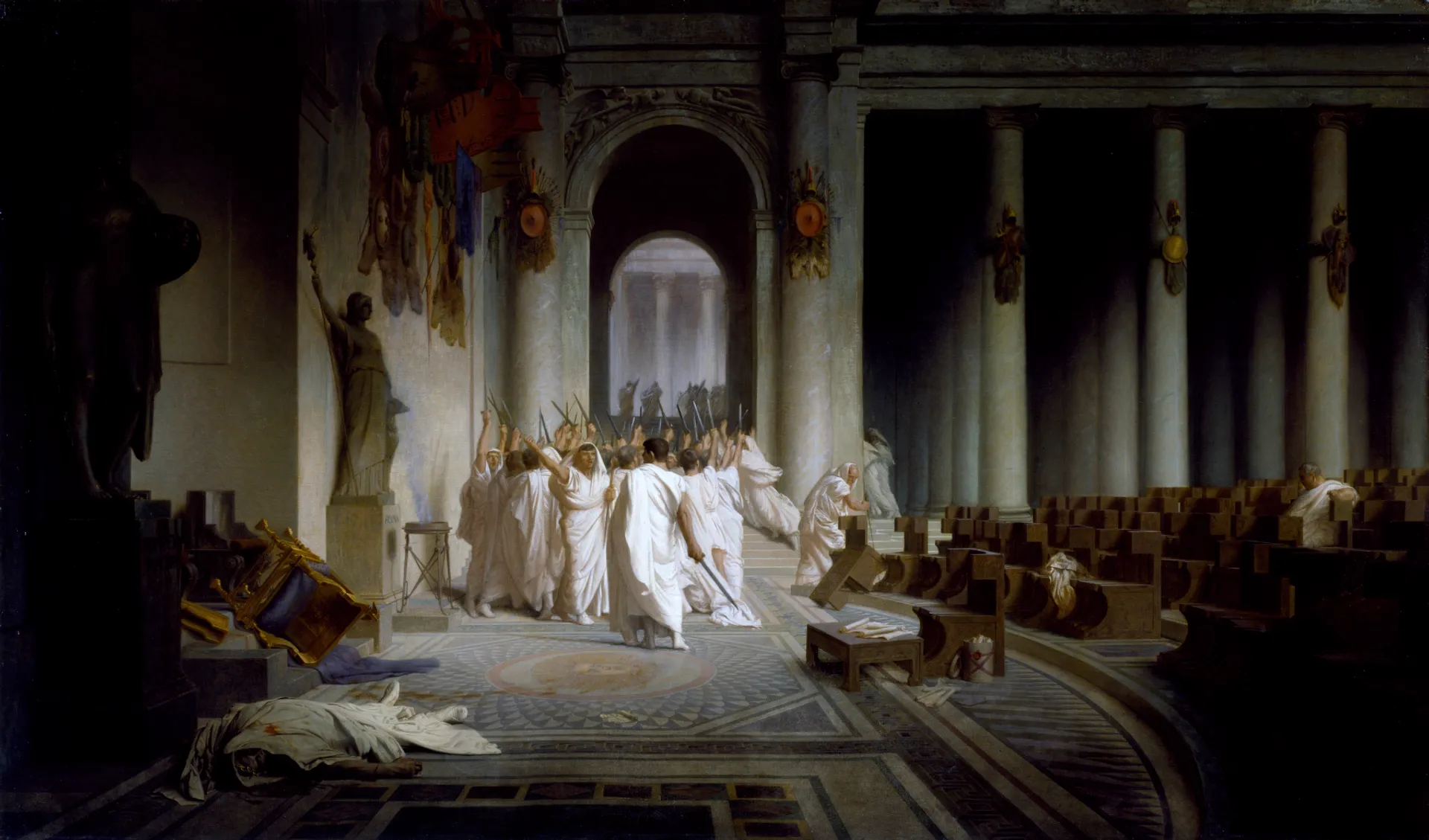
On March 15, 44 BC, a conspiracy of sixty senators attacked Caesar with daggers on the floor of the Senate. Twenty-three blows landed. Only one was fatal.
Veni, vidi, vici.
Defining Events
The Gallic Wars
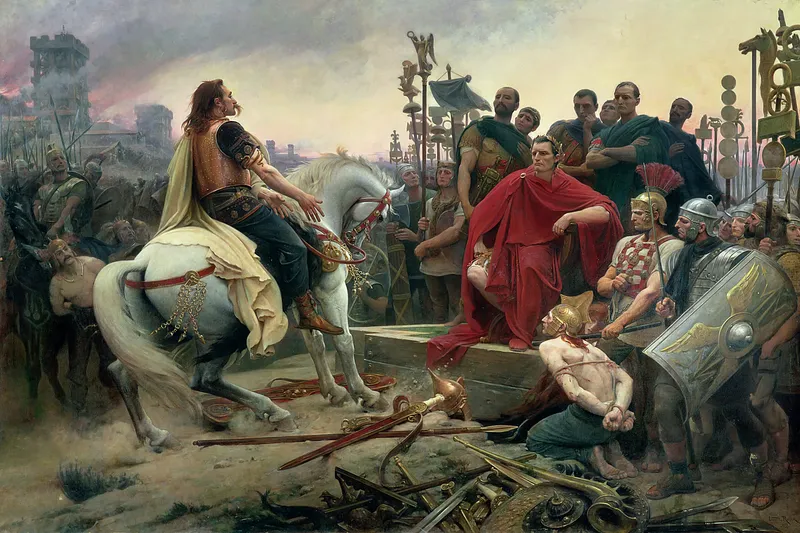
In eight years of relentless campaigning, Caesar conquered all of Gaul — modern France, Belgium, and parts of Germany — defeated the brilliant Vercingetorix at the siege of Alesia, and extended Roman territory to the Atlantic. His legions bridged the Rhine, invaded Britain twice, and fought in conditions that ranged from the forests of Germania to the marshes of Brittany. His own account of the war, Commentarii de Bello Gallico, remains one of the great works of military literature — part campaign diary, part political propaganda, written in the third person with a clarity and economy that Latin students still study two thousand years later.
Crossing the Rubicon
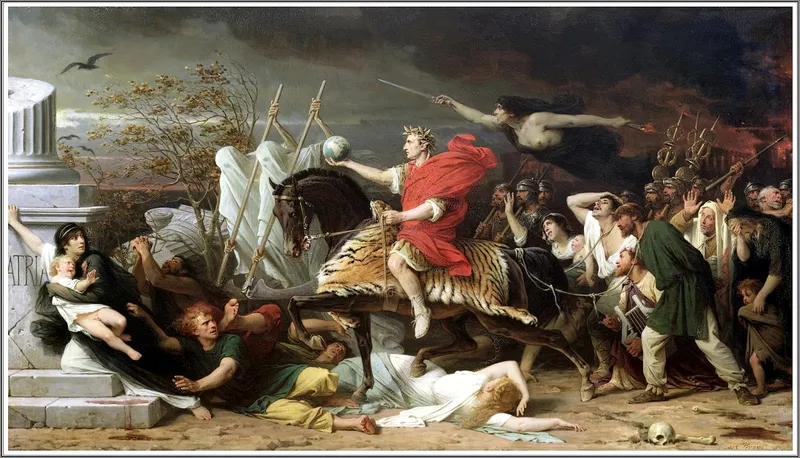
When the Senate ordered Caesar to disband his legions and return to Rome as a private citizen — where his enemies waited to prosecute him — he made the decision that ended the Roman Republic. On January 10, he marched the Thirteenth Legion across the Rubicon river into Italy, an act of treason punishable by death. "Alea iacta est" — the die is cast — became one of history's most famous phrases, and "crossing the Rubicon" entered every language as a metaphor for the point of no return. Within weeks, Pompey and most of the Senate had fled Rome. Within months, Caesar controlled Italy without a battle.
The Julian Calendar
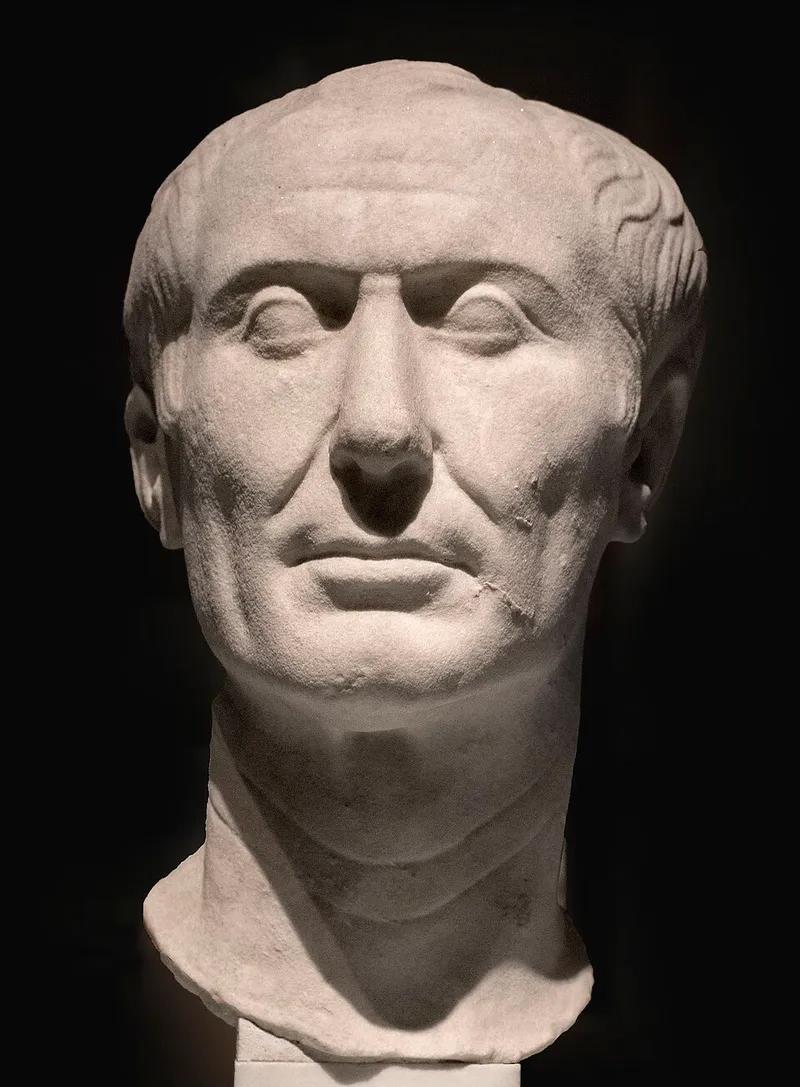
Rome's old lunar calendar had drifted so far from the solar year that winter festivals fell in autumn and harvest celebrations in summer. Caesar, advised by the Alexandrian astronomer Sosigenes, imposed a radical reform: a solar calendar of 365 days with a leap year every four years. To realign the calendar, 46 BC was extended to 445 days — the Romans called it "the last year of confusion." The Julian Calendar remained the standard across Europe for over 1,600 years and forms the basis of the Gregorian calendar still used today. July bears his name.
Timeline
Born in the Subura
Born into the ancient but impoverished Julii family in one of Rome's rougher neighbourhoods. His family claimed descent from Venus through Aeneas — a genealogy that was politically useful and almost certainly fictional. His father was a minor senator. His mother, Aurelia, was formidable.
Defied Sulla
The dictator Sulla ordered young Caesar to divorce his wife Cornelia, daughter of Sulla's enemy Cinna. He refused — one of the few men in Rome brave or foolish enough to defy Sulla to his face. He was stripped of his inheritance and went into hiding. Sulla's allies argued for mercy: 'In that boy, I see many a Marius,' Sulla reportedly said.
Captured by Pirates
Kidnapped by Cilician pirates while crossing the Aegean. They set his ransom at twenty talents of gold. Caesar laughed and told them to ask for fifty — he was worth more than twenty. During his captivity, he joked that he would return and crucify them all. After his ransom was paid, he raised a fleet, hunted the pirates down, and did exactly that.
The First Triumvirate
Formed a secret three-way alliance with Pompey the Great — Rome's most celebrated general — and Crassus, the richest man in the Republic. Together, they controlled the Senate, the armies, and the treasury. It was not a government. It was a conspiracy of three men who were too powerful for the Republic to contain.
Conquest of Gaul
Eight years of war that conquered modern France, crossed the Rhine into Germania, and invaded Britain. An estimated one million Gauls killed, another million enslaved. Caesar built a military reputation that rivalled Pompey's and an army more loyal to him than to Rome — which was precisely what the Senate feared.
Civil War Begins
Crossed the Rubicon with the Thirteenth Legion, triggering a four-year civil war against Pompey and the Senate. Pompey fled to Greece. Caesar pursued him, defeated him at Pharsalus, and chased him to Egypt — where he arrived three days too late. Pompey had been murdered on the beach by Egyptian courtiers seeking Caesar's favour.
Egypt and Cleopatra
Arrived in Alexandria pursuing Pompey and found himself in the middle of an Egyptian civil war. Cleopatra, ousted by her brother Ptolemy XIII, smuggled herself into Caesar's quarters — reportedly in a linen sack. Caesar restored her to the throne, fathered her son Caesarion, and spent months on the Nile while Rome waited.
Assassination
Named dictator perpetuo — dictator in perpetuity — Caesar had accumulated more power than any Roman in history. On March 15, sixty senators led by Brutus and Cassius attacked him with daggers in the Theatre of Pompey. Twenty-three wounds. One fatal. His death did not save the Republic — it destroyed it, and set the stage for the Empire.
Key Figures
Pompey the Great
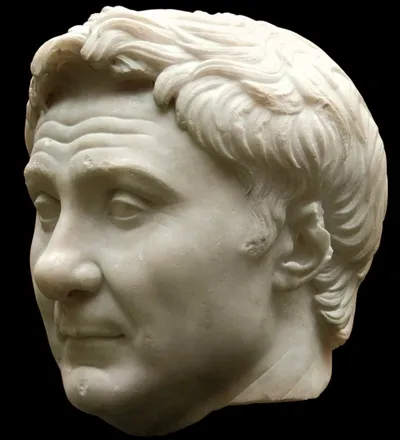
Rome's most celebrated general before Caesar, conqueror of the East, and for a time Caesar's son-in-law — he married Caesar's daughter Julia. Their alliance held Rome together; her death in 54 BC broke it apart. Pompey drifted toward the Senate; Caesar drifted toward war. At Pharsalus in 48 BC, Caesar shattered Pompey's army. Pompey fled to Egypt and was murdered on the beach as he stepped ashore — killed by men who hoped to buy Caesar's favour with his rival's head. Caesar wept when they brought it to him.
Cleopatra VII
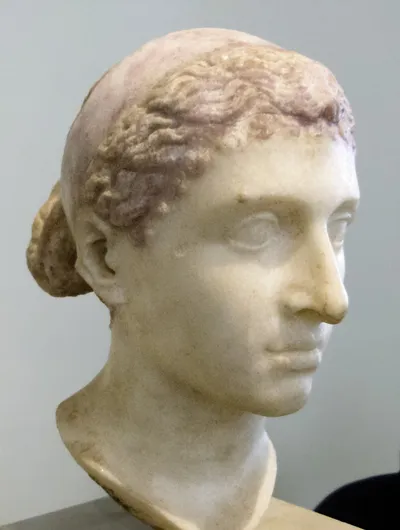
The last pharaoh of Egypt, a polyglot who spoke nine languages, and Caesar's lover during the final years of his life. She bore him his only known biological son, Caesarion, and followed him to Rome, where she lived in his villa across the Tiber and scandalised the Senate. After Caesar's assassination, she allied with Mark Antony in a doomed bid to preserve Egyptian independence — a bid that ended with her death and the annexation of Egypt as a Roman province.
The Real Question
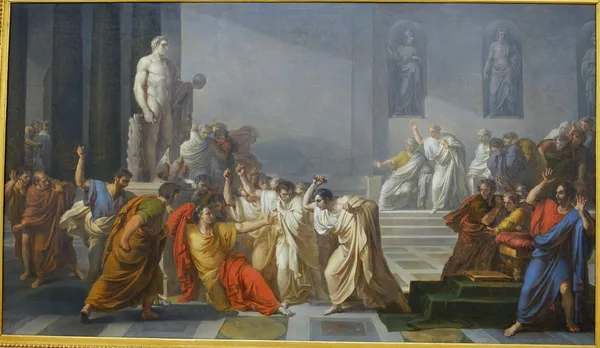
Caesar's assassination did not save the Republic — it destroyed it. The civil wars that followed his death lasted another seventeen years and consumed the last generation of republican Romans. His adopted heir Octavian became Augustus, the first Emperor, and every subsequent ruler took Caesar's name as a title: Kaiser in German, Tsar in Russian. The month of July bears his name. The calendar he reformed still organises our year. And "crossing the Rubicon" remains, twenty centuries later, the universal metaphor for a decision from which there is no turning back.
He was a general who never lost a battle. A writer whose prose is still studied. A politician who outmanoeuvred every rival. And a man who believed, with the absolute conviction of genius, that Rome's future required the end of its past. Whether he was right is a question that two thousand years have not settled. Read his story in his own words — the first-person ePub brings you inside Caesar's mind.
Get the Full Book — Free
Read Julius Caesar's story told in their own voice — 8 chapters of cinematic, first-person narrative.
Get Free EPUB