
Joshua ben Perachiah

The Teacher Who Judged All Men Charitably
Get the full EPUB
Drop your email and the EPUB downloads straight to your device. We'll also ping you when the next chronicle lands — unsubscribe any time.
Your email is already on file — enjoy the read.
Download the EPUBJoshua ben Perachiah is remembered above all through his teaching in Pirkei Avot 1:6: find a teacher, acquire a companion and judge others favourably. Later rabbinic texts place him among the Zugot and tell of exile in Alexandria. These traditions offer a moral portrait, not a continuous contemporary biography.
“Provide thyself with a teacher; get thee a companion; and judge all men charitably.”
Dates uncertain
Joshua belongs to the early rabbinic chain of tradition. The dates of his birth, return from exile and death are not securely established.
2nd of 5
The Zugot ('pairs') were five successive duumvirates of scholars who led the Sanhedrin from c. 170 BC to 30 BC. Joshua served as Nasi (president) alongside Nittai of Arbela as Av Beit Din (chief justice) — the second link in the chain of oral tradition from Sinai to the Mishnah.
Exile tradition
Josephus describes hundreds of captives executed under Jannaeus following civil war. Joshua’s flight to Alexandria belongs to later rabbinic tradition; the sources do not establish that every victim was a noncombatant scholar or that Joshua personally witnessed the massacre.
1:6
Joshua's ethical maxim is recorded in Pirkei Avot (Ethics of the Fathers) chapter 1, mishnah 6 — one of the most widely studied texts in Jewish literature. His three-part teaching on mentorship, companionship, and charitable judgement became a cornerstone of rabbinic ethics.
Nasi of the Sanhedrin, second of the Zugot, author of one of the most famous ethical maxims in Jewish tradition, survivor of Alexander Jannaeus's persecution
Defining Events
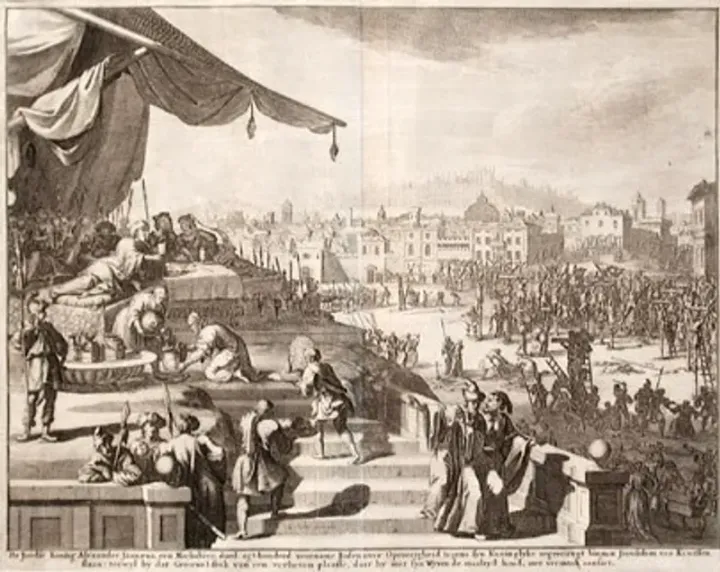
The Persecution and Flight to Alexandria
Later rabbinic tradition places Joshua in exile at Alexandria during persecution under Yannai. Josephus independently describes civil war and executions; the two sources do not supply a single secure itinerary of Joshua’s escape.
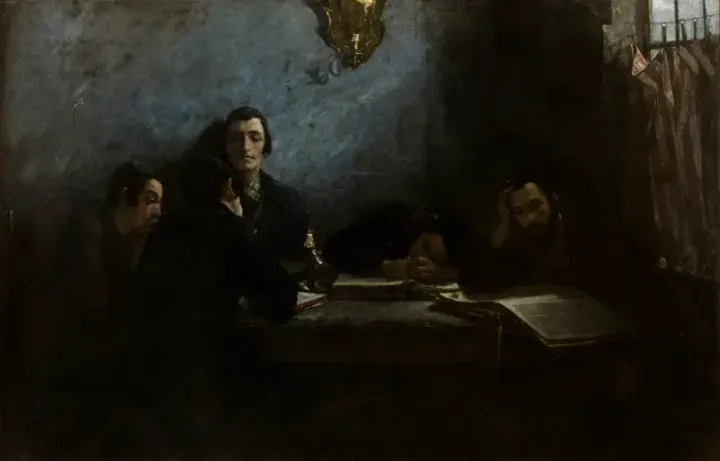
The Teaching at Pirkei Avot
Joshua's three-part ethical maxim — "Provide thyself with a teacher; get thee a companion; and judge all men charitably" — is recorded in Pirkei Avot 1:6 and became one of the most influential teachings in Jewish ethics. The maxim encapsulates the entire Pharisaic programme: learning requires humility (find a teacher), wisdom grows through dialogue (acquire a friend), and justice demands generosity of spirit (judge favourably). It was the antithesis of the Sadducean aristocracy that allied with kings.
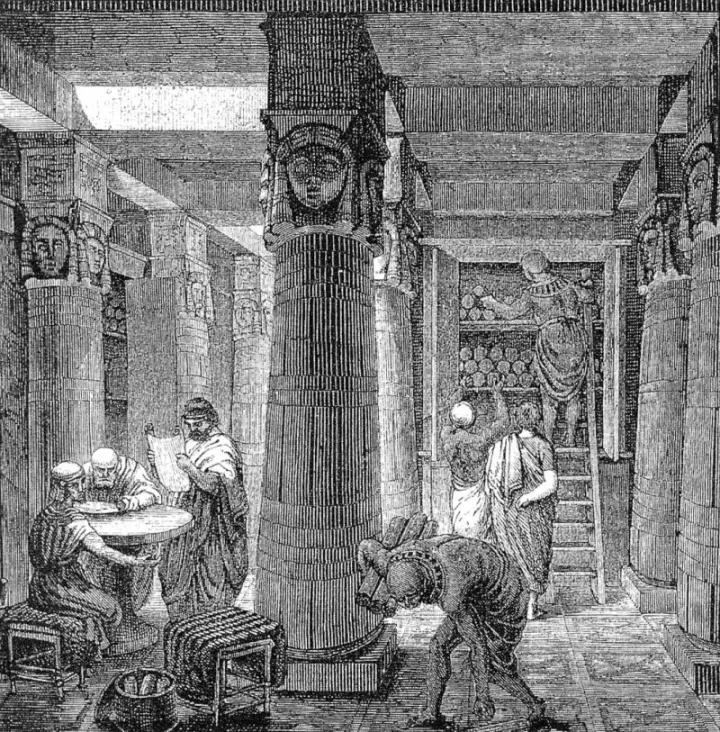
The Return to Jerusalem
Sanhedrin 107b tells of Shimon ben Shetach inviting Joshua back when peace returned under Yannai. This later tradition should not be dated automatically to Salome Alexandra’s accession in 76 BC.
Timeline
Born in Judea
Joshua ben Perachiah was born during the reign of the Hasmonean dynasty, likely in Jerusalem or its environs. He entered a world where the Maccabean revolt was still within living memory and the newly independent Jewish state was led by priest-kings who combined religious and political authority — a combination that would prove explosive within his lifetime.
Studies Under the First Zugot
Avot places Joshua and Nittai after the earlier pair of Yose ben Yoezer and Yose ben Yochanan. This records a succession of teachers, not a documented constitutional design to prevent monopolies of interpretation.
Appointed Nasi of the Sanhedrin
Joshua was appointed Nasi (president) of the Sanhedrin, with Nittai of Arbela serving as Av Beit Din (chief justice). Together they formed the second Zugot pair, responsible for adjudicating legal disputes, interpreting the Torah, and preserving the oral tradition. Their partnership exemplified the Pharisaic ideal: authority shared between two voices, neither supreme without the other.
The Teaching in Pirkei Avot
Joshua's ethical maxim was recorded in Pirkei Avot 1:6: 'Provide thyself with a teacher; get thee a companion; and judge all men charitably.' This three-part teaching became a cornerstone of rabbinic ethics, emphasising that wisdom requires humility, learning demands companionship, and justice depends on generous interpretation of others' intentions.
John Hyrcanus Turns Against the Pharisees
John Hyrcanus, initially allied with the Pharisees, broke with them and aligned himself with the Sadducees. The rift began at a banquet where a Pharisee challenged the legitimacy of Hyrcanus's priesthood. Hyrcanus was furious and revoked Pharisaic ordinances. This was the first fracture in the relationship between the Hasmonean state and the oral tradition that Joshua represented.
Alexander Jannaeus Takes Power
Josephus recounts conflict at Sukkot when a crowd pelted Jannaeus with citrons. Identifying this with a separate rabbinic story about the water libation requires caution; the accounts should not be silently merged.
Executions under Jannaeus
Josephus describes hundreds of captives executed under Jannaeus following civil war. Joshua’s flight to Alexandria belongs to later rabbinic tradition; the sources do not establish that every victim was a noncombatant scholar or that Joshua personally witnessed the massacre.
Exile in Alexandria
In Alexandria, Joshua found refuge in one of the largest Jewish communities in the ancient world — a community with its own synagogues, courts, and scholarly traditions. Here he preserved and transmitted the oral law, teaching students in exile while Jannaeus ruled through violence in Jerusalem. The Great Library and the intellectual culture of Ptolemaic Alexandria provided a context where Jewish scholarship could survive even as it was hunted in its homeland.
Death of Jannaeus and the Restoration
After Jannaeus’s death in 76 BC, Salome Alexandra made peace with the Pharisees. The later account of Joshua’s recall places it during Yannai’s lifetime; it is a separate and uncertain biographical tradition.
Key Figures

Alexander Jannaeus
Josephus describes hundreds of captives executed under Jannaeus following civil war. Joshua’s flight to Alexandria belongs to later rabbinic tradition; the sources do not establish that every victim was a noncombatant scholar or that Joshua personally witnessed the massacre.
Nittai of Arbela
Nittai of Arbela served as Av Beit Din (chief justice of the Sanhedrin) alongside Joshua's presidency, forming the second of the five Zugot pairs. From the town of Arbel in Lower Galilee, Nittai brought the perspective of the northern communities to the partnership. His own teaching in Pirkei Avot 1:7 — 'Keep far from an evil neighbour; do not associate with the wicked; and do not abandon belief in divine retribution' — complemented Joshua's emphasis on charitable judgement, creating a balanced ethical framework: judge individuals generously, but choose your associations wisely.
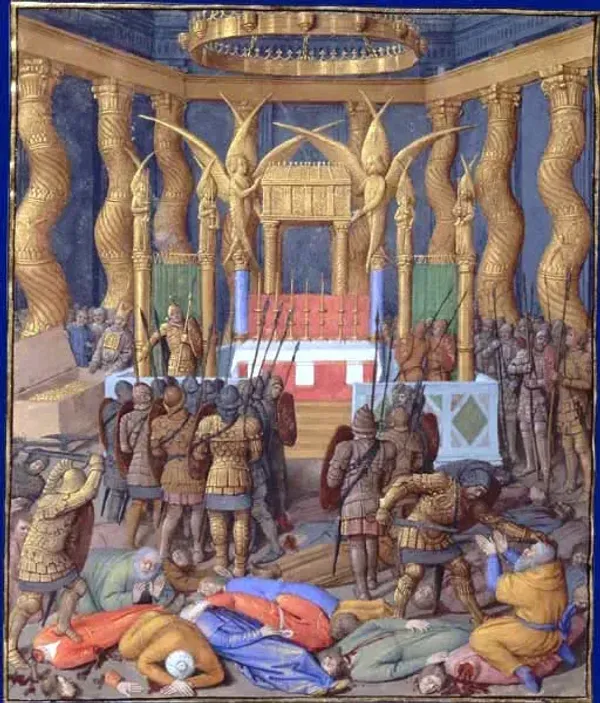
The Legacy of Joshua ben Perachiah
Joshua’s teaching asks readers to combine the discipline of learning with generosity toward other people. The first-person book explores that tension through a reconstruction of later rabbinic traditions. Its conversations, motives and private scenes are not surviving testimony.
Get the Full Book
Read the story of Joshua ben Perachiah — 8 chapters of historical narrative.
Dramatised first-person narrative; not an autobiography.