
Moses
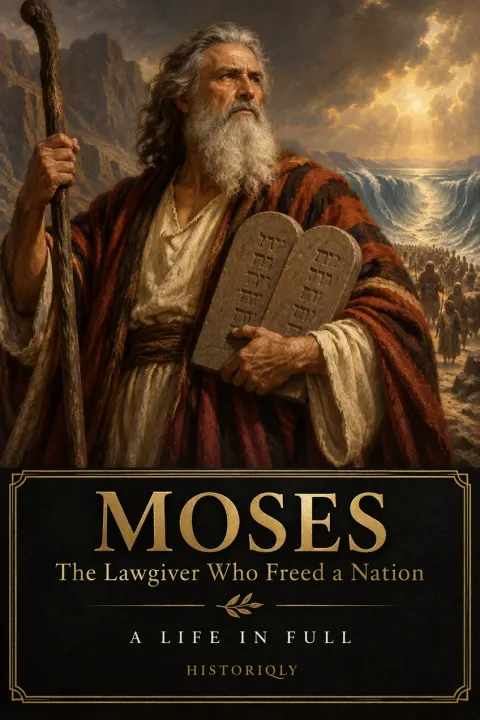
The Lawgiver Who Freed a Nation
Get the full EPUB
Drop your email and the EPUB downloads straight to your device. We'll also ping you when the next chronicle lands — unsubscribe any time.
Your email is already on file — enjoy the read.
Download the EPUBAround 1300 BC, a man raised as Egyptian royalty stood before Pharaoh and demanded the release of an entire enslaved people. Moses — prophet, lawgiver, liberator — led the Israelites out of Egypt through the parted waters of the Red Sea, received the Ten Commandments on Mount Sinai, and spent forty years forging a band of freed slaves into a nation with a covenant, a law, and a God who spoke from fire. His story is the founding narrative of Judaism, a cornerstone of Christianity and Islam, and one of the most consequential lives in human history.
“Let my people go.”
120 years
Deuteronomy gives Moses a lifespan of 120 years. The familiar division into three periods of forty draws on additional scriptural traditions and should not be attributed wholly to Deuteronomy.
10
Exodus narrates ten plagues as acts of divine judgment and deliverance. It does not assign each plague a one-to-one match with a named Egyptian deity.
40
After the people refused to enter Canaan at Kadesh-barnea, God decreed that the exodus generation would wander the wilderness for forty years until a new generation was ready to inherit the promised land.
613
Jewish tradition counts 613 commandments given through Moses in the Torah — 248 positive and 365 negative — governing every aspect of religious, moral, civil, and ceremonial life for the nation of Israel.
Leading the Exodus from Egypt, receiving the Ten Commandments on Mount Sinai, founding Israelite law and nationhood
Defining Events
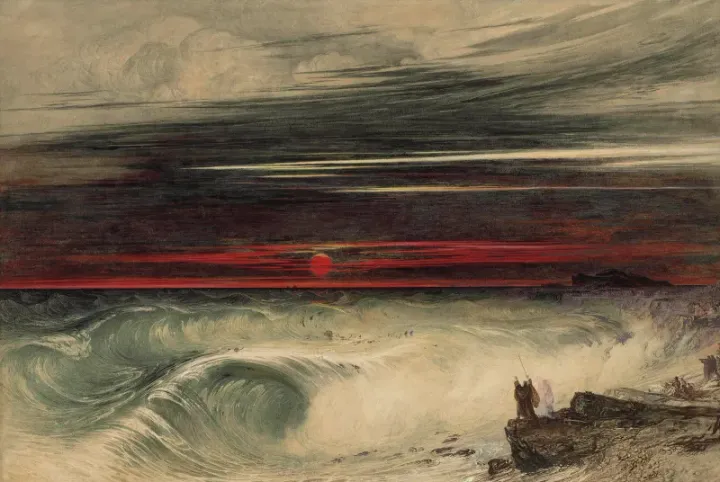
The Exodus from Egypt
Exodus presents God delivering Israel from Egypt and bringing the people through the sea. The census figures belong to the scriptural narrative and are not an independently verified population count.
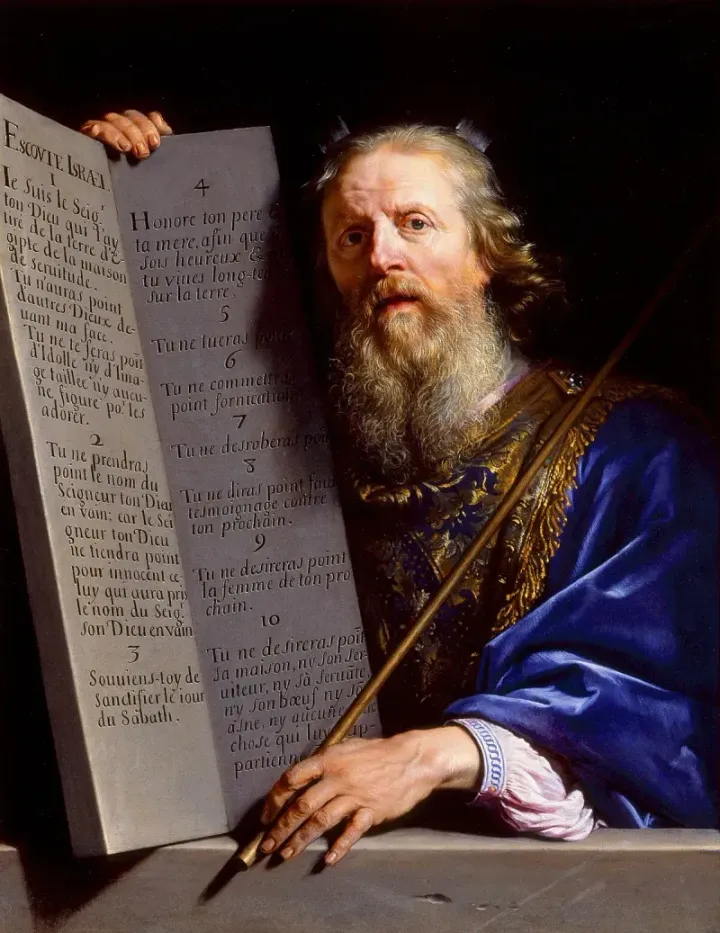
The Ten Commandments at Sinai
Seven weeks after the Exodus, the Israelites camped at the base of Mount Sinai. Thunder, lightning, thick cloud, and the sound of a trumpet that grew louder and louder — and then God spoke the Ten Commandments to the entire nation. Moses ascended the mountain alone, remaining for forty days and forty nights without food or water, and returned carrying two stone tablets inscribed by the finger of God. The law given at Sinai became the foundation of Western moral and legal tradition.
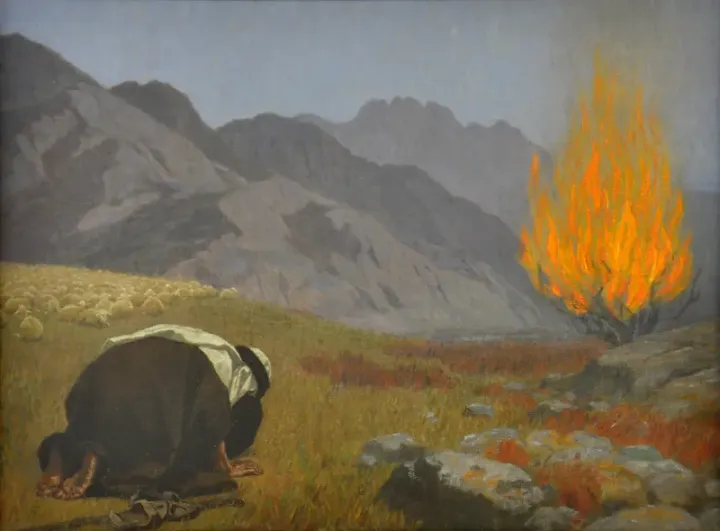
The Burning Bush
After forty years as a shepherd in Midian, Moses encountered a bush that burned without being consumed on the slopes of Mount Horeb. From the fire, God spoke: "I am the God of your father, the God of Abraham, the God of Isaac, and the God of Jacob." He commanded Moses to return to Egypt and free the Israelites. When Moses asked for God's name, the answer was unprecedented in the ancient world: "I AM WHO I AM." — a declaration of absolute, self-existent being that would reshape the history of theology.
Timeline
Born in Egypt
Born to Amram and Jochebed of the tribe of Levi during Pharaoh's decree that all Hebrew male infants be drowned in the Nile. His mother hid him for three months, then placed him in a waterproofed basket among the reeds. Pharaoh's daughter found him, named him Moses ('drawn out'), and raised him as her own son in the Egyptian court.
Flees to Midian
After killing an Egyptian overseer who was beating a Hebrew slave, Moses fled Egypt when Pharaoh sought his life. He crossed the Sinai desert to Midian, where he married Zipporah, daughter of the priest Jethro, and spent forty years as a shepherd — learning the wilderness that he would later lead an entire nation through.
The Burning Bush
While tending Jethro's flock near Mount Horeb, Moses saw a bush that burned without being consumed. God spoke from the fire, revealing His name — 'I AM WHO I AM' — and commanding Moses to return to Egypt and bring the Israelites out of slavery. Moses protested five times before accepting the mission.
The Ten Plagues
Moses and his brother Aaron confronted Pharaoh with the demand 'Let my people go.' When Pharaoh refused, ten plagues struck Egypt in succession: water to blood, frogs, gnats, flies, livestock disease, boils, hail, locusts, darkness, and the death of the firstborn. The final plague established the Passover, still observed three thousand years later.
The Exodus and Red Sea
Moses led the Israelites out of Egypt on the night of the first Passover. When Pharaoh's army pursued them to the shores of the Red Sea, Moses stretched out his staff and the waters parted. Israel crossed on dry ground; the Egyptian chariots were engulfed when the sea returned. The Song of the Sea — one of the oldest poems in the Bible — celebrated the deliverance.
The Law at Sinai
At Mount Sinai, God spoke the Ten Commandments to the assembled nation and gave Moses the entire body of law — civil, ceremonial, and moral — that would govern Israel. Moses spent forty days on the mountain, receiving the tablets of stone. When he descended to find the people worshipping a golden calf, he shattered the tablets in rage, then interceded with God to spare the nation.
The Tabernacle
Under Moses' direction, the Israelites built the Tabernacle — a portable sanctuary of gold, silver, bronze, fine linen, and acacia wood — as the dwelling place of God among His people. The Ark of the Covenant, containing the tablets of the law, was placed in the innermost chamber. The pillar of cloud by day and fire by night guided their journey.
Crisis at Kadesh-barnea
Twelve spies were sent to scout the promised land. Ten returned with a terrifying report of fortified cities and giants; only Joshua and Caleb urged the people to trust God. The nation panicked and refused to enter. God decreed that the entire adult generation would die in the wilderness over forty years, and only Joshua and Caleb would live to enter Canaan.
Death on Mount Nebo
At one hundred and twenty years old, Moses climbed Mount Nebo east of the Jordan and looked out over the promised land he was forbidden to enter — punishment for striking the rock at Meribah instead of speaking to it. He blessed each tribe, laid hands on Joshua as his successor, and died. 'No one knows his burial place to this day.' No prophet like Moses arose again in Israel — one who knew God face to face.
Key Figures
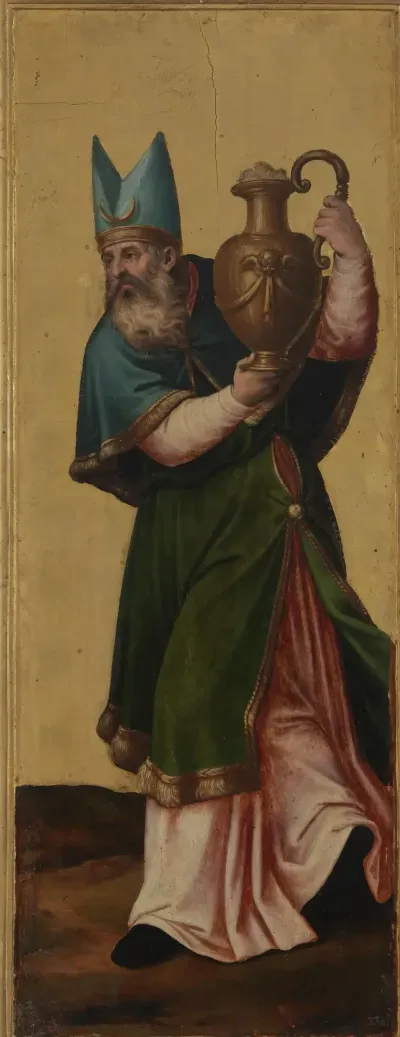
Aaron
Moses' older brother by three years, Aaron served as Moses' spokesman before Pharaoh — 'he shall be your mouth, and you shall be as God to him.' He became the first High Priest of Israel, consecrated by Moses at Sinai to serve in the Tabernacle. Aaron's failures — fashioning the golden calf, joining Miriam in challenging Moses' authority — stand alongside his faithfulness as the archetypal tension of priestly life. He died on Mount Hor at one hundred and twenty-three years of age.
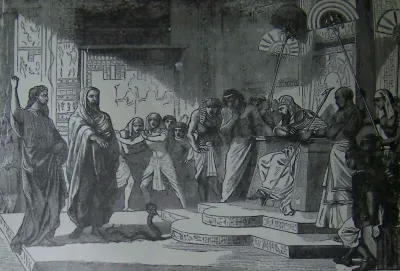
Pharaoh
The unnamed Pharaoh of the Exodus — traditionally identified with Ramesses II, though scholars debate the identification — was the most powerful ruler in the ancient Near East. He commanded the greatest army, the wealthiest treasury, and an empire stretching from Nubia to Syria. Yet he could not overcome ten plagues, hold one enslaved people, or prevent his army's destruction in the sea. His stubbornness became the backdrop against which the God of Israel demonstrated absolute sovereignty over the gods of Egypt.
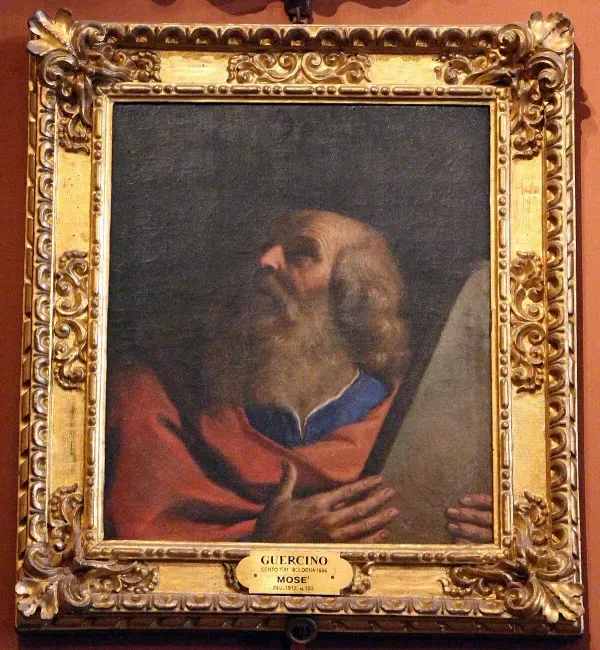
The Legacy of Moses
The Torah presents Moses as liberator, lawgiver and an often challenged leader who does not enter the promised land. This first-person reconstruction follows those scriptural traditions. Its speeches and interior reflections are literary interpretation; proposed dates for Moses’s life are not an independently established chronology.
Get the Full Book
Read the story of Moses — 8 chapters of historical narrative.
Dramatised first-person narrative; not an autobiography.