
King David
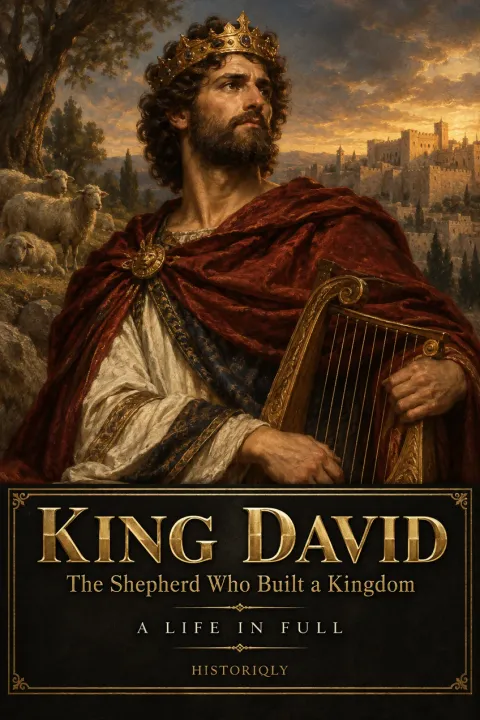
The Shepherd Who Built a Kingdom
Get the full EPUB
Drop your email and the EPUB downloads straight to your device. We'll also ping you when the next chronicle lands — unsubscribe any time.
Your email is already on file — enjoy the read.
Download the EPUBThe books of Samuel portray David as shepherd, warrior, fugitive, and king. He makes Jerusalem his capital and brings the Ark there; the same narrative records violence, abused power, and grief within his household. The psalms traditionally associated with him add voices of praise, fear, and repentance. This biography follows those literary traditions while distinguishing their claims from a recovered autobiography.
“The Lord is my shepherd; I shall not want.”
c. 1040–970 BC
Born in Bethlehem as the youngest of Jesse's eight sons. Died in Jerusalem at approximately seventy years of age, having reigned for forty years — seven in Hebron and thirty-three in Jerusalem.
40 years
Anointed king of Judah at age thirty after Saul's death, then king of all Israel after a seven-year civil war. His forty-year reign transformed scattered tribes into a regional power.
73+
Traditionally credited with composing at least seventy-three of the one hundred and fifty Psalms — prayers, hymns, and poems that form the bedrock of Jewish and Christian worship.
~10
Spent roughly a decade on the run from King Saul, hiding in caves and wilderness, leading a band of outcasts that grew from four hundred to six hundred men.
Slaying Goliath, uniting the tribes of Israel, conquering Jerusalem, composing the Psalms
Defining Events
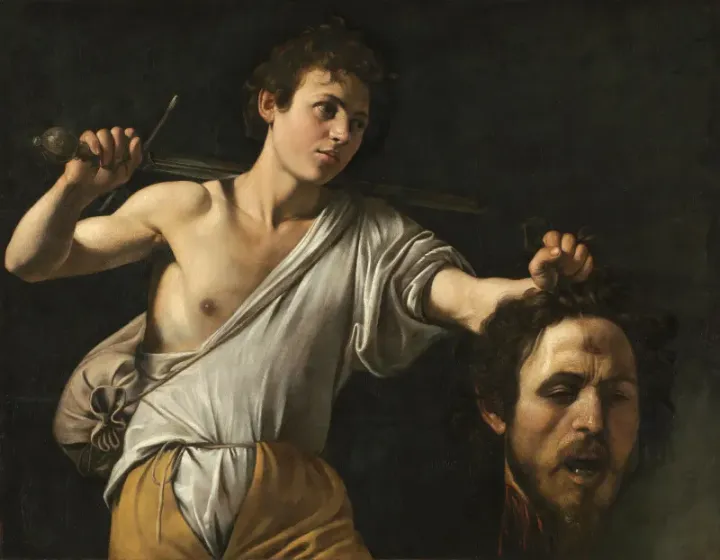
David and Goliath
In the Valley of Elah, a teenage shepherd armed with a sling and five stones faced Goliath of Gath — a Philistine champion whose height, armour, and weaponry had paralysed the entire Israelite army for forty days. David struck him in the forehead with a single stone, then took the giant's own sword and cut off his head. The victory became the archetypal story of the underdog triumphing against impossible odds, and it launched David from obscurity into the court of King Saul.
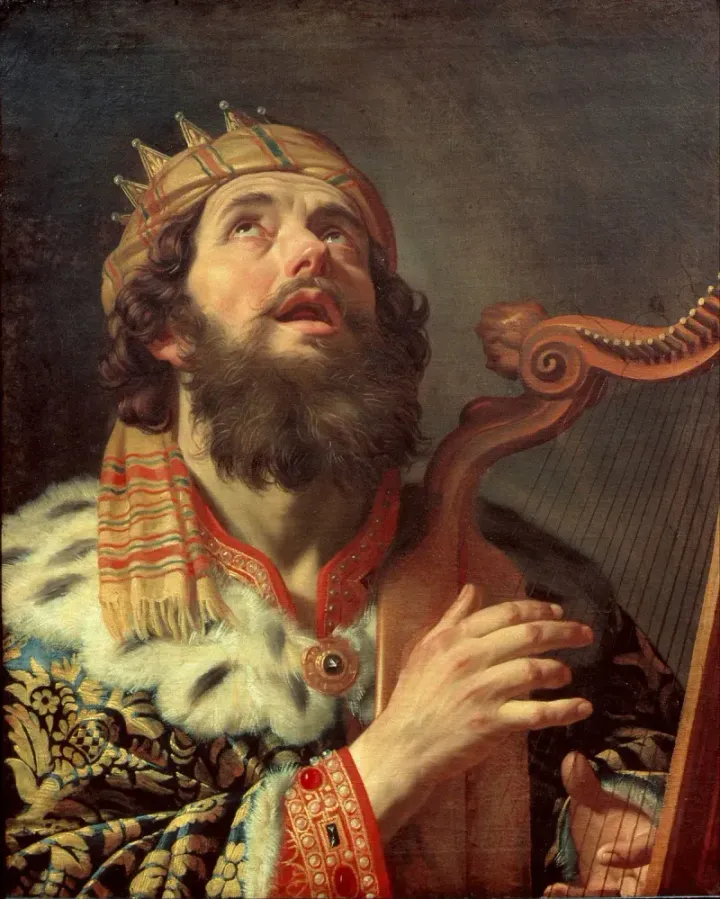
The Conquest of Jerusalem
The biblical account makes Jerusalem David’s capital after its capture from the Jebusites. The meaning of tsinnor and the exact method of entry remain debated; a particular water-shaft assault is not securely established.
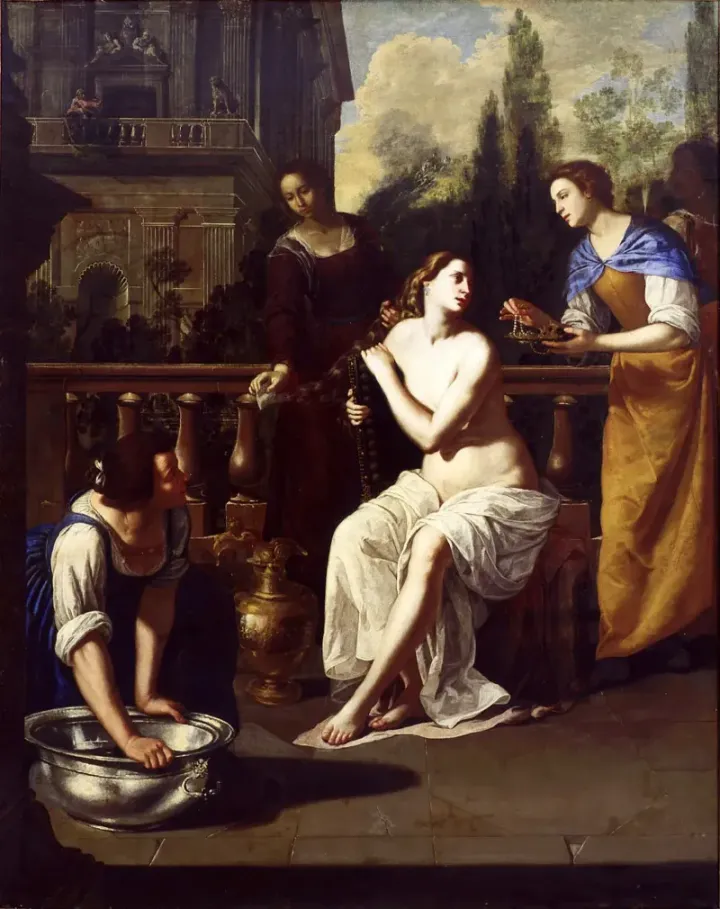
The Bathsheba Affair
In 2 Samuel 11–12, David takes Bathsheba and arranges Uriah’s death. The text does not give her consent or private perspective. Nathan confronts the king; Psalm 51’s heading associates the psalm with this episode, without establishing a witnessed moment of composition.
Timeline
Born in Bethlehem
Born as the youngest of Jesse's eight sons in Bethlehem, a small town in the hill country of Judah. Spent his youth tending his father's sheep in the surrounding wilderness, learning to fight predators with a sling and a staff — skills that would define his destiny.
Anointed by Samuel
The prophet Samuel, instructed by God to find a replacement for the disobedient King Saul, came to Bethlehem and anointed the youngest of Jesse's sons. 'The Lord sees not as man sees: man looks on the outward appearance, but the Lord looks on the heart.' David returned to his sheep and waited fifteen years for the promise to be fulfilled.
Slays Goliath
Armed with a sling and five smooth stones, the teenage David killed the Philistine champion Goliath in the Valley of Elah, triggering a rout of the Philistine army. The victory made him a national hero and brought him into the court of King Saul as a warrior and musician.
Flees Saul's Court
After years of growing jealousy — including two attempts to pin David to a wall with a spear — Saul openly sought David's death. David fled with the help of his wife Michal and his friend Jonathan, beginning roughly a decade of life as a fugitive in the wilderness of Judah.
Crowned King of Judah
After Saul and Jonathan were killed by the Philistines at Mount Gilboa, David was anointed king of Judah at Hebron. He was thirty years old. A civil war with the surviving house of Saul, led by Abner and Ish-bosheth, lasted seven and a half years.
Conquers Jerusalem
The biblical account makes Jerusalem David’s capital after its capture from the Jebusites. The meaning of tsinnor and the exact method of entry remain debated; a particular water-shaft assault is not securely established.
Brings the Ark to Jerusalem
Transported the Ark of the Covenant to Jerusalem with music, sacrifice, and dancing — David himself 'danced before the Lord with all his might.' The Ark's presence transformed Jerusalem from a political capital into the religious heart of Israel, the dwelling place of God among His people.
Bathsheba and Uriah
David’s taking of Bathsheba and arrangement of Uriah’s death bring Nathan’s condemnation in 2 Samuel 11–12. Psalm 51 is traditionally associated with the episode through its heading. The narrative presents a king’s abuse of power and its consequences.
Absalom's Rebellion
David's son Absalom, after murdering his half-brother Amnon and spending years in exile, launched a coup from Hebron and drove David from Jerusalem. The rebellion ended in the forest of Ephraim, where Absalom was killed by Joab against David's explicit orders. David's lament — 'O my son Absalom, my son!' — is one of the most famous expressions of grief in literature.
Death in Jerusalem
Died at approximately seventy years of age after naming Solomon as his successor. He charged Solomon to build the Temple he was not permitted to build and to keep the covenant with God. He was buried in the City of David, and his tomb was still venerated a thousand years later.
Key Figures
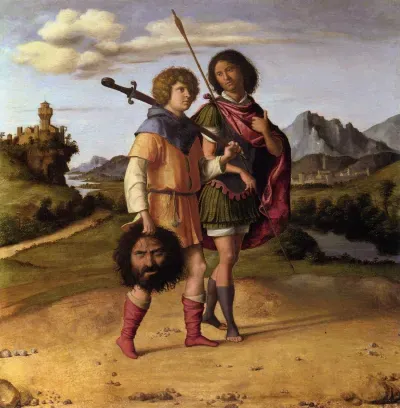
Jonathan
Saul's eldest son and heir to the throne, who loved David 'as his own soul' and willingly surrendered his claim to the kingship. Jonathan gave David his robe, armour, and weapons — a symbolic transfer of royal authority — and repeatedly saved David's life by warning him of Saul's plots. He died alongside his father at Mount Gilboa, and David's lament for him — 'your love to me was wonderful, surpassing the love of women' — is one of the most tender passages in ancient literature.

Bathsheba
Originally the wife of Uriah the Hittite, Bathsheba became David's wife after the affair that was the defining moral catastrophe of his reign. She bore him Solomon, who would succeed David as king and build the Temple. In David's final days, Bathsheba intervened decisively to secure Solomon's succession against the rival claim of Adonijah — transforming herself from a victim of royal power into a wielder of it.
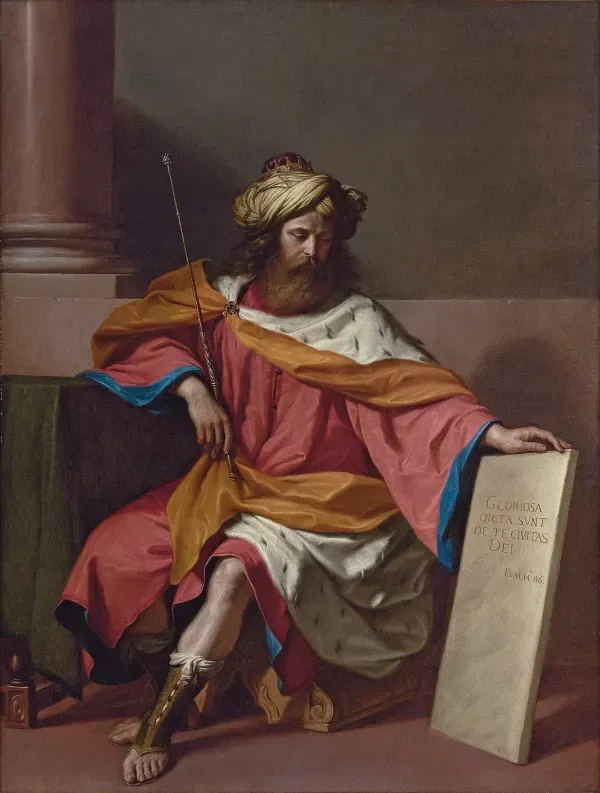
The Legacy of King David
David’s biblical portrait holds royal achievement beside failures that harm his family and subjects. Later psalm traditions also make him a voice of prayer and repentance. This first-person book is an interpretation of those texts, not an autobiography or proof that every psalm associated with David was composed by him.
Get the Full Book
Read the story of King David — 8 chapters of historical narrative.
Dramatised first-person narrative; not an autobiography.