
Martin Buber
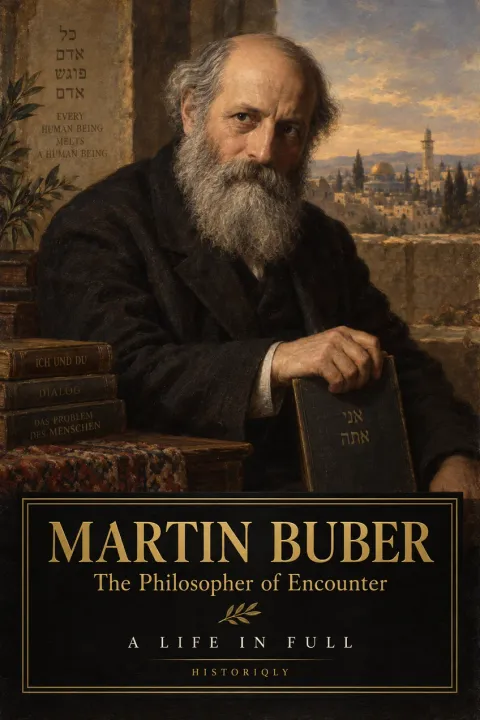
The Philosopher of Encounter
Get the full EPUB
Drop your email and the EPUB downloads straight to your device. We'll also ping you when the next chronicle lands — unsubscribe any time.
Your email is already on file — enjoy the read.
Download the EPUBIn 1923, a forty-five-year-old German-Jewish philosopher published a slim, strange book that would change the course of twentieth-century thought. Ich und Du — I and Thou — argued that the deepest truth of existence is not found in ideas, systems, or solitary contemplation, but in the living encounter between one being and another. Martin Buber had spent two decades collecting the tales of the Hasidic masters and wrestling with the question that haunted him from childhood: how does one meet God? His answer was deceptively simple. You meet God by truly meeting another person. All real living is meeting.
“All real living is meeting.”
1878–1965
Born on February 8, 1878, in Vienna, Austria-Hungary. Raised by his grandfather Solomon Buber, a renowned Midrash scholar, in Lemberg (Lviv). Died on June 13, 1965, in Jerusalem, at the age of eighty-seven. He lived through the collapse of the Habsburg Empire, two world wars, the Holocaust, and the founding of Israel.
40+
Over forty books spanning philosophy, theology, biblical translation, Hasidic storytelling, and political essays. His masterwork <em>I and Thou</em> (1923) has been translated into more than thirty languages and remains one of the most influential philosophical texts of the twentieth century.
7
German, Hebrew, Yiddish, Polish, French, English, and Italian. Buber’s German prose was considered among the finest of his generation. His Bible translation with Rosenzweig attempted to recover the spoken, breathing quality of the original Hebrew in German — a project that took nearly four decades to complete.
38 years
The Buber-Rosenzweig Bible translation began in 1925 and was completed in 1961 — thirty-two years after Rosenzweig’s death. Buber finished it alone in Jerusalem. It remains the most ambitious attempt to render the Hebrew Bible into German as a spoken, performative text rather than a literary artefact.
I and Thou, dialogical philosophy, Hasidic tales, Buber-Rosenzweig Bible translation
Defining Events
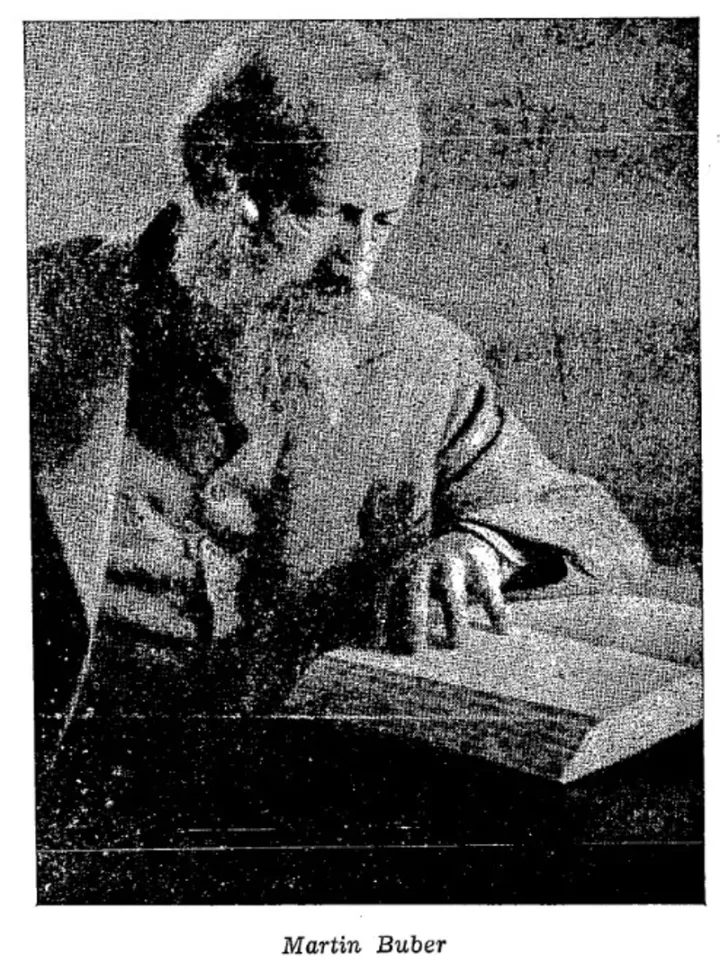
I and Thou
Buber’s masterwork, Ich und Du, proposed a radical distinction between two modes of existence: the I-Thou relation, in which one encounters another being in their full presence, and the I-It relation, in which one treats the other as an object to be used or analysed. The book argued that God — the ‘Eternal Thou’ — is not found through theology or ritual but through genuine encounter with another person. Written in lyrical, almost mystical prose, it influenced existentialism, psychotherapy, education, and interfaith dialogue. Martin Luther King Jr. read it. Carl Rogers built his therapeutic method on it. Abraham Joshua Heschel called it the most important Jewish book of the century.
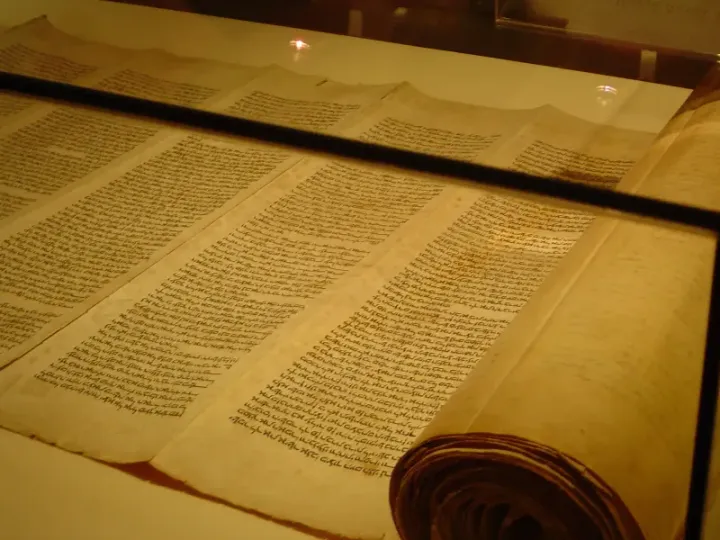
The Buber-Rosenzweig Bible
In 1925, the young publisher Lambert Schneider asked Buber and Franz Rosenzweig to produce a new German translation of the Hebrew Bible. Rosenzweig was already paralysed by amyotrophic lateral sclerosis and could communicate only by blinking at a letter board while his wife typed. Together they produced a translation that broke every convention — preserving Hebrew word roots, breathing patterns, and the ‘leading words’ (Leitworte) that bind the biblical text together. Rosenzweig died in 1929 with only the Pentateuch and some prophetic books completed. Buber continued alone for thirty-two more years, finishing in Jerusalem in 1961.
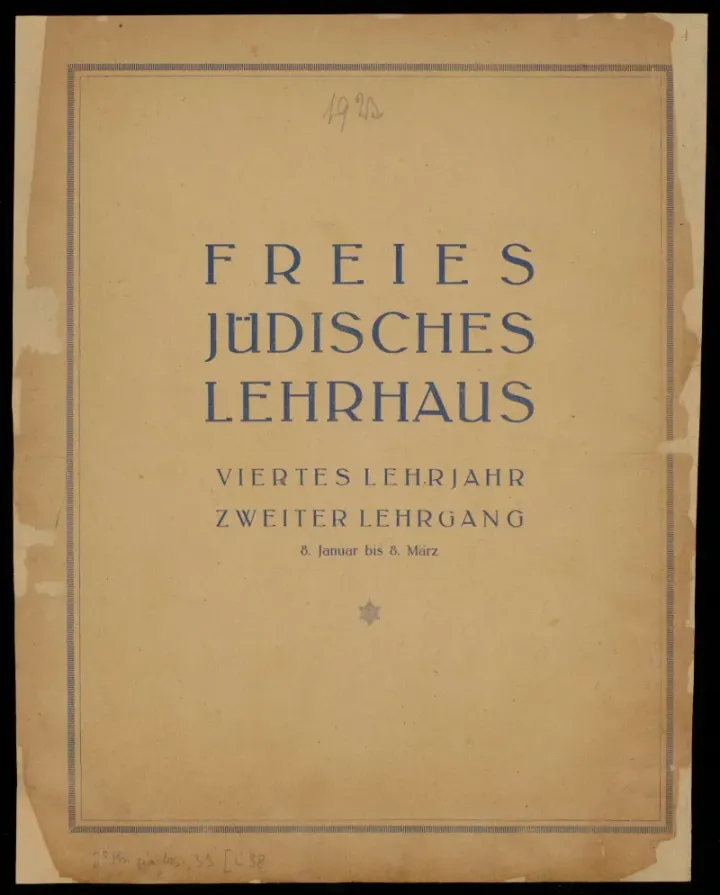
Adult Education Under the Nazis
When the Nazis came to power in 1933 and Jewish professors were expelled from German universities, Buber became the head of the newly reorganised Centre for Jewish Adult Education (Mittelstelle für jüdische Erwachsenenbildung). For five years, while the walls closed in, Buber organised lectures, study groups, and teacher training programmes across Germany — giving Jews the spiritual resources to endure what was coming. He taught that education is not the transfer of information but an encounter between persons. In 1938, the Gestapo shut down the centre and Buber emigrated to Palestine, one of the last Jewish intellectuals to leave Germany.
Timeline
Born in Vienna
Martin Buber is born on February 8 in Vienna, Austria-Hungary, to Carl Buber and Elise Wurgast. When Buber is three years old, his mother leaves the family without explanation and does not return. The experience of what he later calls Vergegnung — ‘mis-meeting’ — shapes his lifelong preoccupation with genuine encounter.
Raised by His Grandfather
Buber is sent to live with his paternal grandparents in Lemberg (Lviv), Galicia. His grandfather Solomon Buber is one of the great Midrash scholars of the age, editing critical editions of ancient rabbinic texts. The boy grows up among books, languages, and the living traditions of Galician Jewry — both the Hasidic and the scholarly.
University in Vienna
Buber begins studying philosophy, art history, and German literature at the University of Vienna. He encounters Nietzsche, whose concept of the creative, value-generating individual profoundly affects him. He also discovers the theatre and considers a career as a dramatist.
Joins the Zionist Movement
Buber joins the Zionist movement and begins attending Zionist congresses, where he meets Theodor Herzl. Buber is initially drawn to political Zionism but quickly develops his own vision of cultural Zionism — emphasising spiritual renewal, education, and Arab-Jewish coexistence over the creation of a political state.
Meets Paula Winkler
Buber meets Paula Winkler, a Catholic writer from Munich, at the University of Zurich. She leaves Catholicism and the two begin a lifelong partnership, formally converting to Judaism and marrying in 1907. Paula becomes his intellectual companion, critic, and protector for over half a century. She writes novels under the pen name Georg Munk. Their partnership is one of the great intellectual marriages of the century.
Discovery of Hasidism
Buber immerses himself in Hasidic literature and begins collecting the tales and teachings of the Hasidic masters — the Baal Shem Tov, Rabbi Nachman of Breslov, and others. He sees in Hasidism a model of religious life grounded in joy, presence, and the hallowing of everyday existence rather than in asceticism or abstract theology.
Founds Der Jude
Buber founds Der Jude (‘The Jew’), a monthly journal that becomes the most important forum for Jewish intellectual life in the German-speaking world. It runs until 1924 and publishes essays on Zionism, culture, religion, and the future of Jewish identity in Europe.
I and Thou Published
Buber publishes Ich und Du (I and Thou), his philosophical masterwork. The book distinguishes between two fundamental attitudes: I-Thou, the encounter with the other as a full presence, and I-It, the treatment of the other as an object. It argues that God is the ‘Eternal Thou’ who can never become an It. The book is initially received with puzzlement but gradually becomes one of the defining texts of the century.
Bible Translation Begins
Buber and Franz Rosenzweig begin their monumental German translation of the Hebrew Bible, Die Schrift. Their method is revolutionary: they preserve the breath-units, sound patterns, and ‘leading words’ of the Hebrew, producing a German text that sounds like no other Bible translation. Rosenzweig is already seriously ill with ALS.
Rosenzweig Dies
Franz Rosenzweig dies on December 10 at the age of forty-two, after seven years of progressive paralysis. He and Buber have completed the Pentateuch and several prophetic books. Buber will continue the translation alone for thirty-two more years. He calls Rosenzweig ‘the most powerful and revolutionary thinker whom Judaism has produced in recent centuries.’
Resistance Through Education
After the Nazis seize power, Buber leads Jewish adult education in Germany, organising study groups and teacher training while Jewish life is systematically dismantled. He refuses to emigrate until the Gestapo shuts down his educational centres in 1938. He is sixty years old when he leaves for Palestine.
Emigrates to Palestine
Buber arrives in Jerusalem and takes a professorship in social philosophy at the Hebrew University. He advocates for a binational Arab-Jewish state — a position that makes him deeply unpopular with both the political Zionist establishment and later with the Israeli government. He never wavers.
Eclipse of God
Buber publishes Eclipse of God, a collection of essays on the crisis of faith in the modern world. He argues that God has not died but has been eclipsed — hidden behind the structures of modern life. The book engages directly with Sartre, Heidegger, and Jung, challenging their positions from the standpoint of dialogical philosophy.
Israel Prize
Buber receives the Israel Prize, the country’s highest civilian honour, for his contributions to the humanities. He uses the public attention to continue advocating for Arab-Jewish dialogue and reconciliation, positions that provoke fierce criticism from nationalist circles.
Death in Jerusalem
Martin Buber dies on June 13, 1965, in Jerusalem, at the age of eighty-seven. He is buried on the Mount of Olives. Thousands attend his funeral, including Arab friends and students. The Israeli Prime Minister, Levi Eshkol, delivers a eulogy. David Ben-Gurion, who had opposed him for decades, eulogises him as ‘the conscience of Israel.’
Key Figures
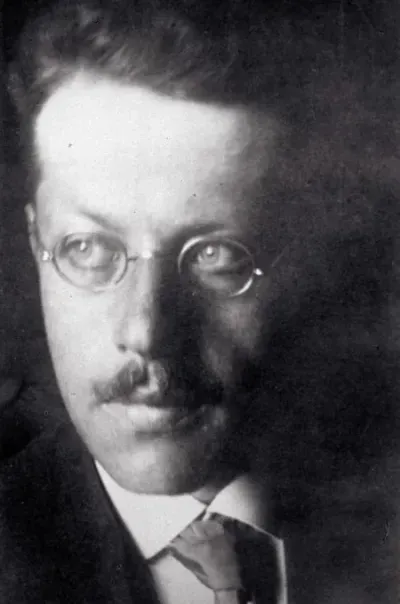
Franz Rosenzweig
Franz Rosenzweig was the most important intellectual relationship of Buber’s life. The two men were opposites in temperament — Rosenzweig systematic and rigorous, Buber intuitive and lyrical — but they shared a conviction that Judaism must be lived, not merely studied. Rosenzweig founded the Frankfurt Lehrhaus (1920), where Buber became a central teacher, and together they began their Bible translation in 1925. By then Rosenzweig was paralysed by ALS, communicating by blinking at a letter board. He died in 1929. Buber spent the next thirty-two years finishing their translation alone, and never stopped speaking of Rosenzweig as his ‘most intimate opponent.’
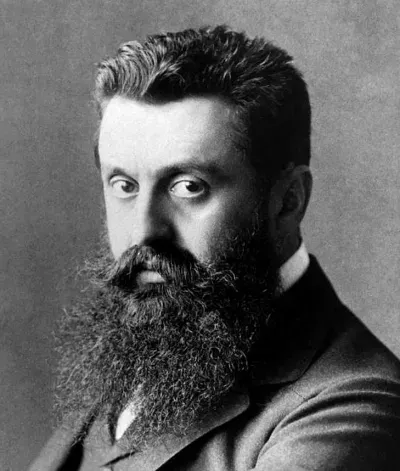
Theodor Herzl
Buber was drawn to Herzl’s charisma at the early Zionist congresses in 1898–1899, but the two men quickly diverged. Herzl wanted a political state; Buber wanted a spiritual homeland. Herzl saw Zionism as a solution to antisemitism; Buber saw it as an opportunity for Jewish cultural and religious renewal. When Herzl tried to centralise control of the movement, Buber led the opposition of the ‘cultural Zionists.’ After Herzl’s death in 1904, Buber stepped back from organised Zionism entirely, returning to it only decades later with his advocacy for a binational state — a position Herzl would not have recognised.
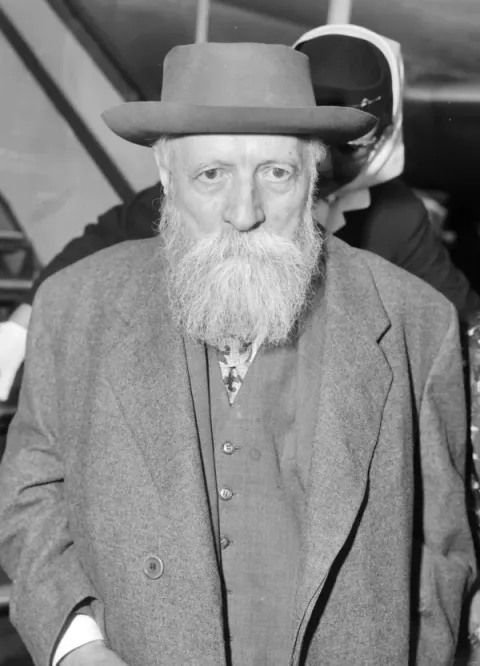
The Legacy of Martin Buber
Martin Buber lived for eighty-seven years across five countries and two world wars, and he spent every one of those years asking the same question: how do we truly meet? His answer — that the divine is present not in solitude or system but in the space between one person and another — changed philosophy, theology, psychotherapy, and education. Carl Rogers built client-centred therapy on the I-Thou relation. Paulo Freire’s pedagogy of dialogue draws directly from Buber. Martin Luther King Jr. and Desmond Tutu cited him. Emmanuel Levinas, his student and critic, called him ‘the greatest Jewish philosopher of the twentieth century.’
Buber never finished his Bible translation to his own satisfaction. He never saw Arab-Jewish peace. He never resolved the tension between mysticism and politics that ran through his entire life. But he showed — in his writing, his teaching, and his stubborn, infuriating insistence on speaking to the other — what it means to live as if every encounter matters. Read his story in his own words in the first-person ePub.
Get the Full Book
Read the story of Martin Buber — 8 chapters of historical narrative.
Dramatised first-person narrative; not an autobiography.