
Nefertiti
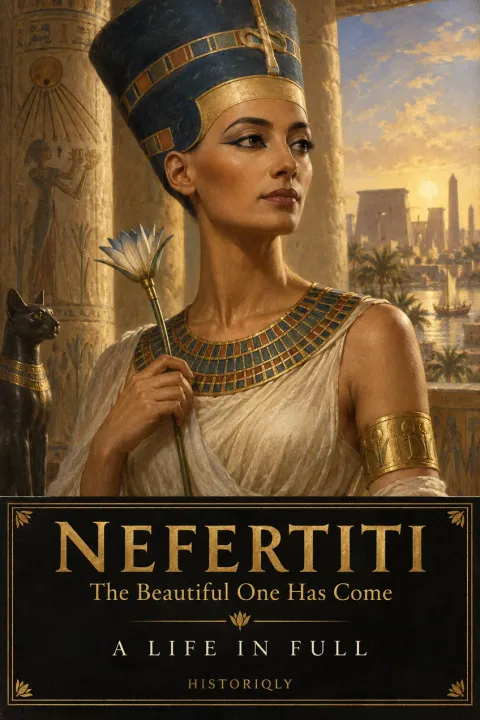
The Beautiful One Has Come
Get the full EPUB
Drop your email and the EPUB downloads straight to your device. We'll also ping you when the next chronicle lands — unsubscribe any time.
Your email is already on file — enjoy the read.
Download the EPUBNefertiti appears prominently beside Akhenaten in the art of the Amarna period, making offerings and participating in the royal presentation of Aten worship. An inscription names her as Great Royal Wife in Year 16 of his reign. Her later fate and possible identification with the ruler Neferneferuaten remain debated; visual prominence alone does not settle the question of co-regency.
c. 1370–1330 BC
Born during Egypt's golden age under the Eighteenth Dynasty. She lived through the most theologically turbulent period in Egyptian history and may have ruled as pharaoh in her own right after her husband's death. Her exact birth and death dates remain uncertain.
6
Nefertiti’s six daughters are named in royal representations. Meketaten’s death is depicted in the Royal Tomb at Amarna, but the suggestion that she died in childbirth remains uncertain.
~17
From the accession of Amenhotep IV (later Akhenaten) around 1353 BC until she disappears from the record around 1336 BC. Some scholars believe she continued ruling as the pharaoh Neferneferuaten after Akhenaten's death.
18th
The Eighteenth Dynasty of Egypt — the dynasty of Thutmose III, Hatshepsut, and Amenhotep III. The most powerful royal house of the New Kingdom, which ruled Egypt at the height of its imperial reach from Nubia to Syria.
Great Royal Wife of Akhenaten, prominent figure in Aten worship and Amarna art; possible later rulership remains debated
Defining Events
The Aten Revolution
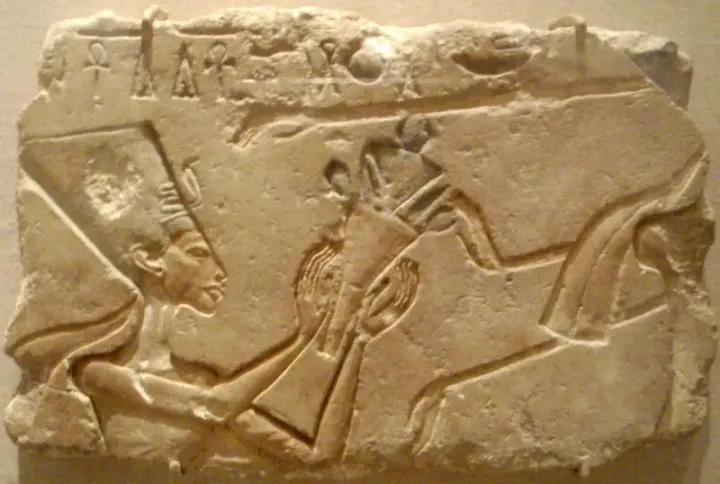
In the fifth year of his reign, Amenhotep IV changed his name to Akhenaten — 'Effective for the Aten' — and Nefertiti took the additional name Neferneferuaten. Together they dismantled the cult of Amun, closed temples across Egypt, and redirected the wealth of the priesthood to the worship of a single deity: the Aten, the sun disc. It was the closest thing to monotheism the ancient world had ever seen. Nefertiti was not a passive consort in this revolution — she is depicted making offerings to the Aten independently, a role previously reserved only for the pharaoh. The old priests were stripped of power. The old gods were forbidden. Egypt would never be the same.
The City of the Horizon
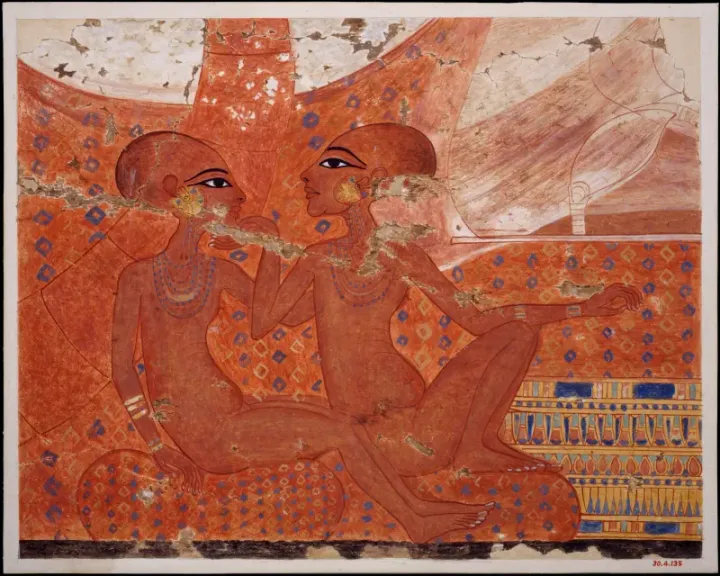
Akhetaten’s temples, palaces, houses, and workshops give material form to the Aten program. The North Palace’s early owner is uncertain and its later inscriptions name Meritaten. The city developed through several building phases.
The Vanishing
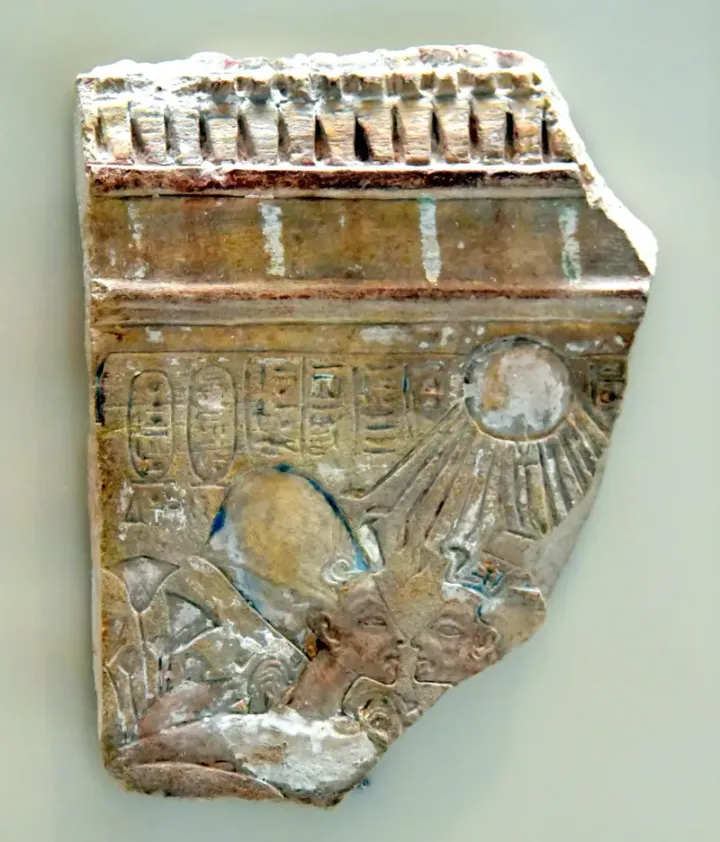
Nefertiti is attested as Great Royal Wife in Year 16 of Akhenaten. Her later fate, burial and possible identity as Neferneferuaten remain unsettled. The evidence does not support a disappearance definitively dated to Year 12.
Timeline
Born in Egypt
Nefertiti is born, likely in Thebes. Her parentage is uncertain, but strong circumstantial evidence suggests she was the daughter of the courtier Ay, who would later become pharaoh himself after Tutankhamun's death. Her name — 'the beautiful one has come' — led some early scholars to speculate she was a foreign princess, but most Egyptologists now believe she was Egyptian-born.
Marriage to Amenhotep IV
Nefertiti marries Amenhotep IV, likely around the age of fifteen. He is heir to the throne of Amenhotep III, who presided over Egypt at the peak of its wealth and power. Together they will have six daughters. From the beginning of the reign, Nefertiti appears alongside her husband with a frequency and prominence seen for no other Egyptian queen.
The Aten Revolution Begins
In Year 5, Amenhotep IV changes his name to Akhenaten and Nefertiti takes the additional name Neferneferuaten. They begin systematically promoting the Aten — the sun disc — as the sole deity of Egypt, suppressing the cult of Amun and closing temples. The wealth of the Amun priesthood is redirected to the new religion. It is the most radical theological upheaval in Egyptian history.
Foundation of Akhetaten
The royal couple abandons Thebes and founds a new capital city at a virgin site in Middle Egypt: Akhetaten, the 'Horizon of the Aten.' Boundary stelae are carved into the cliffs marking the city's limits. Akhenaten swears an oath never to expand beyond these boundaries. The city is built with open-air temples, royal palaces, and a workers' village.
Height of Power
Nefertiti is depicted on temple walls and stelae in poses of royal authority: smiting enemies, riding chariots, and making offerings to the Aten without her husband present. She wears the flat-topped blue crown that becomes her signature. The sculptor Thutmose creates the painted limestone bust that will become one of the most famous works of art in human history — though it will not be discovered for over three thousand years.
Year 12 — The Great Durbar
Royal Tomb scenes show mourning for Meketaten. They do not securely establish a cause of death or prove childbirth.
Disappearance from the Record
Nefertiti is named as Great Royal Wife in Year 16 of Akhenaten. Her subsequent fate and possible identification with Neferneferuaten remain debated.
Tutankhamun Takes the Throne
Tutankhamun succeeded during the period following Akhenaten. Genetic studies propose close kinship among royal mummies, but identifying every mummy by a historical name remains contested. He married Ankhesenamun, Nefertiti’s daughter, and his reign restored traditional cults.
Key Figures
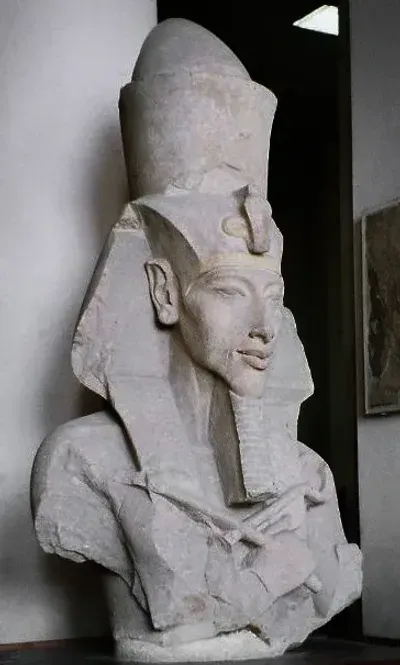
Akhenaten
Born Amenhotep IV, he became the most controversial pharaoh in Egyptian history. Together with Nefertiti, he overthrew the Amun priesthood and imposed the worship of a single god — the Aten. He is depicted in a distinctive elongated artistic style that has puzzled scholars for over a century. Whether he was a visionary monotheist or a power-hungry autocrat depends on which historian you ask. His death around 1336 BC left the revolution without its architect, and within a generation every trace of his heresy was being systematically erased.
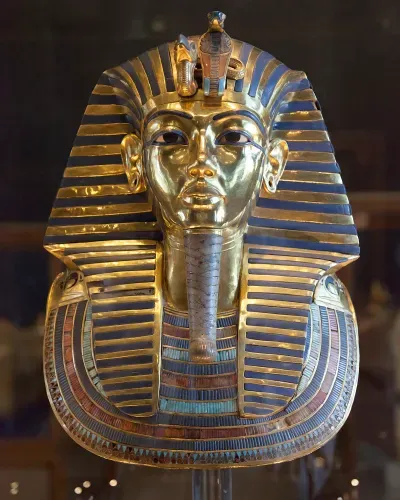
Tutankhamun
Tutankhamun married Nefertiti’s daughter Ankhesenamun and presided over the restoration of traditional cults. Genetic relationships proposed for royal mummies do not by themselves securely establish all their historical names.
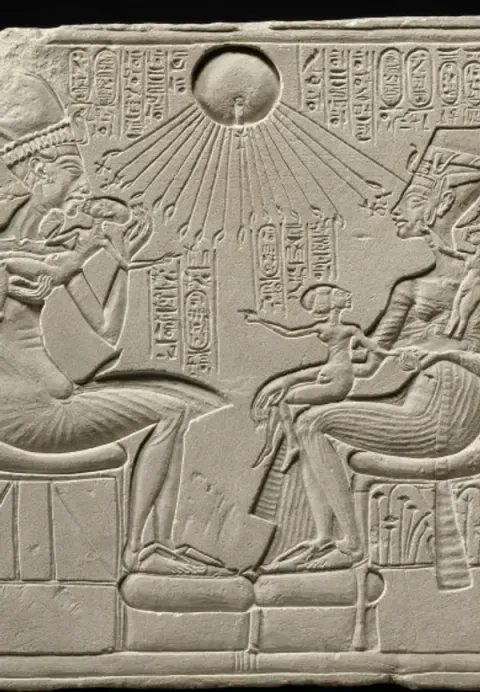
The Legacy of Nefertiti
Nefertiti’s images remain striking, while her origins, political powers, and final years remain incompletely known. The first-person book follows the evidence of the Amarna monuments and explains where reconstruction begins. Prominence beside Akhenaten is clear; a precise administrative career or secure co-regency cannot be read directly from a portrait.
Get the Full Book
Read the story of Nefertiti — 8 chapters of historical narrative.
Dramatised first-person narrative; not an autobiography.