
Robert E. Lee
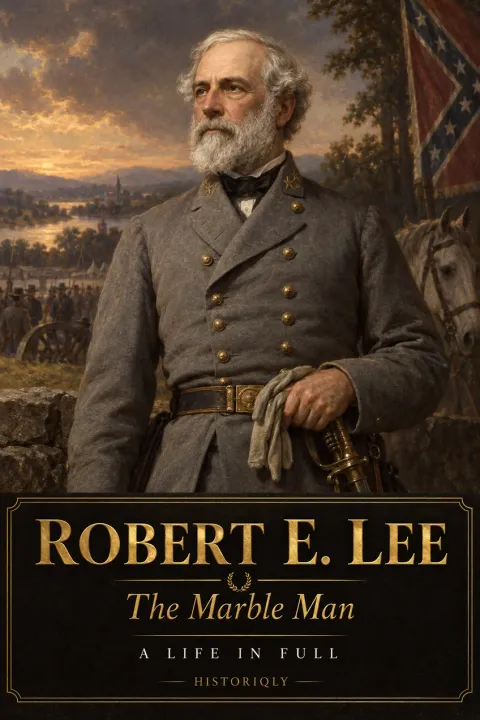
The Marble Man
Get the full EPUB
Drop your email and the EPUB downloads straight to your device. We'll also ping you when the next chronicle lands — unsubscribe any time.
Your email is already on file — enjoy the read.
Download the EPUBOn 18 April 1861, Robert Edward Lee sat in his study at Arlington House, overlooking the Potomac and the capital of the nation he had served for thirty-two years. That morning, Francis Blair had offered him command of the entire United States Army on behalf of President Lincoln. Lee declined. Two days later, he submitted his resignation, writing to his mentor Winfield Scott that he could not raise his sword against his native state. It was, his wife later said, the severest struggle of his life. Within fourteen months, the man who had refused to lead the Union would be commanding the most feared army on the continent — winning battles against forces twice his size, earning a reputation as the greatest tactical mind of his generation, and leading a cause that would cost 750,000 lives.
“It is well that war is so terrible, otherwise we should grow too fond of it.”
1807–1870
Born 19 January 1807 at Stratford Hall, Virginia, son of Revolutionary War hero 'Light Horse Harry' Lee. Graduated second in his West Point class without a single demerit. Died 12 October 1870 in Lexington, Virginia, of a stroke. His citizenship was not restored until 1975, when President Ford signed the resolution 110 years after his amnesty oath was lost.
32
Thirty-two years in the United States Army (1829–1861), from West Point through the Mexican-American War, the frontier, and the suppression of John Brown's raid. Winfield Scott called him 'the very best soldier I ever saw in the field.' He resigned it all in a single letter.
15+
From the Seven Days to Appomattox: Second Manassas, Antietam, Fredericksburg, Chancellorsville, Gettysburg, the Wilderness, Spotsylvania, Cold Harbor, Petersburg. He commanded the Army of Northern Virginia for nearly three years against forces that routinely outnumbered him two to one.
28,000
At Appomattox Court House on 9 April 1865, approximately 28,000 Confederate soldiers laid down their arms. Grant's generous terms allowed officers to keep sidearms and horses, and all men were paroled to return home. Lee issued General Order No. 9, his farewell address, the following day.
Commander of the Confederate Army of Northern Virginia, military strategist, contested American icon
Defining Events
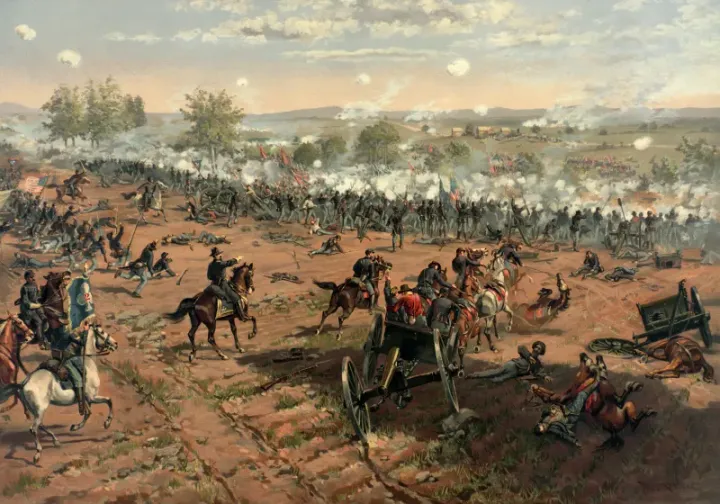
Chancellorsville — 'The Perfect Battle'
Outnumbered more than two to one, Lee divided his army in the face of the enemy — a cardinal sin in military theory. He sent Stonewall Jackson with 28,000 men on a twelve-mile flanking march around the Union right. Jackson's devastating surprise attack on the exposed XI Corps became the most audacious manoeuvre of the war. But the victory came at a terrible cost: Jackson was shot by his own men that night. 'He has lost his left arm,' Lee said, 'but I my right.'
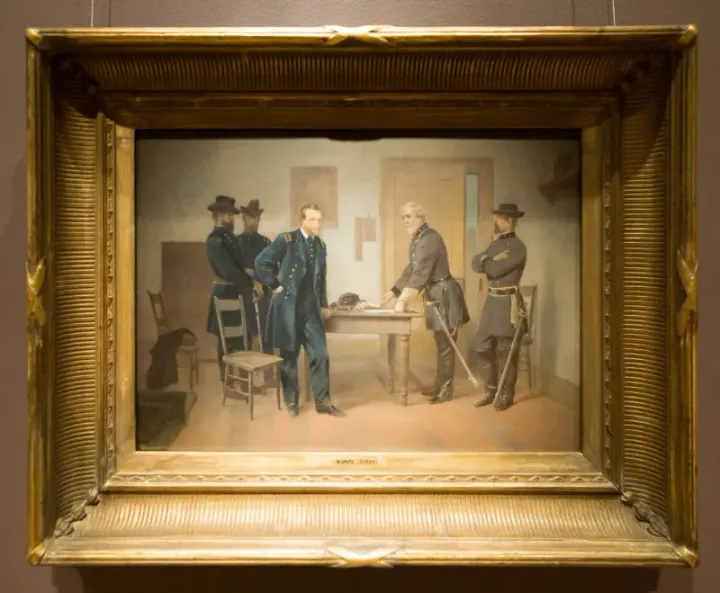
The Surrender at Appomattox
Lee arrived at the McLean House in crisp gray uniform with his ceremonial sword. Grant arrived late, muddy, in a soldier's blouse with only shoulder straps indicating rank. The contrast became one of the war's most iconic images. Grant offered generous terms: officers kept their sidearms, men kept their horses, rations were provided for the starving army. Lee rode Traveller back through his weeping soldiers. The next day he issued General Order No. 9, bidding them 'an affectionate farewell.'
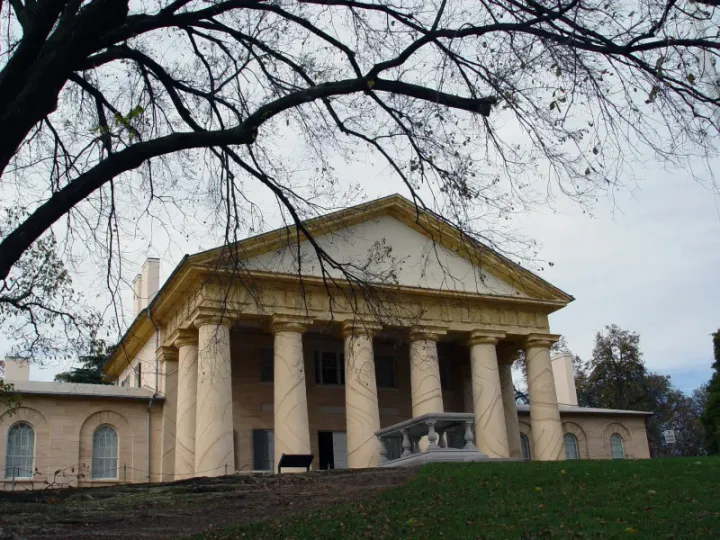
The Decision to Resign
Lee privately opposed secession, calling it 'nothing but revolution.' He was offered command of the Union Army and turned it down. He met with his old mentor Winfield Scott and told him he could not draw his sword against Virginia. On 20 April 1861, he submitted his resignation after thirty-two years of service. Two days later, he accepted command of Virginia's forces. It was the decision that defined his life — and haunted it.
Timeline
Born at Stratford Hall
Born 19 January 1807 at Stratford Hall Plantation, Westmoreland County, Virginia. His father, 'Light Horse Harry' Lee, was a Revolutionary War hero and three-term governor who delivered Washington's funeral eulogy. But financial ruin and imprisonment for debt had destroyed the family. Robert was largely raised by his ailing mother, Anne Hill Carter Lee, in a modest Alexandria house.
West Point — Zero Demerits
Lee graduates second in his West Point class and enters the Corps of Engineers. His record of discipline belongs to his professional formation; his father’s difficulties do not by themselves explain his later political or military choices.
The Mexican-American War
Served under Winfield Scott during the march from Veracruz to Mexico City, effectively functioning as Scott's chief of staff. Won three brevet promotions for gallantry at Cerro Gordo, Contreras, Churubusco, and Chapultepec. Scott later wrote that Lee was 'the very best soldier I ever saw in the field.' The experience cemented his reputation and his understanding of offensive manoeuvre warfare.
John Brown's Raid
Led a company of U.S. Marines to suppress John Brown's raid on the federal arsenal at Harpers Ferry. Lieutenant J.E.B. Stuart served as his aide. The engine house was stormed, Brown captured, and the insurrection crushed. Brown was tried and hanged. The raid inflamed sectional tensions and foreshadowed the coming war.
The Resignation
Offered command of the entire Union Army by Francis Blair on Lincoln's behalf, Lee declined. He met with Winfield Scott and submitted his resignation on 20 April, after thirty-two years of service. 'I could take no part in an invasion of the Southern States,' he wrote. Two days later he accepted command of Virginia's military forces.
A Year of Victories
Took command of the Army of Northern Virginia in June 1862 and transformed the war. The Seven Days, Second Manassas, Fredericksburg, Chancellorsville — a string of victories against superior forces that made Lee the most feared general on the continent. But Antietam — the bloodiest single day in American history, with 22,726 casualties — ended his first invasion of the North.
Gettysburg
Lee’s Pennsylvania invasion ends in defeat at Gettysburg. The July 3 assault on the Union centre fails with severe losses. Confederate troops also kidnap Black civilians during the invasion, a consequence that accounts focused only on battlefield command can obscure.
Appomattox
After ten months of siege at Petersburg, Lee's starving army finally broke. On 9 April 1865, he surrendered to Ulysses S. Grant at the McLean House, Appomattox Court House. Grant offered generous terms. Approximately 28,000 Confederates laid down their arms. The next day, Lee issued General Order No. 9: 'I bid you an affectionate farewell.'
Key Figures
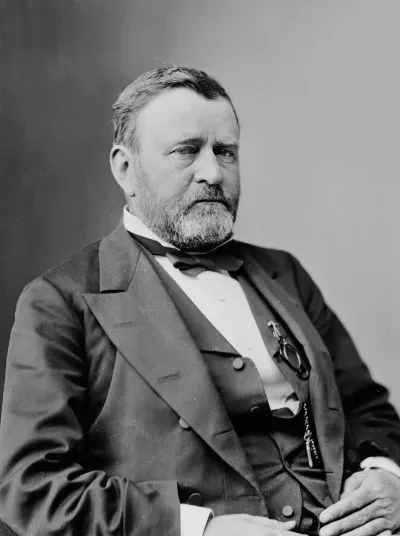
Ulysses S. Grant
The quiet, unassuming general from Ohio who did what no Union commander before him could: he refused to retreat. Grant took command of all Union forces in March 1864 and launched the grinding Overland Campaign that bled both armies white. The Wilderness, Spotsylvania, Cold Harbor, Petersburg — Grant lost 55,000 men in six weeks but kept moving south. Lee inflicted staggering casualties but could not replace his own. At Appomattox, Grant offered terms so generous that Lee's officers wept with relief. The two men never met again, but Grant's endorsement helped forward Lee's amnesty petition.
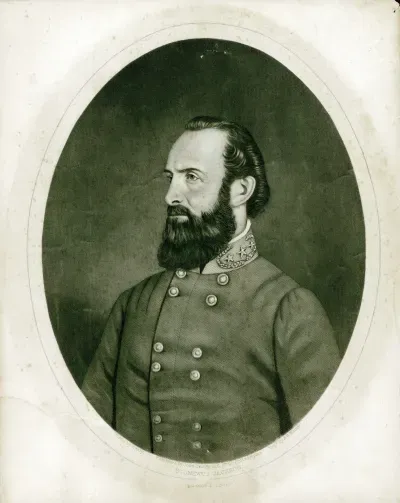
Thomas 'Stonewall' Jackson
The eccentric VMI professor who became the most feared corps commander in the Civil War. Lee and Jackson shared a deep Christian faith and an instinctive tactical understanding that produced the war's most brilliant partnership. Their crowning achievement was Chancellorsville, where Jackson's twelve-mile flanking march destroyed the Union right. But returning from reconnaissance that night, Jackson was shot by his own men in the darkness. His left arm was amputated. Lee sent word: 'He has lost his left arm but I my right.' Jackson died eight days later. Lee never found his replacement.
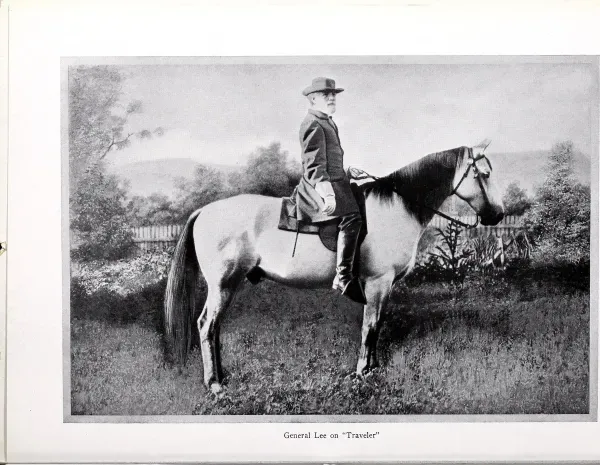
The Legacy of Robert E. Lee
Lee's military service sustained a Confederacy committed to slavery. Virginia birth did not make that allegiance inevitable: other Virginians remained with the Union. He personally owned enslaved people and managed the Custis estate, while his postwar calls for reconciliation coexisted with opposition to Black political equality.
His military decisions and later reputation deserve close examination without a claim that skill cancels responsibility, or an imagined confession that supplies repentance absent from the record. The book is a dramatised reconstruction, not Lee's autobiography.
Get the Full Book
Read the story of Robert E. Lee — 8 chapters of historical narrative.
Dramatised first-person narrative; not an autobiography.