
Saadia Gaon
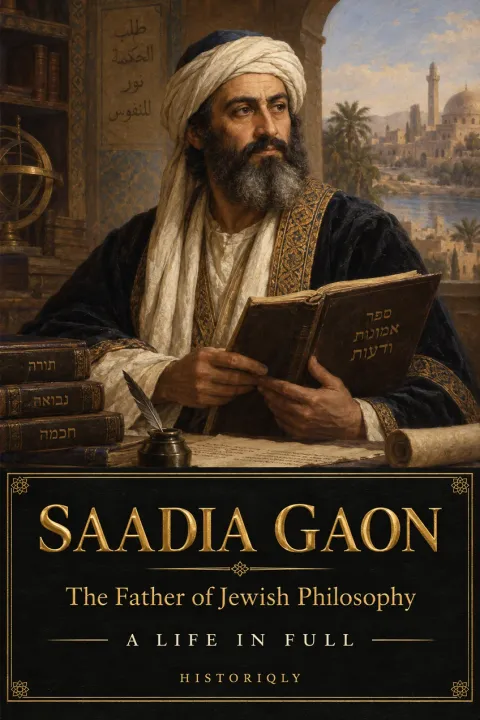
The Father of Jewish Philosophy
Get the full EPUB
Drop your email and the EPUB downloads straight to your device. We'll also ping you when the next chronicle lands — unsubscribe any time.
Your email is already on file — enjoy the read.
Download the EPUBIn 928 CE, an Egyptian-born scholar named Saadia ben Yosef al-Fayyumi was appointed head of the ancient Sura Academy in Babylonia — the first outsider ever to hold the post. It was an extraordinary choice, and it proved to be an extraordinary tenure. In the sixty years of his life, Saadia Gaon produced the first systematic work of Jewish philosophy, translated the entire Torah into Arabic, compiled the first authoritative Jewish prayer book, founded the discipline of Hebrew grammar, and waged an intellectual war on two fronts simultaneously: against the Karaites who rejected rabbinic tradition, and against the Greek-inspired rationalism that threatened to dissolve faith into pure reason. Maimonides, two centuries later, would write that without Saadia Gaon, the Torah would have almost disappeared from the Jewish people.
“Our nation, the Children of Israel, is a nation only by virtue of its Torah.”
882–942 CE
Born in the Faiyum district of Egypt into the Abbasid world at the height of its cultural brilliance. Died at Sura in Babylonia after a life of relentless scholarship and bitter controversy. Approximately sixty years that transformed Jewish intellectual life.
~80
Saadia's literary output was astonishing for a man who also led an academy, managed legal disputes across the Jewish world, and survived a years-long conflict with the Exilarch. He wrote in Hebrew, Judeo-Arabic, and Aramaic across philosophy, grammar, biblical commentary, law, and liturgy.
3
Hebrew, Judeo-Arabic (Arabic written in Hebrew script), and Aramaic. His translation of the Torah into Arabic — the Tafsir — remained in active liturgical use among Yemenite Jews for over a thousand years.
2
In 921–922, a dispute with the Palestinian Gaon Aaron ben Meir threatened to divide world Jewry by placing Passover on different days. Saadia intervened with decisive scholarship, preserving a single unified Jewish calendar across the diaspora.
First systematic Jewish philosopher, translator of the Torah into Arabic, Gaon of Sura
Defining Events

Emunot ve-Deot
Completed during his years of involuntary exile from the Sura Academy, Kitab al-Amanat wal-I’tiqadat — translated into Hebrew as Emunot ve-Deot ("Beliefs and Opinions") — is the first systematic work of Jewish philosophy ever written. In ten treatises, Saadia reconciled reason and revelation, offered four proofs of creation ex nihilo, refuted twelve rival cosmogonies, and established an epistemological framework that would anchor Jewish philosophical thought for centuries. Maimonides built directly upon its foundations; Judah Halevi wrote his Kuzari in explicit dialogue with it.

The Arabic Torah
Saadia's Tafsir — an Arabic translation and rationalist commentary on the entire Pentateuch and much of the Hebrew Bible — became the most widely used Jewish Arabic Bible for centuries. Written in Hebrew script for Jewish readers, it was simultaneously a translation and a philosophical intervention: every anthropomorphic reference to God ("the hand of God", "the face of God") was paraphrased to align with monotheistic philosophy. Yemenite Jewish communities used it as part of their weekly Torah reading for over a thousand years.
The Calendar Controversy
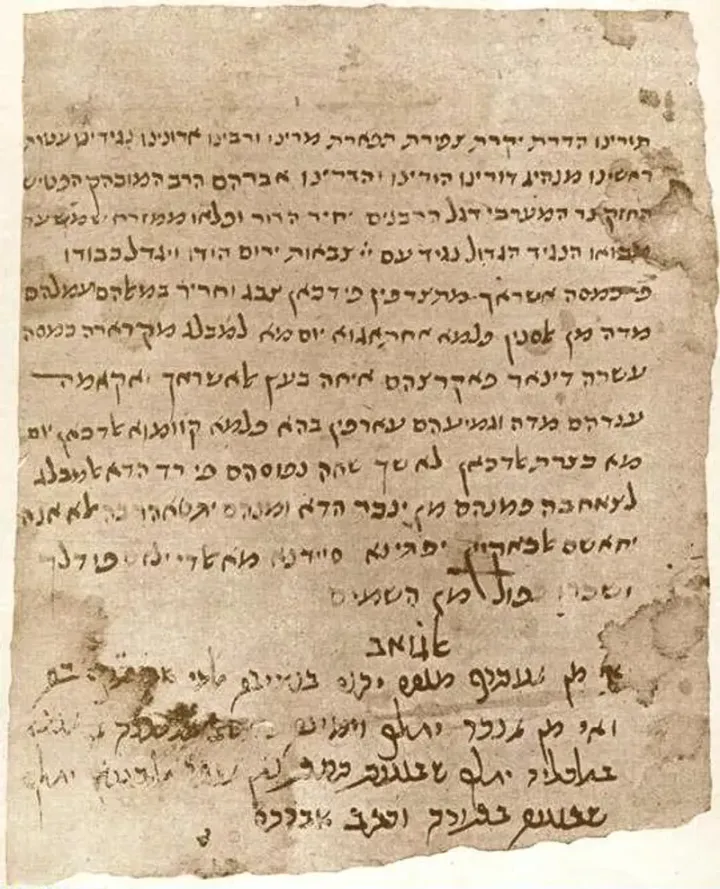
When the Palestinian Gaon Aaron ben Meir announced a calendrical revision that would have placed Passover two days earlier than the Babylonian reckoning, Saadia was the first scholar to formally rebut him. Writing from Palestine and then Babylonia, he produced Sefer ha-Mo’adim ("Book of Festivals") to demonstrate the mathematical and traditional error. The consequence mattered enormously: without a unified calendar, some Jewish communities would be eating forbidden leavened bread while others were still in the middle of Passover, and Yom Kippur would fall on different days. The Babylonian position prevailed.
Timeline
Born in the Faiyum, Egypt
Saadia ben Yosef was born in the Faiyum district of Middle Egypt — in Arabic, al-Fayyum — under the vast administrative umbrella of the Abbasid Caliphate. His father was Rabbi Yosef; the family's precise standing is disputed, since his later enemies would slander his father's origins. Saadia himself, in his polemical autobiography Sefer ha-Galui, claimed descent from the biblical Shelah, son of Judah, and listed the first-century ascetic Hanina ben Dosa among his ancestors. The Faiyum had an established Jewish community with access to the broader Mediterranean world of letters.
Composes the Agron
At approximately twenty years old, Saadia completed the Agron — the first Hebrew dictionary in history. Double-indexed alphabetically by initial and final letters, it was designed as a practical tool for poets. The name Agron would become a generic term for Hebrew lexicons for generations. Though primitive by the standards of his later, more sophisticated grammatical works, it announced an extraordinary mind and founded an entire discipline.
Settles in Tiberias
Saadia left Egypt and settled in the Land of Israel — then the Abbasid province of Bilad al-Sham — establishing himself in Tiberias, the ancient city on the Sea of Galilee. There he studied under Abu Kathir Yahya al-Katib (Eli ben Yehudah ha-Nazir), a Jewish theologian trained in the Kalam tradition of Islamic rational theology. This encounter with Kalam — the Muslim science of systematic theological argument — would permanently shape Saadia's philosophical method and ultimately produce Emunot ve-Deot.
The Karaite Wars
Beginning in his early twenties, Saadia engaged in systematic polemical combat against Karaism — the movement founded around Anan ben David that rejected the Oral Torah (the Talmud and Mishnah) and insisted on the literal text of the written Bible alone. By 926 he had composed at least five major anti-Karaite works, including the exhaustive Kitab al-Tamyiz ("Book of Distinction"). His first target was the Karaite scholar Solomon ben Yeruham; his campaign continued for decades against successive Karaite polemicists.
The Calendar Controversy
Rabbi Aaron ben Meir, head of the Palestinian Gaonate in Ramla, announced that for the year 922 he would place Passover two days before the Babylonian reckoning — a mathematical dispute about when the lunar conjunction could trigger a postponement. The consequence was catastrophic: world Jewry would observe Passover on different days. Saadia was the first to formally rebut ben Meir, writing from Palestine and then, after relocating to Babylonia, placing his pen at the service of the academies. The Babylonian calendar prevailed; ben Meir eventually capitulated.
Appointed Gaon of Sura
Exilarch David ben Zakkai appointed Saadia as head of the Sura Academy — the ancient institution founded in 225 CE by Abba Arika (Rav) and the senior center of Jewish learning in the world. The appointment was extraordinary on two counts: no non-Babylonian had ever been made Gaon of Sura, and Saadia was passed over senior local scholars. Under his leadership, the declining academy entered a period of renewed brilliance that contemporaries immediately recognized as exceptional.
Conflict with the Exilarch
A probate case shattered the relationship between Saadia and David ben Zakkai. Saadia refused to sign a ruling he considered legally unsound and financially self-serving to the Exilarch. When David sent his son to compel Saadia's signature by threat, Saadia's servant ejected the young man. David deposed Saadia and installed a rival Gaon; Saadia retaliated by formally conferring the exilarchate on David's brother Hasan. The conflict paralysed Babylonian Jewish institutions for years and involved appeals to the Abbasid Caliph's court. It was during this exile — writing in a private house in Baghdad — that Saadia completed Emunot ve-Deot.
Emunot ve-Deot Completed
In the most productive years of his involuntary exile from the Gaonate, Saadia completed his masterwork: Kitab al-Amanat wal-I'tiqadat, known in Hebrew as Emunot ve-Deot. Ten treatises addressed: creation, divine unity, revelation, commandments, reward and punishment, the soul, resurrection, the messianic age, and ethics. It was the first systematic work of Jewish philosophy — an attempt to provide rational foundations for everything Judaism believed, and to demonstrate that reason and revelation, properly understood, could not contradict each other.
Reconciliation and Return
Through the mediation of Bishr ben Aaron — father-in-law of a future Gaon — Saadia and David ben Zakkai were reconciled after approximately four years of open conflict. The precise terms were not recorded, but Saadia was reinstated as Gaon of Sura. David ben Zakkai died around 940, before his former adversary; the reconciliation held. Saadia returned to the academy and continued writing and teaching for the remaining years of his life.
Death at Sura
Saadia Gaon died at Sura in Babylonia in 942 CE, aged approximately sixty. The cause of death, as recorded by Abraham ibn Daud in Sefer ha-Qabbalah (c. 1161) and transmitted through Saadia's son Dosa, was mara shehora — "black gall", the medieval term for severe melancholia. His health had been repeatedly broken by the extraordinary demands of his career: polemical warfare, institutional conflict, exile, and decades of literary production. He died as the last giant of the Geonic age, in the academy he had transformed.
Key Figures
David ben Zakkai
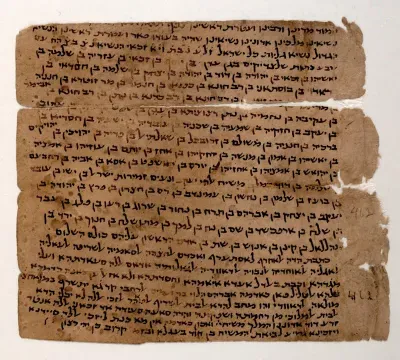
David ben Zakkai held the office of Exilarch — the secular head of Babylonian Jewry, a hereditary post claiming descent from the House of David and recognized by the Abbasid Caliphate. He appointed Saadia to the Gaonate in 928, an act of confidence that made Saadia's career possible. Two years later, a disputed probate ruling destroyed their alliance: each excommunicated the other, each installed a rival in the other's seat. The conflict lasted years, involved the Caliph's court, and rocked every Jewish institution in Babylonia. They were eventually reconciled, but David died around 940 — before his adversary — carrying the wounds of their long war.
Hai Gaon
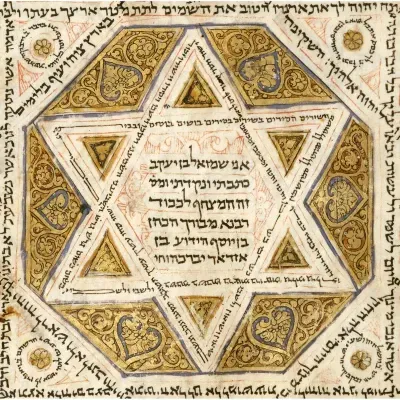
Hai ben Sherira Gaon (939–1038) was Saadia's great successor at the head of the Babylonian academies — born three years before Saadia's death, he would come to represent the final flowering of the Geonic tradition. Where Saadia was its revolutionary transformer, Hai was its last defender. He served as Gaon for forty years, answering questions from Jews across four continents, and his death in 1038 marked the definitive end of the Babylonian era of Jewish authority that Saadia had so brilliantly sustained. Together they bookend the golden century of the Geonim.
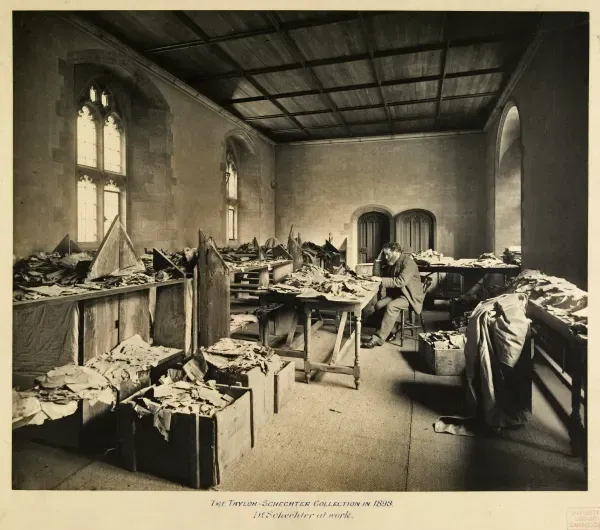
The Legacy of Saadia Gaon
Saadia Gaon died in 942, but the world he built lasted far longer. His Emunot ve-Deot became the foundation on which every subsequent medieval Jewish philosopher built — Bahya ibn Paquda, Judah Halevi, and Maimonides all acknowledged him as the starting point of their inquiry. His Arabic Torah translation remained in liturgical use among Yemenite Jews for over a thousand years, so central to their practice that they copied it by hand into nearly every Bible manuscript they produced. His prayer book — the first attempt to transcribe the full weekly liturgy — established the template for every siddur that followed. And his grammar of Biblical Hebrew pioneered the comparative Semitic linguistic tradition that modern scholars still inhabit.
Maimonides, in the twelfth century, wrote with characteristic directness: "Were it not for Saadia Gaon, the Torah would have almost disappeared from the Jewish people." That verdict has stood. Read his story in his own words — the first-person ePub brings you inside the mind of the man who saved a tradition.
Get the Full Book
Read the story of Saadia Gaon — 8 chapters of historical narrative.
Dramatised first-person narrative; not an autobiography.