
Sargon of Akkad
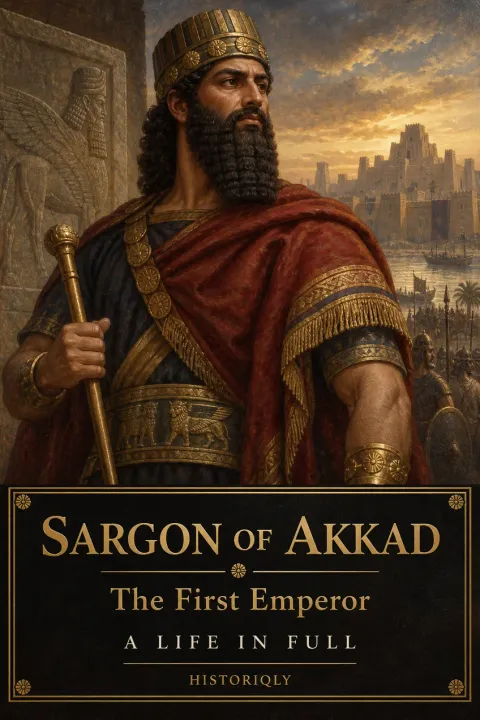
The First Emperor
Get the full EPUB
Drop your email and the EPUB downloads straight to your device. We'll also ping you when the next chronicle lands — unsubscribe any time.
Your email is already on file — enjoy the read.
Download the EPUBSargon brought several Mesopotamian city-states under Akkadian rule in the late third millennium BC. Royal inscriptions and later traditions preserve claims of conquest, while the much later birth legend tells of an infant set adrift in a basket. Those are different kinds of evidence. His capital, Akkad, has not been securely located, and the reach of campaigns should not automatically be mapped as permanent administration. His dynasty became an influential precedent without having invented every element of imperial government.
“My mother was a high priestess, my father I knew not. She set me in a basket of rushes, she sealed my lid with bitumen. She cast me into the river, which rose not over me.”
~56 years
Sargon ruled the Akkadian Empire for approximately 56 years, one of the longest reigns in ancient Mesopotamian history.
34
Sargon fought 34 recorded battles to conquer and unify the city-states of Sumer and Akkad under his rule.
~180 years
Akkadian power endured across several reigns before fragmenting under multiple internal and external pressures. The Gutians were part of this history; a single invasion is not a sufficient explanation of the collapse.
Sea to Sea
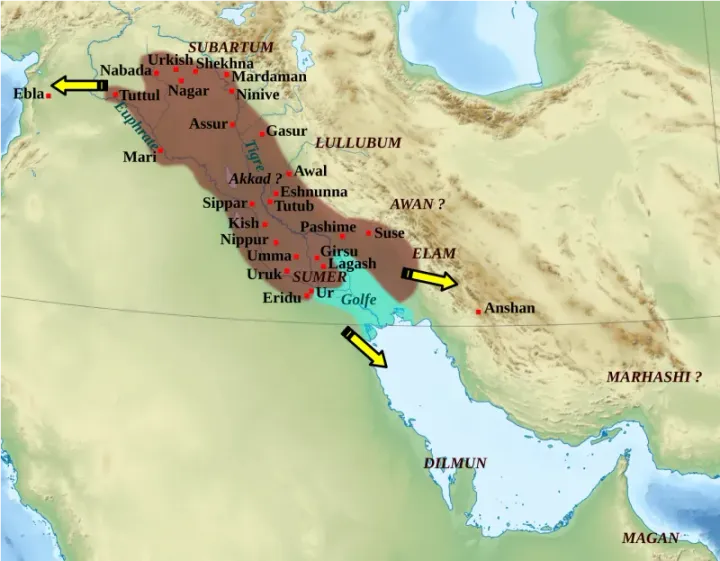
From the Upper Sea (Mediterranean) to the Lower Sea (Persian Gulf), Sargon's empire was the largest the world had yet seen.
Founding the Akkadian Empire, the first empire in recorded history, uniting Sumer and Akkad under a single dynasty
Defining Events
The Defeat of Lugal-Zage-Si
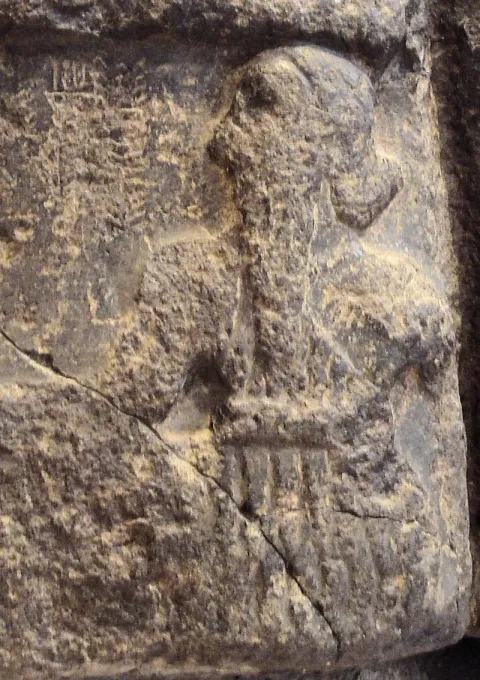
After seizing power in Kish, Sargon turned his ambitions southward against Lugal-Zage-Si of Uruk, the most powerful ruler in Sumer, who had already united much of the region under his own authority. Sargon defeated him in battle, reportedly leading Lugal-Zage-Si in a neck-stock to the gate of the god Enlil at Nippur — a dramatic public humiliation that signalled the end of traditional Sumerian political supremacy and the dawn of Akkadian dominance.
Building the City of Akkad
Akkad, or Agade, served as Sargon’s capital, though the settlement may have preceded him. Its location remains unidentified. Akkadian gained prominence under the dynasty while Sumerian continued in use; imperial administration worked through inherited institutions as well as new demands.
Enheduanna and Cultural Legacy
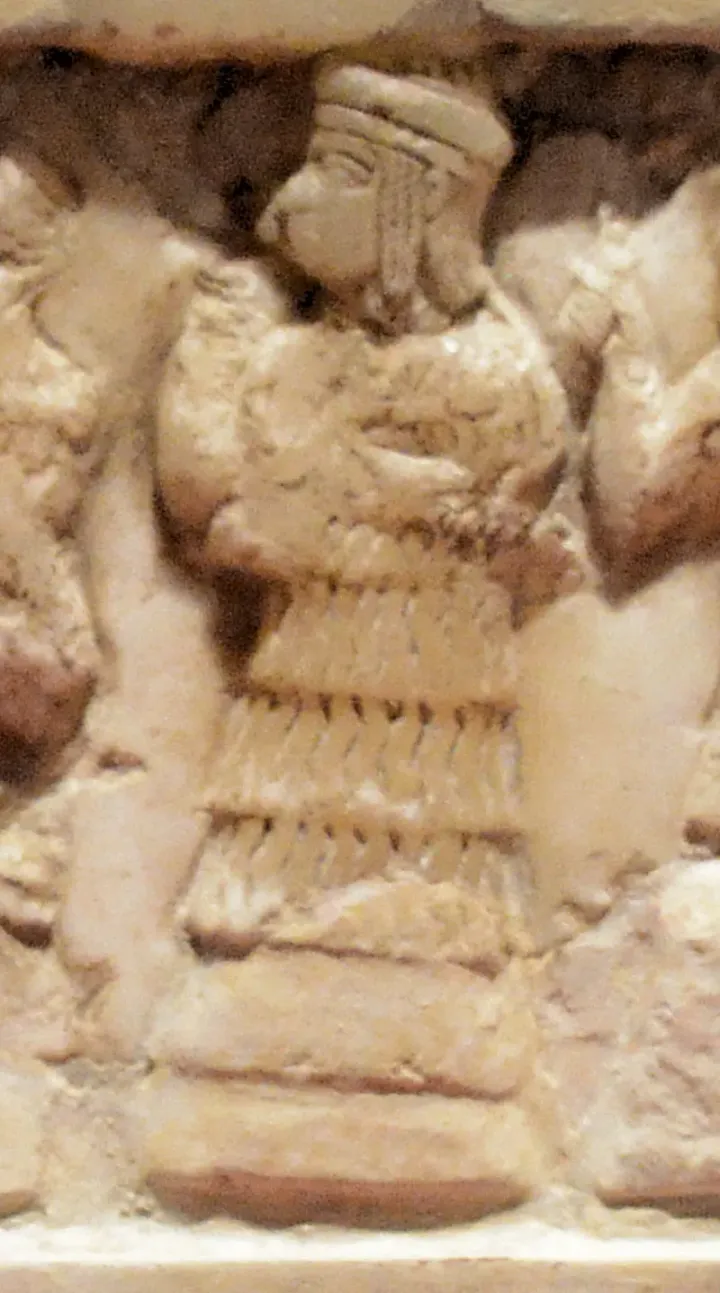
Enheduanna’s disk identifies her as Sargon’s daughter and priestess of Nanna at Ur. Literary tradition attaches major hymns to her name. Their survival through later copies raises questions of authorship and transmission alongside the firm evidence for her priestly office.
Timeline
Seizure of Power in Kish
Sargon, serving as cupbearer to King Ur-Zababa, overthrew his master and seized control of the city-state of Kish, launching his campaign to unify Mesopotamia.
Defeat of Lugal-Zage-Si
Sargon marched south and defeated Lugal-Zage-Si of Uruk, the dominant ruler of Sumer, parading him in chains to the gate of Enlil at Nippur and dismantling the old Sumerian order.
Foundation of Akkad
Sargon established his new capital city of Akkad (Agade), which became the political and economic center of the empire. Its exact location remains unknown to this day.
Conquest to the Upper Sea
Sargon campaigned westward through Mari and into the Levant, reaching the Upper Sea (Mediterranean) and the Cedar Forest, extending Akkadian influence far beyond Mesopotamia's traditional borders.
Appointment of Enheduanna
Enheduanna held the priesthood of Nanna at Ur and is identified as Sargon’s daughter. Poems transmitted under her name survive in later copies; their authorship and development remain subjects of scholarly discussion.
Revolts and Reassertion
In the later years of his reign, widespread revolts erupted across the empire. Sargon suppressed them and maintained his hold on power, demonstrating the resilience of the centralized imperial system he had built.
Death of Sargon
Sargon died after a reign of approximately 56 years. Power passed to his sons Rimush and then Manishtushu, both of whom faced continuous rebellions from subject city-states.
Empire at Its Zenith Under Naram-Sin
Naram-Sin extended Akkadian power and claimed divine status. His Victory Stele survives. The dynasty’s later decline involved multiple pressures and should not be compressed into one Gutian invasion.
Key Figures
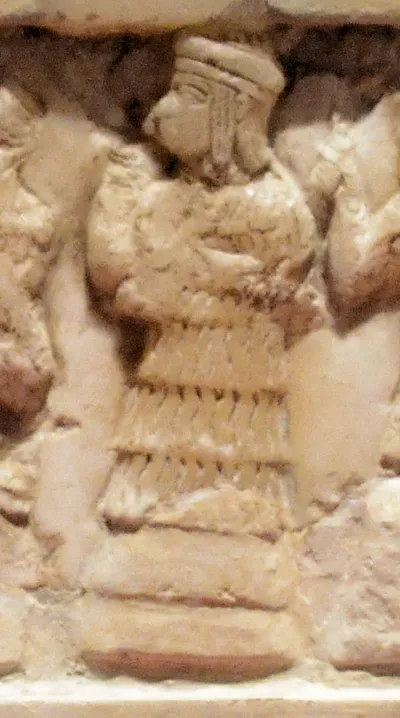
Enheduanna
Enheduanna’s priestly role and relationship to Sargon are attested by her disk. Hymns associated with her became important parts of Mesopotamian literary tradition. Their later manuscript history invites careful distinction between the historical priestess and the texts transmitted in her name.
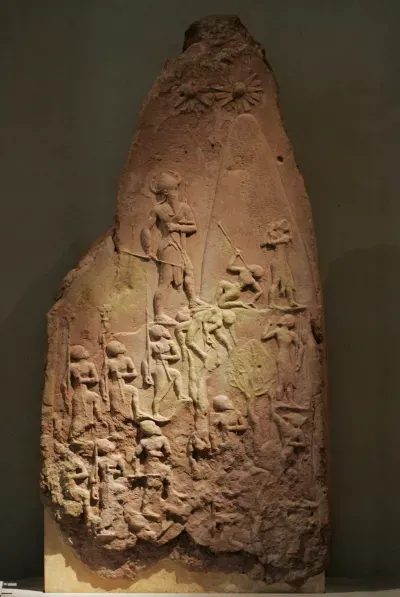
Naram-Sin
The grandson of Sargon and the fourth ruler of the Akkadian dynasty, Naram-Sin brought the empire to its greatest territorial extent. He was the first Mesopotamian king to declare himself a living god, adding the divine determinative to his name. His famous Victory Stele, depicting him towering over fallen enemies beneath the stars, is one of the masterworks of ancient art. Yet his reign also marked the beginning of the empire's decline, and later Mesopotamian tradition blamed him for angering the gods and inviting the Gutian catastrophe that ultimately destroyed Akkad.
The Legacy of Sargon of Akkad
Sargon of Akkad did something no one before him had done: he took a landscape of competing city-states and forged them into a single political entity governed from a single capital. The Akkadian Empire he built around 2334 BC was not merely the first empire in Mesopotamia — it was the first empire anywhere in the recorded human past. His innovations in centralized administration, the use of Akkadian as an imperial lingua franca, the appointment of loyal governors over conquered territories, and the strategic placement of family members in key religious positions created a blueprint for imperial rule that the Third Dynasty of Ur, the Babylonians, the Assyrians, and the Persians would all follow. That his birth legend — the child set adrift in a basket, found by a humble man, destined for greatness — resonated so powerfully that it was retold for nearly two thousand years after his death speaks to the mythic stature Sargon achieved in the ancient world. His capital of Akkad, the city that gave its name to a language, a people, and an entire civilization, remains lost beneath the alluvial plains of Iraq, a fitting emblem of how much of the ancient world still lies beyond our reach. Yet the political idea Sargon brought into being — that diverse peoples and distant lands could be bound under a single sovereign authority — proved indestructible, outlasting not only his dynasty but the civilization that produced it.
Get the Full Book
Read the story of Sargon of Akkad — 8 chapters of historical narrative.
Dramatised first-person narrative; not an autobiography.