
Sigmund Freud
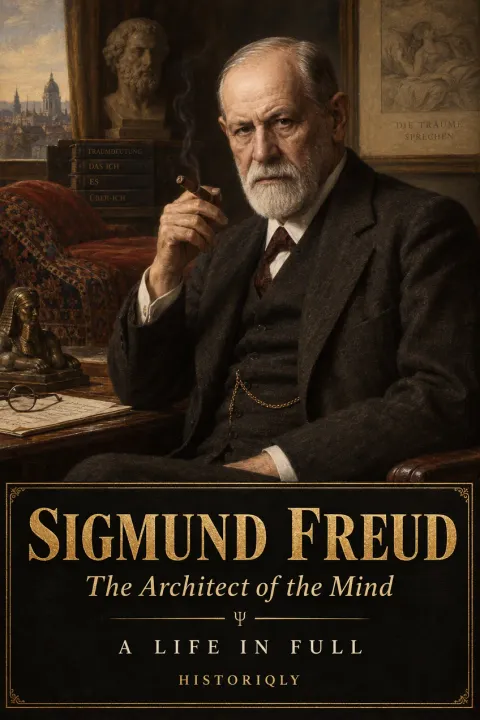
The Architect of the Mind
Get the full EPUB
Drop your email and the EPUB downloads straight to your device. We'll also ping you when the next chronicle lands — unsubscribe any time.
Your email is already on file — enjoy the read.
Download the EPUBFreud built a method around listening to what patients found difficult to say. In his consulting room in Vienna, dreams, memories and apparently stray thoughts became material for interpretation. His theories influenced medicine and culture, but their influence should not be confused with proof of every claim. This reconstructed biography follows both the ambition of his work and the questions raised by his accounts of other people’s lives.
“The interpretation of dreams is the royal road to a knowledge of the unconscious activities of the mind.”
1856–1939
Born in Freiberg, Moravia, on 6 May 1856. Died in London on 23 September 1939, aged eighty-three, after years of treatment for oral cancer.
24 volumes
The Standard Edition of the Complete Psychological Works of Sigmund Freud spans twenty-four volumes — from early studies on hysteria to his final meditations on civilization, religion, and death.
600 copies
The first printing numbered 600 copies. Published in November 1899 with 1900 on the title page, the book initially sold slowly and later acquired a wide readership through new editions and the growth of psychoanalysis.
47
From 1891 to 1938, Freud lived and practiced at Berggasse 19 in Vienna’s Alsergrund district. It was here that psychoanalysis was born, where patients lay on the famous couch, and where Freud received the world.
Psychoanalysis, the unconscious mind, dream interpretation, the Oedipus complex
Defining Events
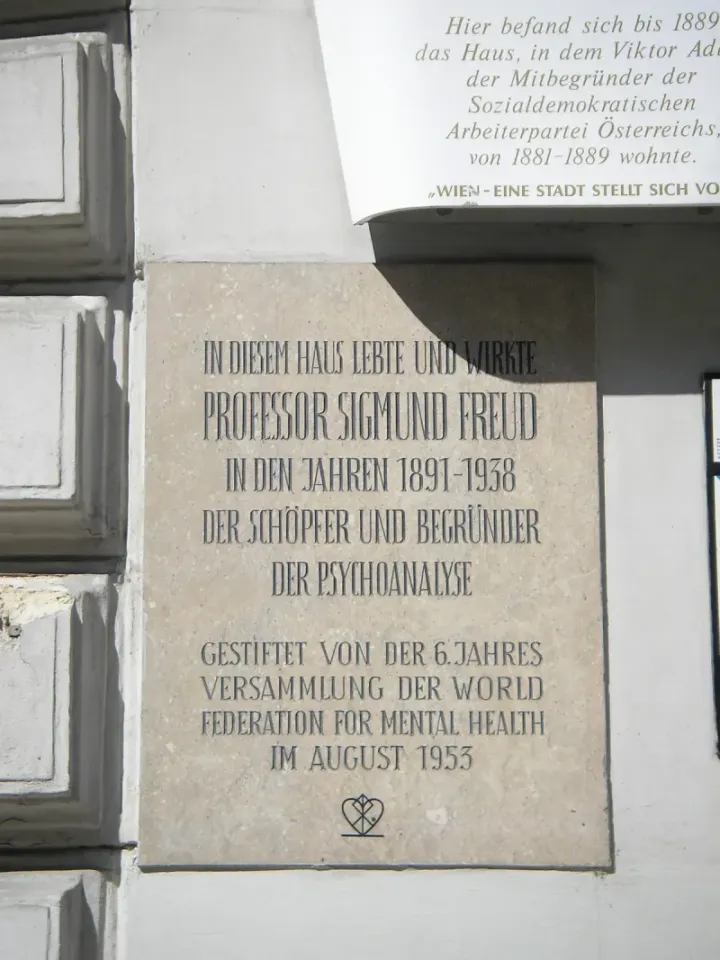
Berggasse 19 and the Birth of Psychoanalysis
Freud lived and worked at Berggasse 19 from 1891 to 1938. His consulting rooms became a setting for clinical work and meetings of the early psychoanalytic circle. The published cases drew on different arrangements: Little Hans, for example, was largely observed through reports from his father, rather than regular sessions with Freud.
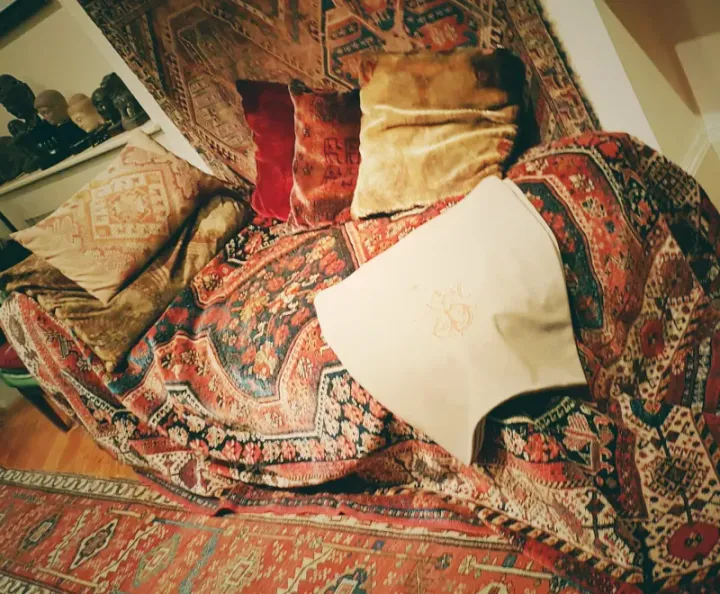
The Talking Cure
The phrase “talking cure” came from Anna O., a patient treated by Josef Breuer. Freud later developed free association as part of psychoanalysis. The published account of Anna O.’s recovery overstated the treatment’s success. Her life, under her own name Bertha Pappenheim, also included important work as a social reformer.
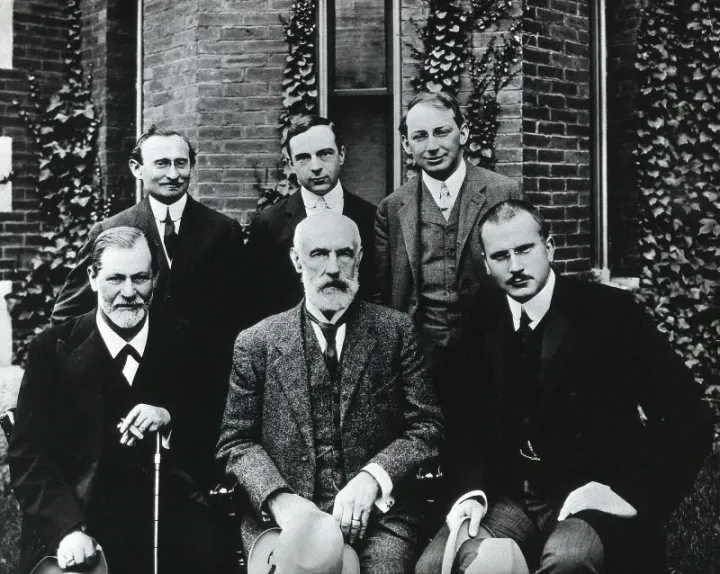
Clark University Lectures
In September 1909, Freud gave five lectures at Clark University in Worcester, Massachusetts, at the invitation of G. Stanley Hall. Jung and Ferenczi travelled with him. The honorary degree and lectures marked an important American reception of his work, without implying unanimous acceptance.
Timeline
Born in Freiberg, Moravia
Sigismund Schlomo Freud is born on May 6 in Freiberg, Moravia (now Příbor, Czech Republic), the eldest child of Jakob Freud, a wool merchant, and his third wife, Amalia Nathansohn. The family is Jewish. When Sigismund is three, economic hardship forces the family to move — first briefly to Leipzig, then to Vienna, the city that will define him.
Studies Under Charcot in Paris
Freud studies with Jean-Martin Charcot in Paris in 1885–1886. The demonstrations of hypnosis and hysteria influence his clinical questions; psychoanalysis emerges gradually from later work, rather than arriving fully formed from Paris.
The Interpretation of Dreams
The Interpretation of Dreams appeared in November 1899 with 1900 on its title page. It set out Freud’s account of dream-work and interpretation, using his own dreams alongside those reported by others. Its influence grew through later editions and psychoanalytic discussion.
Clark University Lectures
Freud gave five lectures in German and received an honorary degree from Clark University. Their publication offered a concise introduction to psychoanalysis for a wider audience.
The Break with Jung
Theoretical disputes over libido and interpretation strained the alliance. Freud and Jung ended their personal relationship in January 1913; Jung’s resignation as president of the International Psychoanalytic Association followed in 1914.
The Ego and the Id
Freud presented the structural model of id, ego and superego. The model allowed for unconscious activity within the ego and did not simply equate the ego with consciousness. In the same year, oral surgery began a long period of treatment and prosthetic care.
Flight from Vienna
Following the Nazi annexation of Austria in March 1938, Freud and his family face persecution. Supporters help arrange their escape. He reaches London on 6 June, lives first at Elsworthy Road and moves to Maresfield Gardens on 27 September. Four sisters remain in Vienna; their deaths under Nazi persecution occur after his own.
Death in London
Freud dies at Maresfield Gardens on 23 September 1939, aged eighty-three. His physician Max Schur later describes administering morphine in his final illness. The account of these last days comes from those around him, rather than from Freud himself.
Key Figures
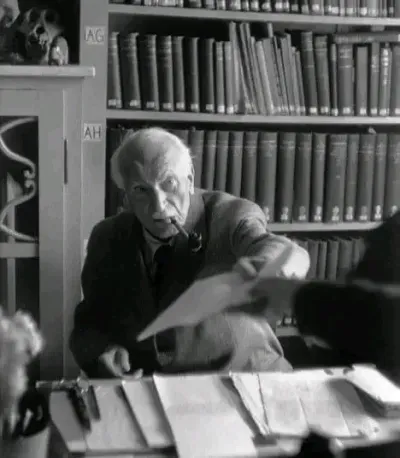
Carl Jung
The Swiss psychiatrist became a close collaborator and the first president of the International Psychoanalytic Association in 1910. Disagreements over libido, interpretation and authority led to the rupture of their personal relationship in 1913. Jung developed the distinct tradition of analytical psychology.
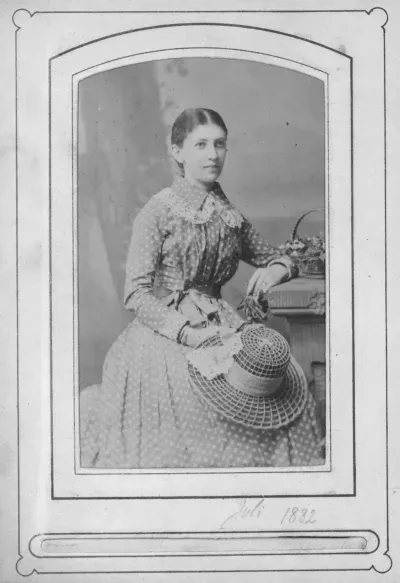
Martha Bernays
Martha Bernays met Freud in 1882 and married him in 1886 after a four-year engagement. Their correspondence preserves affection as well as tensions over his possessiveness. She managed a household with six children, moved to London in 1938, and lived until 1951.
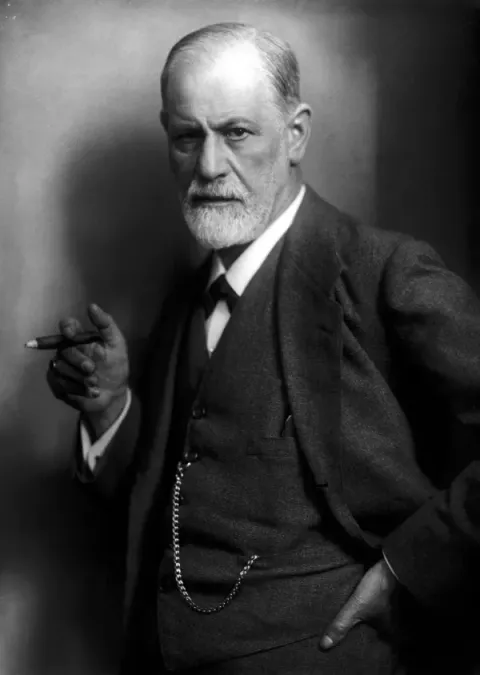
The Legacy of Sigmund Freud
Freud’s influence and the validity of his theories are distinct questions. His writing changed how many readers understood dreams, childhood and unconscious motivation, while his case histories and clinical claims remain subjects of criticism.
The book uses a reconstructed first-person voice. It is not Freud’s autobiography or a transcript of his thoughts; its historical afterword separates events following his death from what he could have known.
Get the Full Book
Read the story of Sigmund Freud — 8 chapters of historical narrative.
Dramatised first-person narrative; not an autobiography.