
Yose ben Yoezer
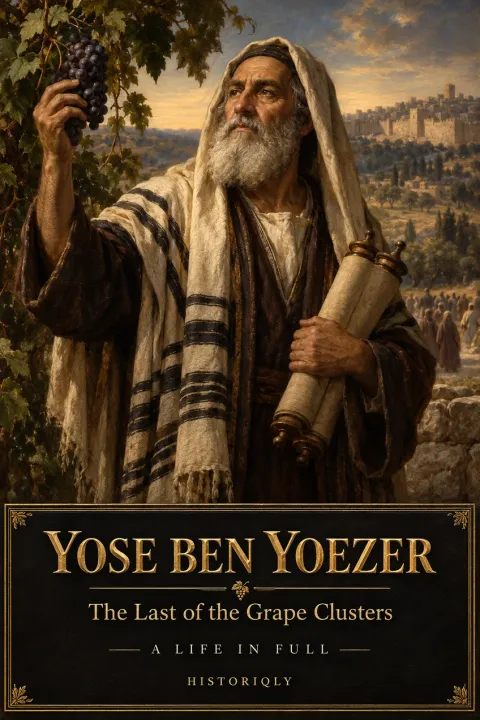
The Last of the Grape Clusters
Get the full EPUB
Drop your email and the EPUB downloads straight to your device. We'll also ping you when the next chronicle lands — unsubscribe any time.
Your email is already on file — enjoy the read.
Download the EPUBYose ben Yoezer is remembered in early rabbinic teaching and in a much later midrash about execution and repentance. Those sources differ in genre and distance from his lifetime. His teachings supply a firmer basis for his portrait than a continuous biography or a securely dated account of his death.
“Let your house be a meeting place for the Sages; sit in the dust of their feet, and drink their words thirstily.”
Dates uncertain
Genesis Rabbah 65:22 tells of Yose being taken to execution and meeting his nephew Yakum. The date is uncertain. Identifying him among the sixty men killed in 1 Maccabees 7, or identifying Yakum with Alcimus, goes beyond what those texts establish.
1st of 5
Yose ben Yoezer and Yose ben Yochanan of Jerusalem were the first of five successive pairs (Zugot) of scholars who led the Sanhedrin from c. 170 BC to 30 BC. He served as Nasi (president); his partner served as Av Beit Din (chief justice).
1:4
His teaching is recorded in the fourth mishnah of Pirkei Avot — 'Let your house be a meeting place for the Sages; sit in the dust of their feet, and drink their words thirstily.' One of the most quoted ethical maxims in Jewish tradition.
3
He issued three famously lenient rulings recorded in Mishnah Eduyot 8:4 — on the purity of a certain locust, on Temple slaughterhouse liquids, and on corpse impurity — earning the paradoxical nickname 'Yossi the Permitter' despite being the most personally strict sage of his generation.
Early rabbinic teacher of the Zugot tradition, remembered for legal rulings, priestly piety, and a later execution narrative
Defining Events
The First Halakhic Dispute
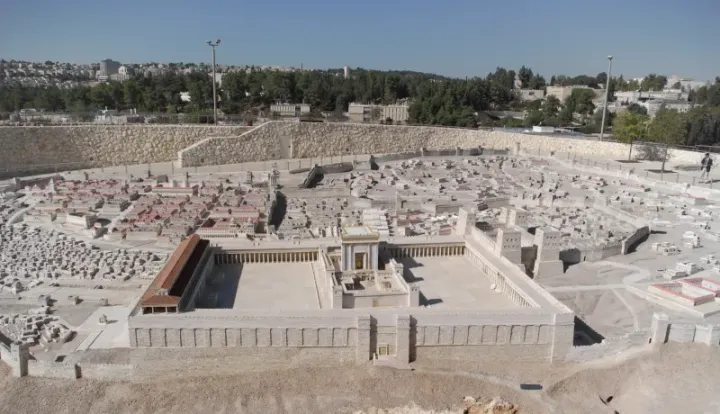
Mishnah Chagigah 2:2 preserves Yose ben Yoezer opposing festival semikhah and Yose ben Yochanan permitting it. Later tradition remembers this as an early enduring controversy; it does not prove that no interpreters had previously disagreed.
The Three Lenient Rulings
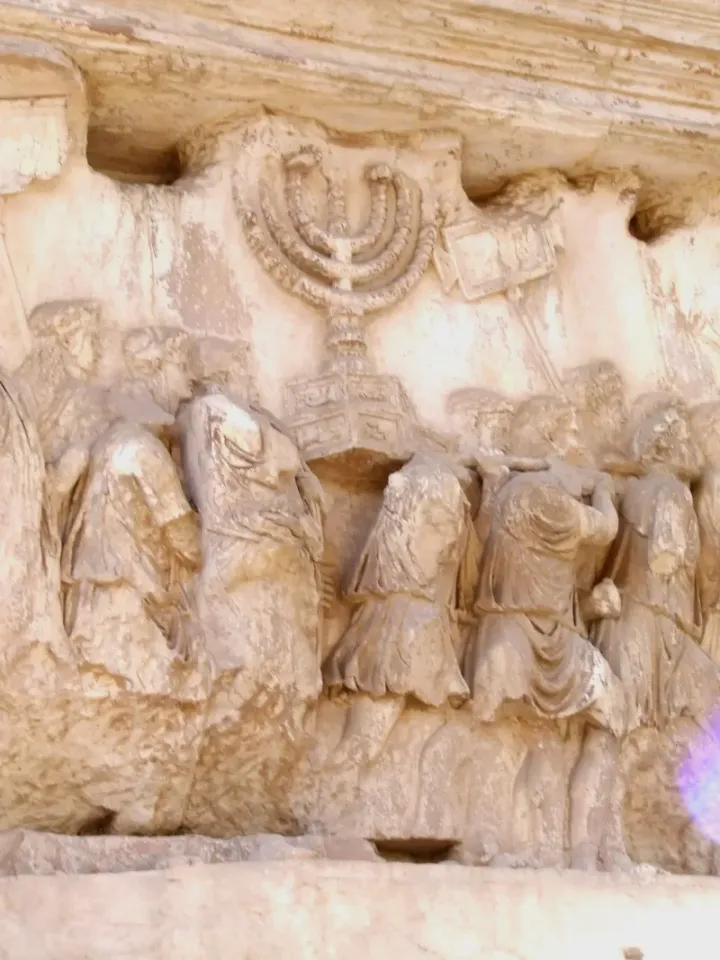
Recorded in Mishnah Eduyot 8:4, Yose ben Yoezer testified on three matters: the ritual purity of the ayal kamtza locust, the cleanness of liquids from the Temple slaughterhouse, and questions of corpse impurity. Each ruling was considered lenient, earning him the nickname Yossi Sharya — 'Yossi the Permitter.' The paradox was sharp: in his personal practice, he was so stringent that he treated his ordinary food as if it were Terumah (priestly offering), earning him the title Chasid ShebKehunah — 'the most pious of the priesthood.'
The Martyrdom and the Nephew's Vision
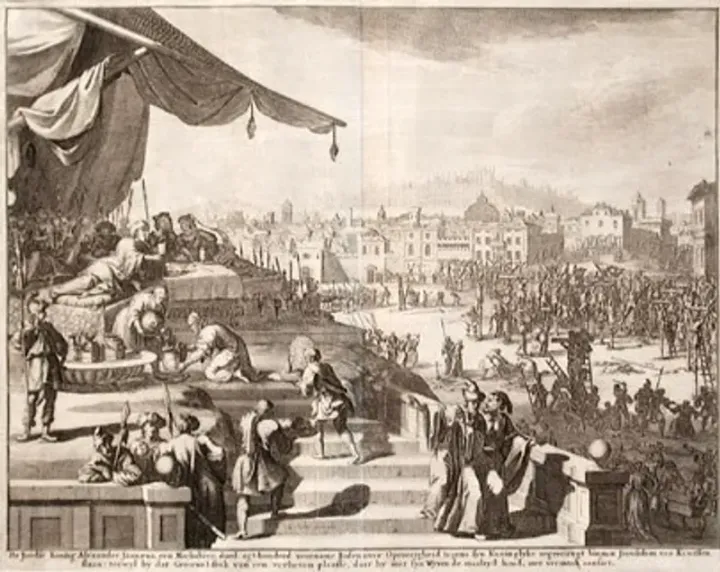
Genesis Rabbah 65:22 tells of Yose being taken to execution and meeting his nephew Yakum. The date is uncertain. Identifying him among the sixty men killed in 1 Maccabees 7, or identifying Yakum with Alcimus, goes beyond what those texts establish.
Timeline
Born in Zeredah
Yose ben Yoezer was born in Zeredah (Tzreidah), a town in southern Samaria, into a priestly (Kohen) family. Judea was transitioning from Ptolemaic to Seleucid control. He was likely a disciple of Antigonus of Sokho, placing him in the direct chain of transmission from Moses at Sinai through the Men of the Great Assembly.
Antiochus IV Takes Power
Antiochus IV Epiphanes became king of the Seleucid Empire. He would prove to be the most dangerous enemy the Jewish religion had ever faced. His programme of aggressive Hellenisation targeted the very foundations of Jewish practice — Torah study, circumcision, Sabbath observance, and the Temple cult.
Appointed First Nasi of the Zugot
Yose ben Yoezer was appointed Nasi (president) of the Sanhedrin, with Yose ben Yochanan of Jerusalem serving as Av Beit Din (chief justice). Together they formed the first Zugot pair — inaugurating a system of dual leadership that would govern Jewish spiritual life for the next century and a half.
The Abomination of Desolation
1 Maccabees 1 describes the desecration of the altar in Seleucid year 145, conventionally 167 BC, and the suppression of Jewish practices. It does not identify Yose as an eyewitness to these events.
The Maccabean Revolt Begins
Mattathias of Modi'in killed a Hellenising Jew and a royal official at the altar, sparking the Maccabean revolt. Yose ben Yoezer and the Hasidim (pious ones) joined the rebellion. His son Judah Maccabee took command of the guerrilla campaign against Seleucid forces.
The Temple Rededicated
Judah Maccabee recaptured Jerusalem and rededicated the Temple — the event commemorated as Hanukkah. The altar of Zeus was torn down and the daily sacrifices restored. But the political crisis was far from over: the Seleucids still controlled the region and their appointees still claimed the high priesthood.
Alcimus Appointed High Priest
1 Maccabees describes Alcimus’s appointment and betrayal of men who trusted his priestly descent. The text does not identify him as Yose’s nephew Yakum.
Martyrdom
1 Maccabees 7 describes sixty men being seized and killed at Alcimus’s command; it does not name Yose or specify crucifixion. Genesis Rabbah’s account of Yose and Yakum is a distinct, much later tradition.
Key Figures
Yose ben Yochanan
Yose ben Yochanan of Jerusalem served as Av Beit Din (chief justice of the Sanhedrin) alongside Yose ben Yoezer’s presidency, forming the first of the five Zugot pairs. Together they were called 'the grape clusters' — eshkolot — a title the Talmud interprets as 'men who had everything in them,' meaning sages of total, comprehensive knowledge. His own teaching in Pirkei Avot 1:5 — 'Let your house be wide open; let the poor be members of your household' — complemented his partner’s emphasis on welcoming scholars. When they died, the Talmud records, the grape clusters ceased forever.
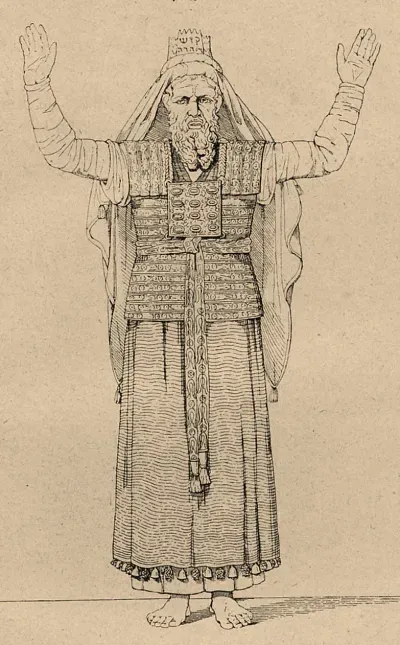
Alcimus and Yakum: a disputed identification
Alcimus appears in 1 Maccabees, including an account of his death in chapter 9. Yakum is Yose’s nephew in Genesis Rabbah 65:22. Treating them as one person creates contradictions between different texts and is not an identification made by Genesis Rabbah itself.
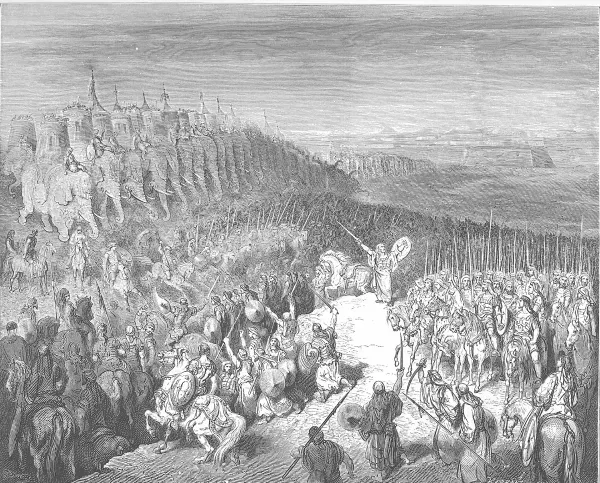
The Legacy of Yose ben Yoezer
Yose’s teachings and the later story of his execution ask difficult questions about fidelity, suffering and repentance. The first-person book explores that inherited tradition. It does not treat a later midrash as eyewitness history or merge Yakum’s story with Alcimus’s biography.
Get the Full Book
Read the story of Yose ben Yoezer — 8 chapters of historical narrative.
Dramatised first-person narrative; not an autobiography.