
Joseph Stalin
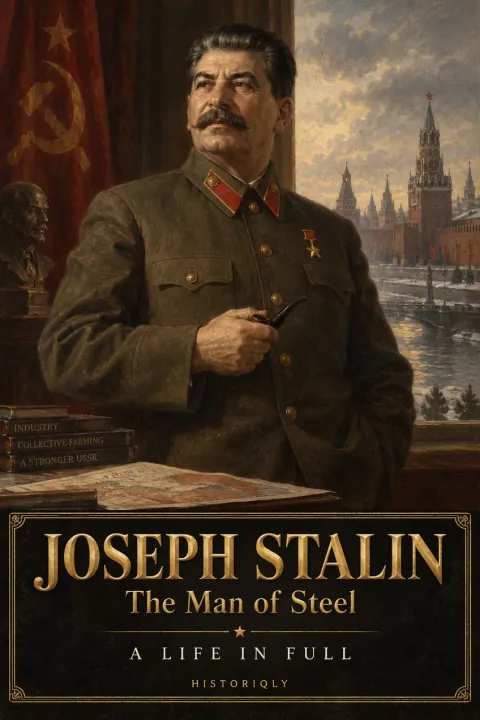
The Man of Steel
Get the full EPUB
Drop your email and the EPUB downloads straight to your device. We'll also ping you when the next chronicle lands — unsubscribe any time.
Your email is already on file — enjoy the read.
Download the EPUBStalin died on 5 March 1953 after a stroke. Accounts of the delay before treatment raise questions about fear and authority around him, but do not establish that earlier treatment would have saved him. His rule combined rapid industrial expansion and wartime leadership with forced collectivisation, terror and mass repression. The people harmed by those policies belong at the centre of the account.
“One death is a tragedy; a million deaths is a statistic.”
1878–1953
Born Ioseb Jughashvili in Gori, Georgia, then part of the Russian Empire. Died in his dacha outside Moscow after suffering a stroke. His guards waited over twelve hours before summoning help — a testament to the paralysing terror he had cultivated.
29 years
From Lenin's death in 1924 to his own death in 1953, Stalin held absolute power over the Soviet Union — longer than any other Soviet leader. He outlasted every rival, every purge, and every crisis.
~682,000
Archival figures record 681,692 death sentences in 1937–1938 during the Great Terror. The figure has a defined scope; it is not a total for everyone who died through imprisonment, deportation, famine or state violence under Stalin.
27 million
The Soviet Union suffered approximately 27 million deaths during World War II — the highest toll of any nation. Stalin's leadership was decisive in defeating Nazi Germany, but his pre-war purge of the officer corps left the Red Army catastrophically weakened when the invasion came.
Soviet dictator, architect of industrialisation, orchestrator of the Great Purge, WWII leader
Defining Events
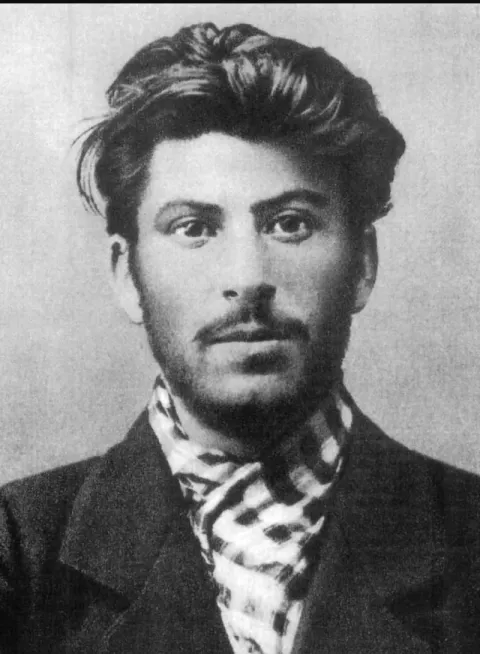
The Five-Year Plans
Stalin's programme of forced industrialisation transformed the Soviet Union from an agrarian society into an industrial superpower in barely a decade. The First Five-Year Plan (1928–1932) prioritised heavy industry — steel, coal, machinery — at a pace that stunned Western economists. Output of pig iron quadrupled; steel production tripled. But the human cost was staggering. The forced collectivisation of agriculture that funded industrialisation triggered the Holodomor, a man-made famine in Ukraine that killed an estimated 3.5 to 5 million people in 1932–1933. Stalin's industrial miracle was built on a foundation of suffering that the state denied for decades.
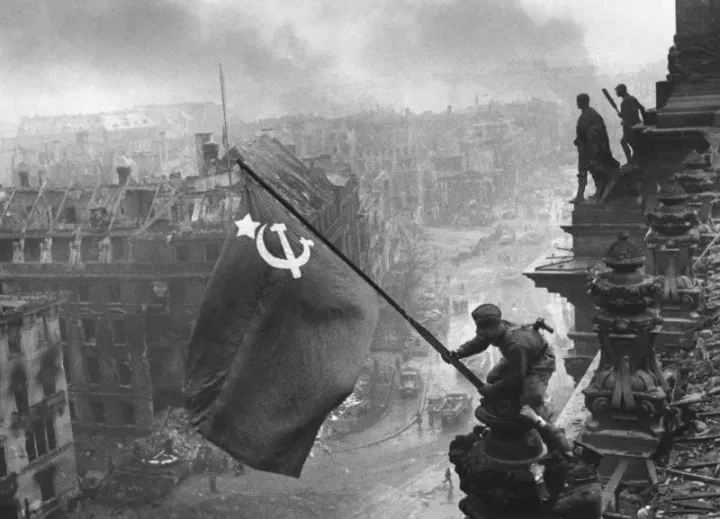
The Great Patriotic War
The German invasion in June 1941 brings catastrophic Soviet defeats. Stalingrad and Kursk become major turning points, achieved through soldiers, civilians and commanders as well as central leadership. German occupation and deliberate mass killing, including the starvation of Soviet prisoners, add to immense wartime losses. Victory does not establish that Stalin’s earlier repression was necessary to achieve it.
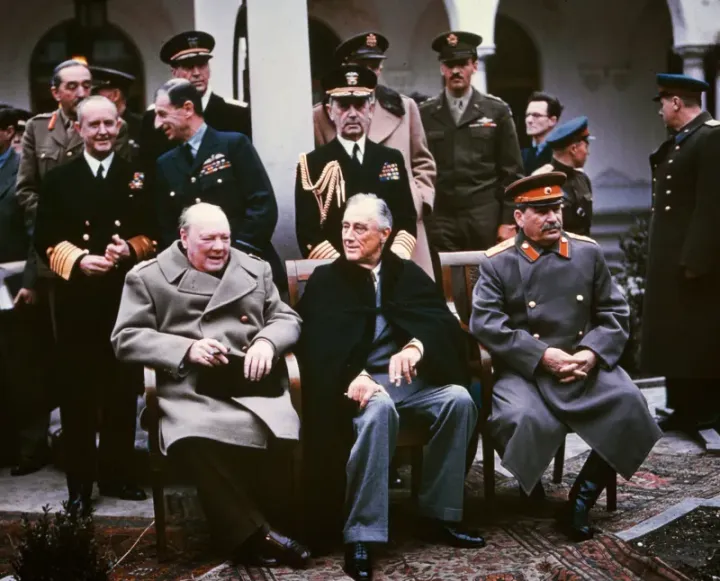
The Yalta Conference
At Yalta, Stalin, Roosevelt and Churchill negotiate over Germany, Poland, the United Nations and the war against Japan. Their agreements leave conflicts over implementation and political freedom unresolved. The conference shapes the postwar settlement without making every later confrontation inevitable.
Timeline
Born in Gori
Born Ioseb Jughashvili on December 18, 1878, in the small Georgian town of Gori, then part of the Russian Empire. His father, Besarion, was a cobbler who drank heavily and beat his family. His mother, Ketevan, was a washerwoman who dreamed of her son becoming a priest. A childhood bout with smallpox left his face permanently scarred.
Expelled from Seminary
After five years at the Tiflis Theological Seminary, the young Jughashvili was expelled — officially for missing exams, though he had already become deeply involved with Marxist revolutionary circles. The seminary, ironically, had given him both his education and his introduction to radical politics. He joined the Social Democrats and began organising strikes among Tiflis railway workers.
Joins the Bolshevik Central Committee
Lenin, impressed by the Georgian's organisational ruthlessness and his 1907 Tiflis bank robbery that netted some 241,000 rubles for the Party, appointed him to the Bolshevik Central Committee. Around this time he adopted the name 'Stalin' — from the Russian stal, meaning steel. Between 1902 and 1913, he was arrested seven times and exiled six times, escaping repeatedly.
The October Revolution
When the Bolsheviks seized power in Petrograd on October 25, 1917, Stalin played a supporting role to Lenin and Trotsky. He was appointed People's Commissar for Nationalities, a position that seemed minor but gave him power over the empire's vast non-Russian populations. While Trotsky commanded the Red Army, Stalin quietly accumulated administrative control.
Lenin Dies — The Power Struggle Begins
Lenin died on January 21, 1924, leaving no clear successor. His final testament warned against Stalin, calling him 'too rude' and recommending his removal as General Secretary. Stalin suppressed the testament. Over the next five years, he systematically outmanoeuvred Trotsky, Zinoviev, Kamenev, and Bukharin — first allying with each against the others, then destroying each in turn. By 1929, he was the undisputed ruler of the Soviet Union.
The Holodomor
Stalin's forced collectivisation of agriculture, combined with punitive grain requisitions from Ukraine, triggered a catastrophic famine that killed an estimated 3.5 to 5 million Ukrainians. The Soviet state denied the famine was happening while it was occurring and classified information about it for decades. Whether it constituted a deliberate genocide remains debated by historians, but the scale of suffering is beyond dispute.
The Great Purge
Stalin directed a campaign of mass repression that included show trials, executions and imprisonment. Archival figures record 681,692 death sentences in 1937–1938. Terror reached far beyond political rivals, harming people selected through nationality, social category and fabricated accusations.
Death at Kuntsevo
On the evening of March 1, 1953, Stalin's guards realised he had not emerged from his room. Too afraid to enter uninvited, they waited until the following evening. They found him on the floor, barely conscious, having suffered a massive stroke. Doctors were not called for another twelve hours. He died on March 5. Millions mourned; millions more were quietly relieved. The system of terror he had built began to unravel almost immediately under Khrushchev's de-Stalinisation.
Key Figures
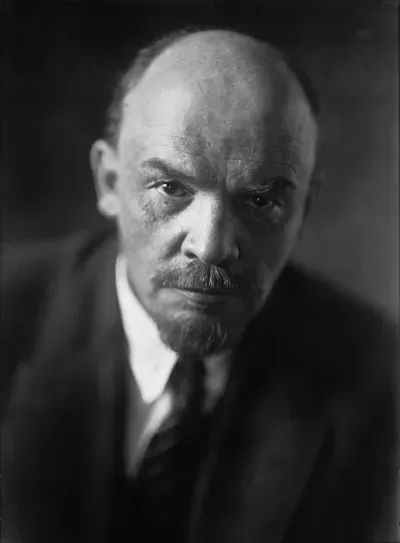
Vladimir Lenin
The founder of the Soviet state and the man who brought Stalin into the Bolshevik inner circle. Lenin recognised Stalin's organisational talent and appointed him General Secretary of the Communist Party in 1922 — a position Stalin used to build a patronage network that would outlast every rival. But by 1923, a dying Lenin had grown alarmed by Stalin's rudeness and accumulation of power. His final testament explicitly recommended Stalin's removal. Stalin suppressed the document and used Lenin's funeral to position himself as the faithful disciple — while his rivals were sidelined.
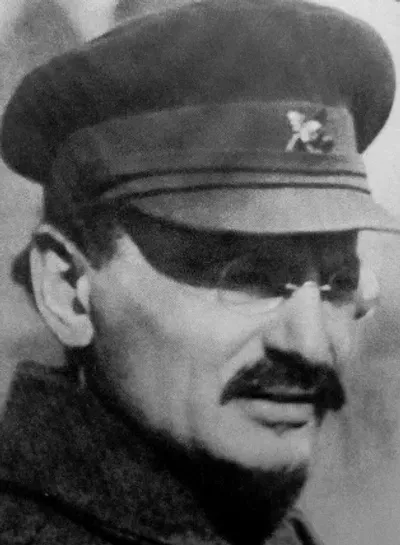
Leon Trotsky
The brilliant orator and commander of the Red Army during the Civil War, Trotsky was Stalin's most dangerous rival for power after Lenin's death. Where Trotsky was charismatic, intellectual, and internationalist, Stalin was methodical, bureaucratic, and focused on 'socialism in one country.' Stalin outmanoeuvred Trotsky politically, expelled him from the Party in 1927, exiled him from the Soviet Union in 1929, and finally had him assassinated with an ice axe in Mexico City on August 20, 1940. Even in exile, Trotsky's writings haunted Stalin — the spectre of an alternative communism that could not be purged.
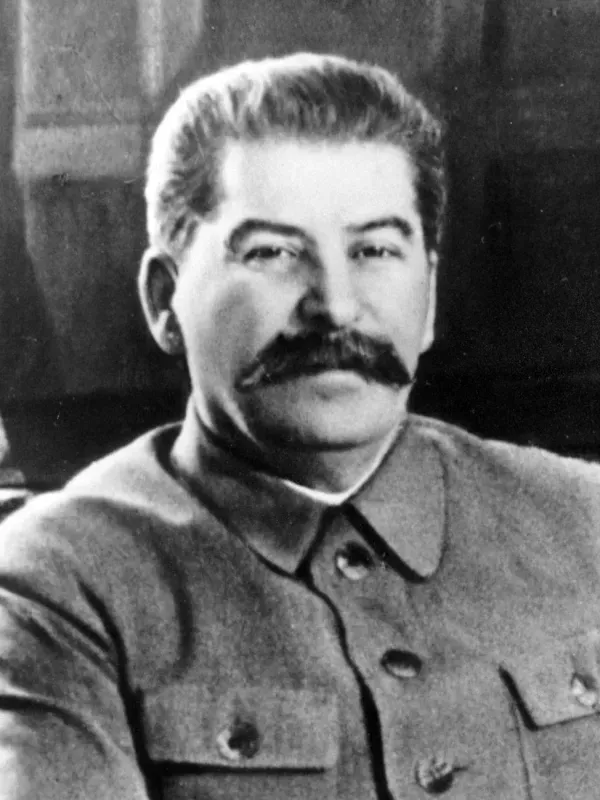
The Legacy of Joseph Stalin
Stalin's death did not end the Soviet state or political repression. Releases, rehabilitation and official denunciation of his rule followed unevenly; they could not restore the lives destroyed.
Industrial development and wartime victory do not establish that famine, executions or forced labour were necessary to achieve them. The book examines choices and institutions through a dramatised voice whose assertions must be tested against the record, not accepted as testimony.
Get the Full Book
Read the story of Joseph Stalin — 8 chapters of historical narrative.
Dramatised first-person narrative; not an autobiography.