
Rabban Gamliel
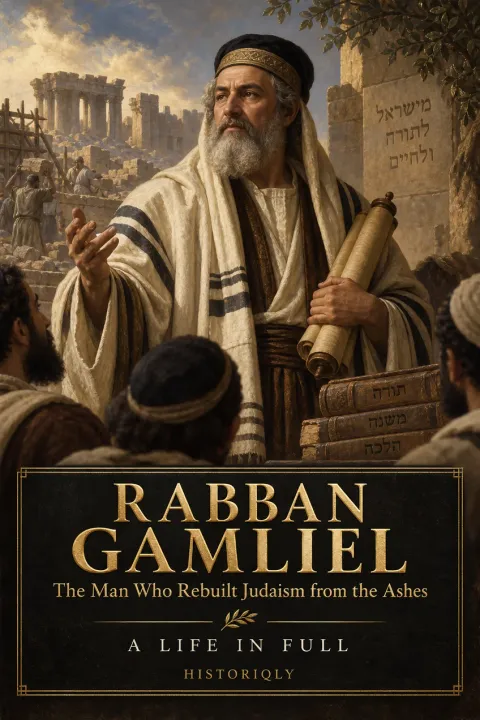
The Man Who Rebuilt Judaism from the Ashes
Get the full EPUB
Drop your email and the EPUB downloads straight to your device. We'll also ping you when the next chronicle lands — unsubscribe any time.
Your email is already on file — enjoy the read.
Download the EPUBRabban Gamliel II belongs to the generation of sages who negotiated Jewish religious life after the Temple’s destruction. Later rabbinic accounts show him asserting authority, facing opposition and making compromises. They associate his academy with the ordering of prayer, but do not establish that one man created a uniform liturgy or composed the entire Passover Haggadah. He belonged to Hillel’s lineage, not to the generation of Hillel’s grandsons.
“Anyone who has not explained these three things on Passover has not fulfilled his obligation: Pesach, Matzah, and Maror.”
Dates uncertain
Rabban Gamliel II was born into the house of Hillel during the last decades of the Second Temple and lived through its destruction, the fall of Masada, and the reign of five Roman emperors. He spent his entire adult life rebuilding what Rome had destroyed.
18 → 19
Berakhot 28b associates Gamliel’s academy with the ordering of the Amidah and Shmuel HaKatan with the blessing against minim. Its original targets and role in relations between Jews and Christians remain debated.
Roman journeys
Rabbinic sources place Gamliel on Roman journeys with fellow sages. Their exact number, dates, and diplomatic results are uncertain; a two-mission itinerary tied securely to Domitian and Nerva is not established.
Pesach 10:5
Gamliel's ruling in the Mishnah — that anyone who does not explain Pesach, Matzah, and Maror has not fulfilled his obligation — became the structural foundation of the Passover Haggadah recited by Jews worldwide to this day.
Leadership at Yavneh, debates over rabbinic authority, and traditions concerning prayer and Passover
Defining Events
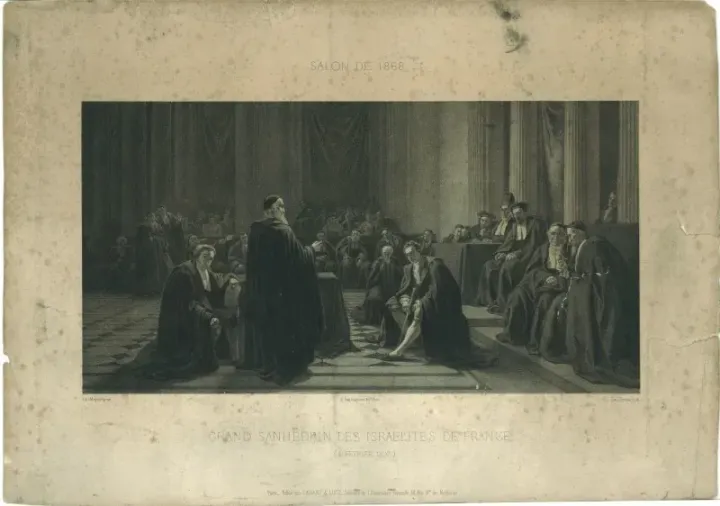
The Rebuilding at Yavneh
After the destruction of the Temple in 70 AD, Rabban Yochanan ben Zakkai established a provisional academy at Yavneh. When Gamliel II succeeded him as Nasi, he transformed this modest coastal school into the authoritative centre of Jewish law. He standardised the liturgy, centralised legal rulings, and insisted that Yavneh's authority replace the Temple's — ensuring that Judaism could survive without the sacrificial system that had defined it for a thousand years.
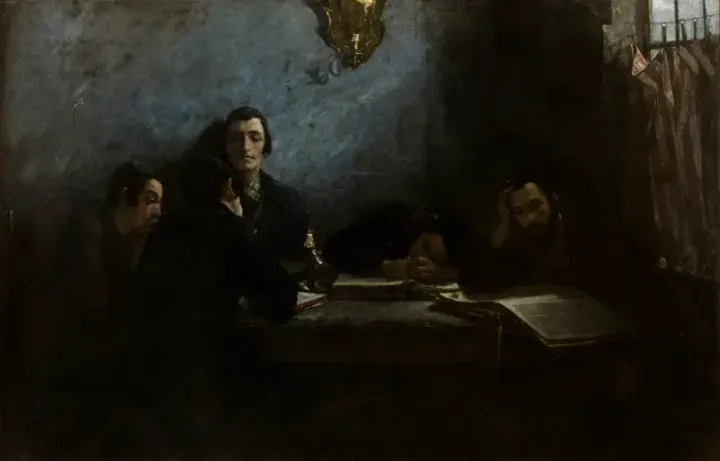
The Deposition and Restoration
Gamliel's authoritarian leadership style led to a dramatic crisis. After publicly humiliating Rabbi Joshua ben Hananiah — forcing him to stand during a teaching session and compelling him to appear in weekday clothes on a day Joshua calculated to be Yom Kippur — the sages deposed Gamliel and replaced him with the young Rabbi Eleazar ben Azariah. The academy's doors were thrown open and hundreds of new students flooded in. Gamliel was eventually reconciled with Rabbi Joshua and partially reinstated in a power-sharing arrangement.
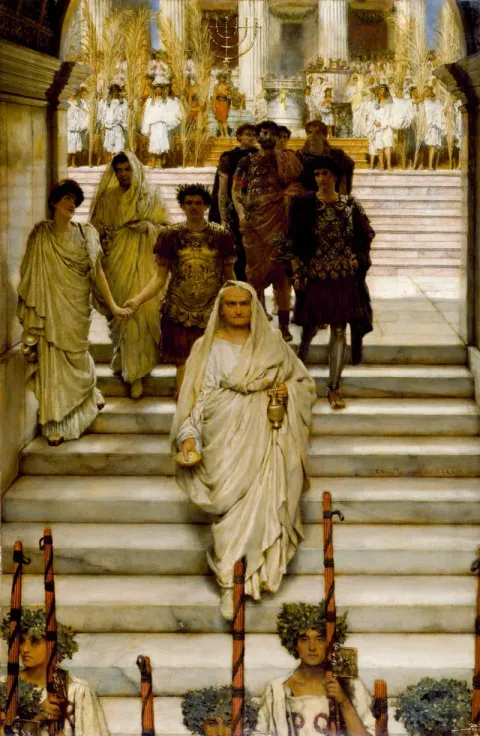
The Missions to Rome
Rabbinic stories place Gamliel and other sages in Rome. Nerva’s coins separately record reform of abuses concerning the Jewish tax, not its abolition. A causal link to Gamliel’s delegation is not securely documented.
Timeline
Born into the House of Hillel
Rabban Gamliel II was born in Jerusalem, the grandson of Rabban Gamliel I (the Elder, mentioned in the Book of Acts) and a direct descendant of Hillel the Elder. He grew up in a family that had led the Sanhedrin for generations, surrounded by the Temple, its rituals, and the vibrant scholarly culture of Second Temple Judaism.
The Great Revolt Begins
The Jewish revolt against Rome erupted after years of oppressive Roman governance. The young Gamliel witnessed the escalation from protest to full-scale war, as Zealots seized Jerusalem and the Temple became a fortress. The aristocratic Pharisaic families, including the house of Hillel, found themselves caught between Roman power and revolutionary fervour.
The Destruction of the Temple
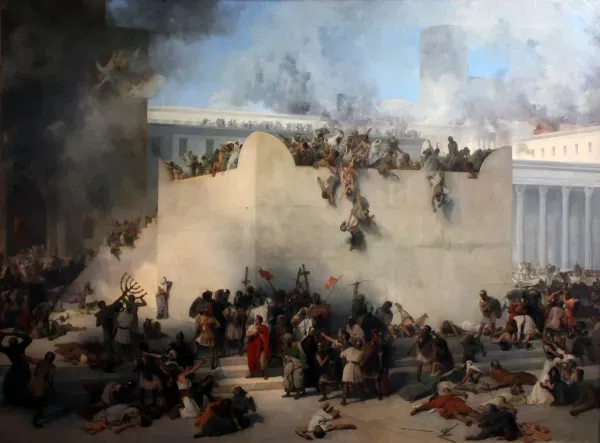
Titus's legions breached the walls of Jerusalem and burned the Second Temple to the ground. The priesthood was destroyed, the Sadducees vanished as a movement, and the entire sacrificial system that had defined Jewish worship for a millennium came to an abrupt end. Gamliel survived the catastrophe and made his way to the coastal town of Yavneh, where Rabban Yochanan ben Zakkai had established a provisional academy.
Appointed Nasi at Yavneh
After the death of Yochanan ben Zakkai, Gamliel was appointed Nasi (president) of the reconstituted Sanhedrin at Yavneh. Unlike his predecessor, who had operated with caution and diplomacy, Gamliel asserted his authority forcefully — insisting that Yavneh's rulings carried the same weight as those of the old Temple Sanhedrin and that all Jewish communities must accept its calendar determinations.
The Birkat HaMinim
Berakhot 28b credits Shmuel HaKatan with formulating the blessing against minim at Gamliel’s request. The text does not establish one precise target group or a single decisive break between Judaism and Christianity.
The Deposition Crisis
Berakhot recounts Gamliel’s removal after humiliating Joshua. Gamliel subsequently visits Joshua to apologize. The account restores him with three teaching Sabbaths to Eleazar ben Azariah’s one, preserving the replacement teacher’s honor.
Roman journeys in rabbinic tradition
Stories place Gamliel and fellow sages in Rome, but do not establish their presence at Domitian’s assassination or a securely dated interrupted audience.
Nerva’s reform of tax abuses
Nerva advertised the removal of abuses connected with the Jewish tax, which continued. The evidence does not show that Gamliel personally obtained the measure.
Death and Legacy
Gamliel’s exact death date is uncertain. His descendants remained important in the patriarchal tradition. Mishnah Sotah’s saying about the departure of the honour of Torah concerns Gamliel the Elder, a different figure.
Key Figures
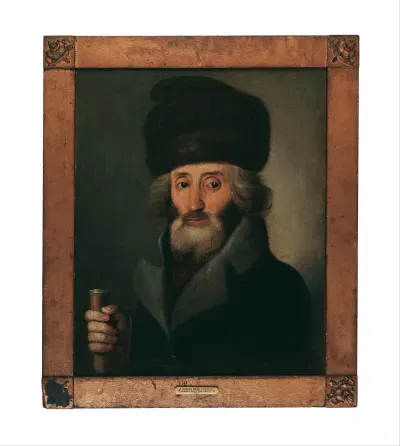
Rabbi Joshua ben Hananiah
Berakhot depicts Joshua as a learned man with a difficult livelihood. Gamliel’s visit to his blackened house leads to a rebuke and an apology; the trade has been understood as charcoal-burning or smithing. Joshua then supports reconciliation.
Rabbi Akiva
Rabbi Akiva — the illiterate shepherd who began studying Torah at forty and became the greatest sage of his generation — was Gamliel's companion on the missions to Rome and his colleague at Yavneh. Akiva's legal genius complemented Gamliel's administrative authority: while Gamliel held the institution together, Akiva developed the hermeneutical methods that would shape the Mishnah. He would later die a martyr's death during the Bar Kokhba revolt, tortured by the Romans while reciting the Shema.
The Legacy of Rabban Gamliel
The traditions about Gamliel preserve disputes as well as rulings. His significance lies in those arguments over shared authority and religious practice, not in a claim that he single-handedly rebuilt Judaism. The first-person narrative is a literary reconstruction from texts compiled after his lifetime.
Get the Full Book
Read the story of Rabban Gamliel — 8 chapters of historical narrative.
Dramatised first-person narrative; not an autobiography.