
Yochanan ben Zakkai
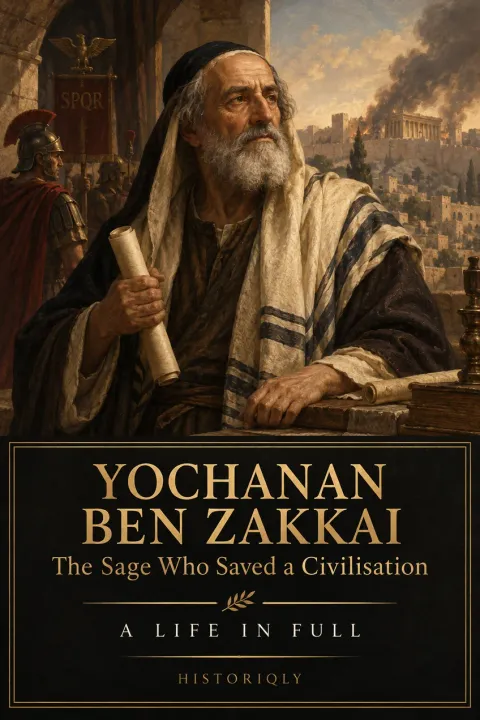
The Sage Who Saved a Civilisation
Get the full EPUB
Drop your email and the EPUB downloads straight to your device. We'll also ping you when the next chronicle lands — unsubscribe any time.
Your email is already on file — enjoy the read.
Download the EPUBIn the summer of 70 AD, as Roman legions under Titus tore Jerusalem apart and the Second Temple burned, one elderly rabbi had already secured the survival of everything that mattered. Rabban Yochanan ben Zakkai — smuggled out of the besieged city in a coffin, granted an audience with Vespasian, and permitted to establish a school at the coastal town of Yavne — performed the most consequential act of negotiation in Jewish history. He traded a city for a classroom, a Temple for a tradition, and in doing so ensured that Judaism would outlive not only Rome but every empire that followed.
“If you are holding a sapling in your hand and someone tells you the Messiah has come, first plant the sapling and then go greet the Messiah.”
Traditional lifespan
Rabbinic tradition gives Yochanan a patterned lifespan of 120 years divided among commerce, learning, and teaching. It is not a secure birth record or a precise chronology of study with Hillel.
5 Great
His five principal disciples — Rabbi Eliezer ben Hyrcanus, Rabbi Yehoshua ben Hananiah, Rabbi Yossi HaKohen, Rabbi Shimon ben Netanel, and Rabbi Elazar ben Arakh — became the next generation of great sages. He said that if all the sages of Israel were on one scale and Elazar ben Arakh on the other, Elazar would outweigh them all.
9 Takkanot
After the Temple's destruction, Yochanan enacted nine legislative reforms (takkanot) at Yavne. These transferred Temple-specific practices to the academy, preserved memory of the destroyed sanctuary, and reshaped Judaism into a religion that could function without sacrifice, priesthood, or political sovereignty.
Gittin 56
The dramatic account of his escape and meeting with Vespasian is preserved in Babylonian Talmud Gittin 56a–56b, with variant versions in Avot de-Rabbi Nathan and Lamentations Rabbah. The story is retold annually on Tisha B'Av, the fast day commemorating the Temple's destruction.
Rabbinic teachings, enactments associated with Yavne, and the later tradition of escape from Jerusalem and petition to Vespasian
Defining Events
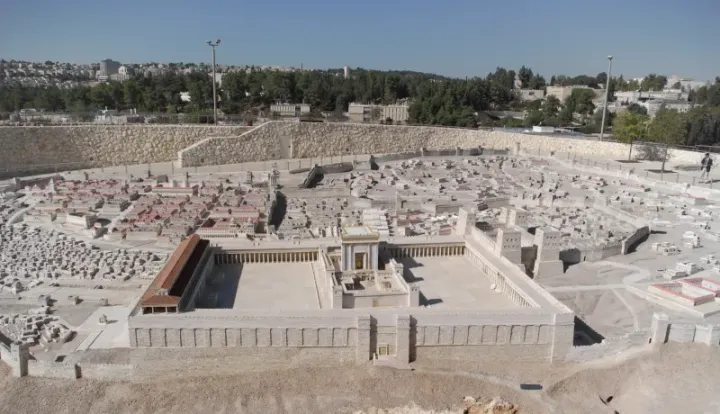
The Coffin Escape from Jerusalem
With Jerusalem under siege and the Zealots killing anyone who spoke of surrender, Yochanan ben Zakkai feigned death and was smuggled out of the city in a coffin carried by his students Rabbi Eliezer and Rabbi Yehoshua. His nephew Abba Sikra, head of the Zealot militants, helped devise the plan. At the gates, the guards wanted to stab the body to verify death — Abba Sikra convinced them to let the coffin pass.
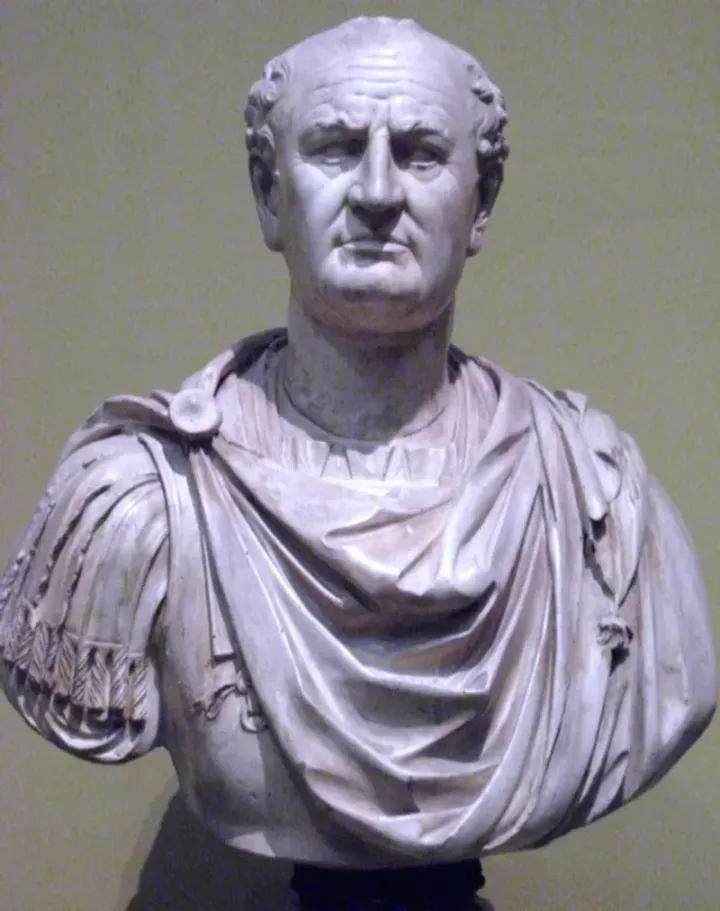
The Prophecy Before Vespasian
Gittin 56 tells a later story in which Yochanan greets Vespasian as a ruler and asks for Yavneh and its sages. Its dialogue is not a contemporary transcript. Nero died in 68 CE, Vespasian’s accession followed in 69, and Titus besieged Jerusalem in 70.
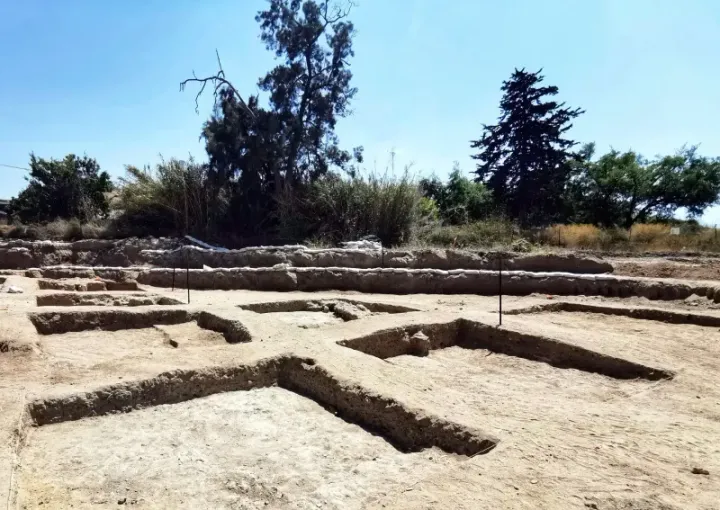
The Academy at Yavne
After the Temple's destruction, Yochanan reconstituted the Sanhedrin at Yavne and enacted nine reforms that transformed Judaism. Prayer replaced sacrifice. The synagogue replaced the Temple. The rabbi replaced the priest. Torah study became the supreme religious act, and Jewish identity became portable — no longer tied to a single building or a single city. The tradition he preserved at Yavne became the foundation of rabbinic Judaism.
Timeline
Born During the Reign of Augustus
Yochanan ben Zakkai was born in the early years of the Roman principate, during the reign of Herod the Great in Judea. Talmudic tradition places him as the youngest and most promising student of Hillel the Elder, the great Pharisaic sage whose school emphasised mercy, humility, and the primacy of the oral tradition.
Student of Hillel the Elder
Yochanan studied under Hillel, absorbing his teacher's more lenient and humane approach to Jewish law. Hillel's famous teaching — 'What is hateful to you, do not do to your fellow; that is the whole Torah, the rest is commentary' — shaped Yochanan's conviction that Judaism's core was ethical, not ritual, and could survive without the Temple.
Eighteen Years in the Galilee
A later tradition places Yochanan at Arav and voices disappointment at the few questions brought to him. It should not be read as proof that all Galileans neglected study or deserved the subsequent conquest.
Teaching in Jerusalem
Yochanan settled in Jerusalem and taught in the shadow of the Temple. He debated with the Sadducees on matters of purity law, Temple practice, and the authority of the oral tradition. He served on the Sanhedrin and was recognised as one of the foremost religious authorities in Judea, challenging Sadducean interpretations with wit and rigour.
The Great Revolt Begins
The Jewish revolt against Rome erupted in 66 AD, triggered by religious tensions, oppressive taxation, and Roman provocations. Emperor Nero dispatched General Vespasian with four legions to crush the rebellion. The Zealots and Sicarii took control of Jerusalem, killing moderates and burning food storehouses to force the population to fight.
The Coffin Escape
With the Zealots killing anyone who advocated peace, Yochanan feigned death and was carried out of Jerusalem in a coffin by his students Rabbi Eliezer and Rabbi Yehoshua. His nephew Abba Sikra, leader of the Biryonim militants, arranged passage through the gates. The guards wanted to stab the body; Abba Sikra persuaded them to let it pass undisturbed.
The Meeting with Vespasian
The later Gittin narrative links Yochanan’s meeting with Vespasian to news of imperial accession. Nero’s death in 68 and Vespasian’s accession in 69 were separate events. The story preserves a tradition about Yavneh, not a securely dated eyewitness meeting.
The Second Temple Destroyed
Titus completed the siege of Jerusalem and the Second Temple was destroyed by fire on the ninth of Av — traditionally the same date as the destruction of Solomon's Temple in 586 BC. The Sadducees, whose authority depended on the Temple, vanished from history. The Pharisaic oral tradition, preserved at Yavne, became the sole surviving form of Judaism.
The Reconstruction at Yavne
At Yavne, Yochanan reconstituted the Sanhedrin and enacted nine legislative reforms. He transferred the blowing of the shofar on Rosh Hashanah from the Temple to wherever the court sat. He permitted the lulav to be waved all seven days of Sukkot throughout Israel, not only in the Temple. He replaced sacrifice with prayer, citing Hosea 6:6: 'I desire mercy, not sacrifice.'
Succeeded by Rabban Gamliel II
Yochanan stepped aside as head of the Yavne academy, succeeded by Rabban Gamliel II — the very descendant of the family line he had asked Vespasian to spare. The transition ensured continuity of the patriarchal office that would lead Jewish communities for centuries.
Death of Yochanan ben Zakkai
On his deathbed, Yochanan wept. His students asked why a man of such righteousness should fear death. He replied: 'If I were being taken before a king of flesh and blood, I would weep. Now I am being taken before the King of Kings — shall I not weep? Moreover, two roads lie before me, one to Paradise and one to Gehenna, and I do not know which I will be taken on.' He was buried in Tiberias.
Key Figures
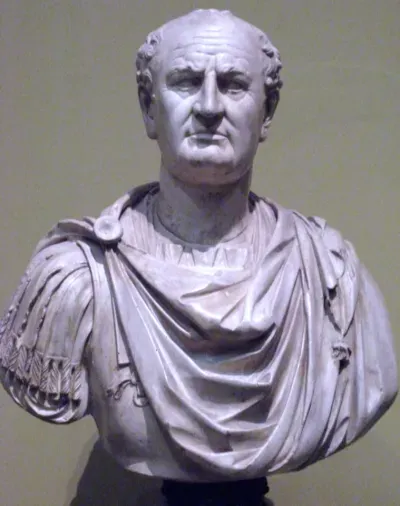
Vespasian
Gittin’s later narrative associates Vespasian’s accession with Yochanan’s requests. The historical Vespasian ruled from 69 to 79; the encounter’s dialogue and exact date are not contemporary documentation.
Abba Sikra
Abba Sikra (also called Ben Batiach) was Yochanan's nephew and the head of the Biryonim, the militant faction that controlled Jerusalem during the siege. He privately acknowledged the catastrophe his movement was causing but told his uncle he was powerless to stop it — the other militants would kill him if he advocated peace. He devised the coffin escape plan, convinced the guards at the gate to let the body pass unstabbed, and made possible the survival of the tradition his own faction was helping to destroy. His story is a study in the tragedy of a man caught between loyalty to a cause and loyalty to truth.
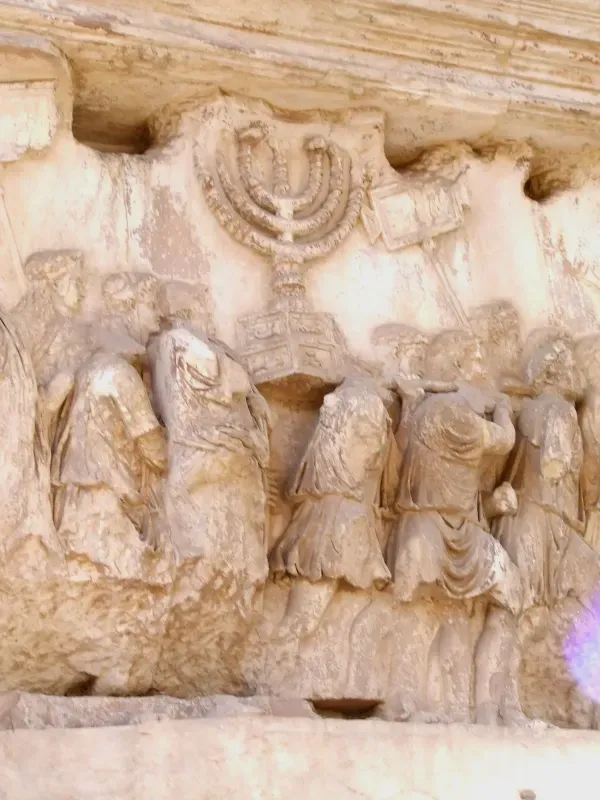
The Legacy of Yochanan ben Zakkai
Later rabbinic tradition makes Yochanan’s request for Yavneh an image of learning preserved through catastrophe. The historical development of rabbinic Judaism involved many people and communities. This first-person book interprets those traditions without treating their dialogue as a contemporary record.
Get the Full Book
Read the story of Yochanan ben Zakkai — 8 chapters of historical narrative.
Dramatised first-person narrative; not an autobiography.