
Muhammad
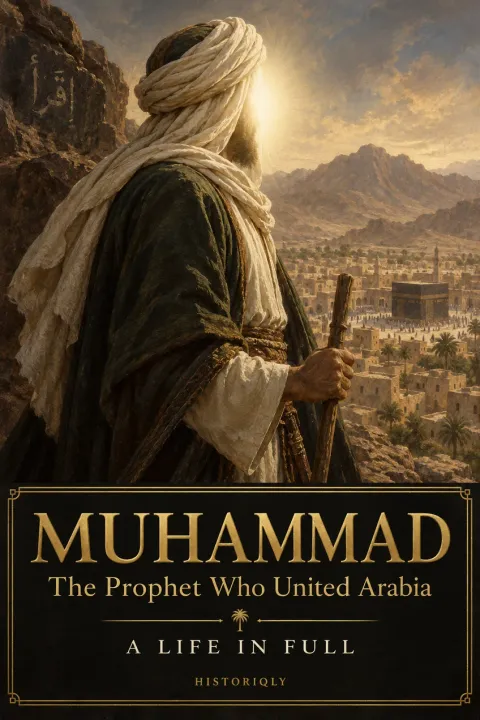
The Prophet Who United Arabia
Get the full EPUB
Drop your email and the EPUB downloads straight to your device. We'll also ping you when the next chronicle lands — unsubscribe any time.
Your email is already on file — enjoy the read.
Download the EPUBIn the year 610 CE, in a cave on the slopes of Jabal al-Nur above Mecca, a forty-year-old merchant named Muhammad ibn Abdullah felt the embrace of an angel and heard a command: Iqra — "Read." He was, by his own account, illiterate. What followed was twenty-two years of revelation, persecution, migration, war, diplomacy, and ultimately the peaceful conquest of the city that had tried to destroy him. Today, Islam is the faith of 1.8 billion people; the Quran he recited remains unchanged from what was spoken in his lifetime. No other single life produced a comparable transformation of human civilization in so compressed a time.
“None of you truly believes until he loves for his brother what he loves for himself.”
c. 570–632 CE
Born around 570 CE in Mecca during what Arabs called the Year of the Elephant. His father Abdullah died before his birth; his mother Amina died when he was six. He lived to approximately sixty-three years, dying in Medina on 8 June 632 CE (12 Rabi al-Awwal, 11 AH) in the arms of his wife Aisha.
22
Islamic tradition places the prophetic mission across the Meccan and Medinan periods, beginning with revelation and continuing through public preaching, persecution, migration, and the formation of a community.
~100,000+
Islamic reports describe a large gathering for the Farewell Pilgrimage in 10 AH (632 CE). Numbers vary, and the familiar Farewell Sermon combines several reports. Tribal agreements and professions of Islam did not make the peninsula a uniformly settled religious or political community.
6,236
The Quran contains 6,236 verses (ayat) across 114 chapters (surahs), revealed to Muhammad over twenty-two years. Unlike the Bible, the Quran was memorized and recited aloud during Muhammad's lifetime; written compilation began under Abu Bakr and was standardized under Uthman ibn Affan (644–656 CE). It remains the most memorized book on earth.
Founder of Islam, Prophet of God, statesman and military commander who unified the Arabian Peninsula and revealed the Quran — the sacred text that shaped the lives of over 1.8 billion people
Defining Events
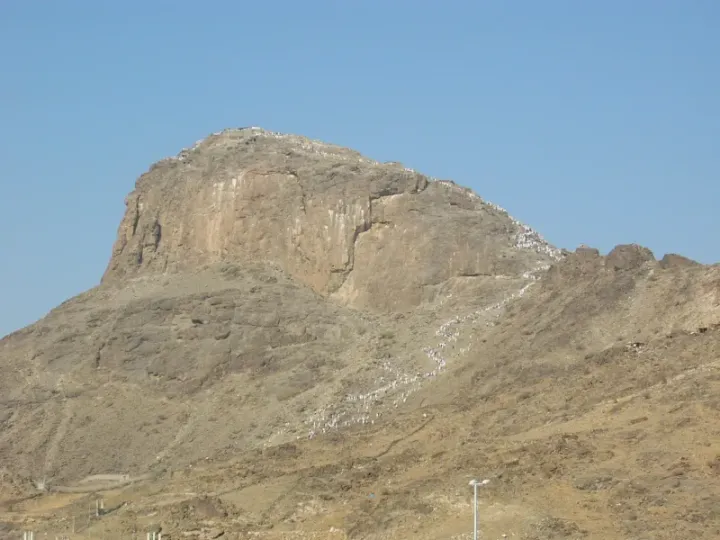
The Night of Power
In the Cave of Hira on Jabal al-Nur, Muhammad received the first revelation of the Quran from the Angel Jibril (Gabriel) — the opening words of Surah Al-Alaq: "Read in the name of your Lord who created." Shaken, he returned home to Khadijah, who wrapped him in a cloak and brought him to her Christian cousin Waraqah ibn Nawfal, who confirmed this was the same angel who had come to Moses. The night is commemorated as Laylat al-Qadr and falls in the last ten days of Ramadan.
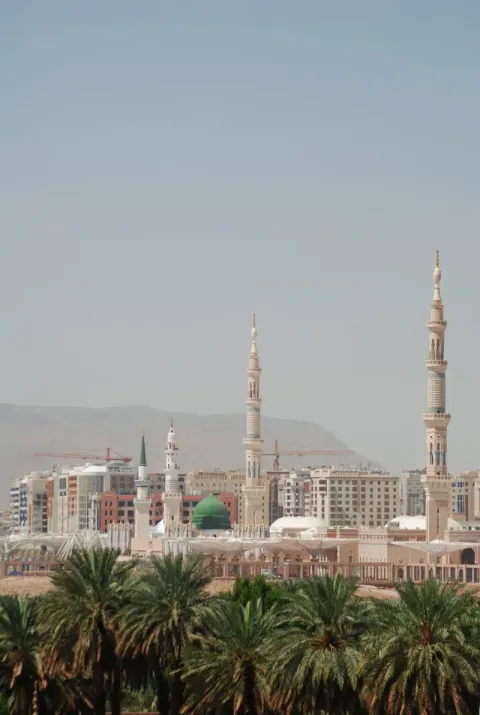
The Hijra to Medina
The Hijra took Muhammad and Abu Bakr from Mecca to Medina in 622, through the refuge at Thawr and a stay at Quba. Precise converted dates vary. The Medinan period brought the mosque and agreements among named local groups.
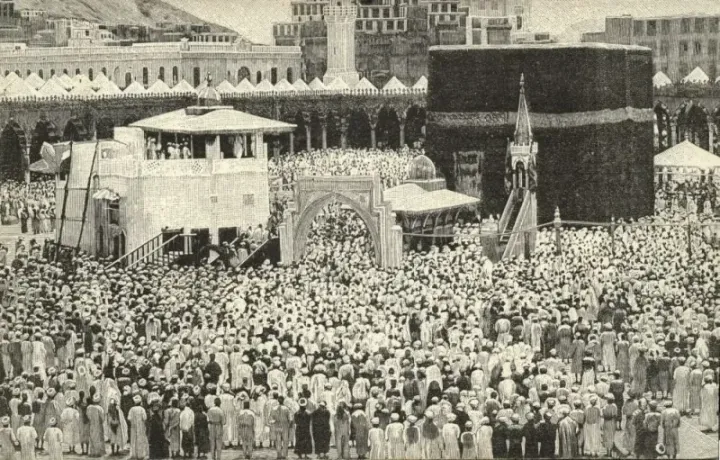
The Conquest of Mecca
After the Quraysh violated the Treaty of Hudaybiyyah, Muhammad marched on Mecca with an army of approximately 10,000. The city that had tortured his followers, killed his family, and driven him into exile surrendered with almost no bloodshed. Muhammad declared a general amnesty — "You are free" — entered the Kaaba, and destroyed the 360 idols, rededicated the ancient sanctuary to the God of Abraham. It was perhaps the most gracious military victory in ancient history.
Timeline
Birth in Mecca
Muhammad ibn Abdullah is born in Mecca into the Hashim clan of the powerful Quraysh tribe. His father Abdullah ibn Abd al-Muttalib had already died on a trading journey to Medina before the birth. The year is traditionally called the Year of the Elephant, marking an Abyssinian campaign against Mecca. His mother Amina bint Wahb names him Muhammad — "The Praised One" — a name virtually unheard of in Arabia at the time.
Death of His Mother
Muhammad's mother Amina dies at the oasis of Abwa on the road between Mecca and Medina, returning from a visit to his father's grave in Yathrib (Medina). The six-year-old child is placed in the care of his paternal grandfather Abd al-Muttalib, an elder of high standing in Mecca. When Abd al-Muttalib himself dies two years later, Muhammad passes into the guardianship of his uncle Abu Talib, who will protect him for the next forty-two years.
First Journey to Syria
Accompanying his uncle Abu Talib on a trading caravan to Syria, the young Muhammad encounters a Christian monk named Bahira at Bosra who, according to Islamic tradition, recognizes signs of prophethood in him. He earns growing respect in Mecca for his character, acquiring the epithets al-Amin ("the Trustworthy") and al-Sadiq ("the Truthful") — unusual distinction in a city built on commerce and negotiation.
Marriage to Khadijah
Muhammad, approximately twenty-five, enters the employ of Khadijah bint Khuwaylid, a wealthy widow and independent merchant of high standing in Mecca, who is approximately fifteen years his senior. Impressed by his integrity and the success of his Syrian trading expedition on her behalf, she proposes marriage. Their union is monogamous for the twenty-four years it lasts. Khadijah will become the first Muslim, his greatest comfort, and the mother of his six children. Her death in 619 CE devastates him.
The Black Stone Dispute
When the Quraysh rebuild the Kaaba following a flood, a bitter dispute erupts over which clan has the honour of restoring the sacred Black Stone (al-Hajar al-Aswad) to its corner. Muhammad, aged around thirty-five and renowned for his impartial judgment, is chosen as arbitrator. He lays a cloak on the ground, places the stone upon it, and instructs representatives of each clan to lift the edges together — then places the stone himself. The elegant solution averts a potential tribal war.
First Revelation — Laylat al-Qadr
The early revelation account in Sahih al-Bukhari describes Muhammad returning from Hira shaken and asking to be covered. Khadijah reassures him and Waraqa relates the experience to earlier prophecy. The report should not be replaced by an invented psychological diagnosis.
Public Preaching Begins
After several years of private preaching in small gatherings, Muhammad begins declaring his message openly in Mecca. His proclamation of absolute monotheism — La ilaha illa Allah, "There is no god but God" — directly threatens the Quraysh's pilgrimage economy, which depended on the 360 tribal idols housed in the Kaaba. The city's merchant elite organize systematic persecution of his followers, particularly those without tribal protection. Bilal ibn Rabah, an enslaved Ethiopian man, is tortured on the hot desert sand with stones placed on his chest, crying out Ahad, Ahad — "One, One."
The Year of Grief
The traditional Year of Grief includes the deaths of Khadijah and Abu Talib and the loss of personal and tribal support. Sunni and Shi‘i traditions differ on Abu Talib’s faith.
The Hijra — Migration to Medina
Islamic accounts describe the journey from Mecca through Thawr to Quba and Medina in 622. Exact converted dates and the duration of the Quba stay vary; the migration became the reference event for the Hijri calendar.
Battle of Badr
The first major military engagement of the nascent Islamic state. Muhammad leads approximately 313 poorly-equipped Muslims against a Meccan force of nearly 1,000 under Abu Jahl, who had come to escort a large trading caravan. The Muslims win a decisive victory: approximately 70 Meccans are killed (including Abu Jahl himself), 70 are taken prisoner; only 14 Muslims die. The Quran devotes an entire chapter — Surah Al-Anfal, "The Spoils" — to the battle, declaring the victory a sign of divine assistance. The defeat shocks and enrages the Quraysh.
Battle of Uhud
A Meccan army of 3,000 soldiers under Abu Sufyan marches on Medina. The Muslims initially advance, but when a group of archers abandon their post on a hillock to collect spoils, a cavalry charge by Khalid ibn al-Walid turns the tide. Muhammad is wounded — knocked to the ground, bleeding from his face — and rumours of his death spread panic through the Muslim ranks. About 70 Muslims are killed, including his beloved uncle Hamza ibn Abd al-Muttalib. The battle teaches hard lessons about discipline, and its reversal is addressed in Surah Al-Imran.
Battle of the Trench
A coalition of 10,000 opponents — including the Quraysh, allied tribes, and former Jewish allies — besieges Medina. On the inspired suggestion of Salman al-Farsi, a Persian companion, Muhammad orders a defensive trench (khandaq) dug around Medina's vulnerable northern perimeter — an unprecedented tactic in Arabian warfare. The coalition, unable to cross the trench, is frustrated for twenty-seven days before a combination of internal divisions, poor weather, and Muhammad's diplomacy dissolves the alliance. It is the last major Meccan offensive against Medina.
Treaty of Hudaybiyyah
Muhammad leads approximately 1,400 Muslims toward Mecca to perform the lesser pilgrimage (Umrah), but Quraysh forces block them at Hudaybiyyah outside the city. In negotiations, Muhammad agrees to terms widely seen as humiliating: the pilgrimage is postponed a year; any Meccan who joins Muhammad must be returned, but any Muslim who joins the Quraysh need not be. His companions are outraged. Yet the Quran calls it fath mubin — "a manifest victory" — recognising that the treaty's legitimacy gave Islam diplomatic standing equal to Mecca for the first time.
Conquest of Mecca
Traditions describe Muhammad’s entry into Mecca in Ramadan 8 AH (630 CE) and the removal of idols around the Kaaba. The report of 360 idols should not be turned into a claim that all were inside the sanctuary.
The Farewell Pilgrimage
Muhammad performs the Hajj for the first and only time — the Hajj al-Wada, the Farewell Pilgrimage. An estimated 100,000 to 140,000 Muslims accompany him. At the plain of Arafat, he delivers his last great sermon, proclaiming the equality of all humanity before God, the end of tribal vendettas, the rights of women, and the sacred status of every Muslim's life and property. He concludes: "Have I delivered the message? O God, be my witness." The crowd answers: "Yes!" The Quran then reveals: "Today I have perfected for you your religion." (Surah Al-Maidah 5:3)
Death in Medina
Three months after his Farewell Sermon, Muhammad falls gravely ill with a severe fever and intense headaches. He continues to lead prayers from his sickbed for as long as he can, then asks Abu Bakr to lead in his stead. He dies on 8 June 632 CE (12 Rabi al-Awwal, 11 AH) in his house adjacent to the mosque, his head resting in the lap of his wife Aisha. He is approximately sixty-three years old. Abu Bakr addresses the grieving community: "Whoever worshipped Muhammad, Muhammad is dead. Whoever worships God, God is alive and never dies." Muhammad is buried where he died — beneath what is now the Green Dome of Masjid al-Nabawi.
Key Figures
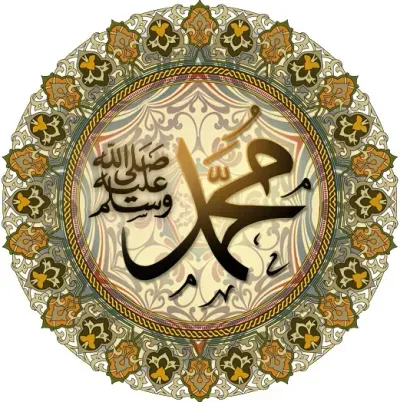
Khadijah bint Khuwaylid
A wealthy, independent merchant fifteen years his senior, Khadijah proposed marriage to Muhammad after witnessing his integrity on a trading expedition. When the first revelation came and Muhammad trembled with fear, it was Khadijah who wrapped him in her cloak, steadied his nerves, and declared: "By God, He will never disgrace you." She was the first person to accept Islam — before Abu Bakr, before Ali, before anyone. She bore Muhammad six children and provided him financial security that freed him to devote himself to his mission. Her death in 619 CE, during the Year of Grief, broke something in him that never fully healed. He spoke of her with love until the end of his life.
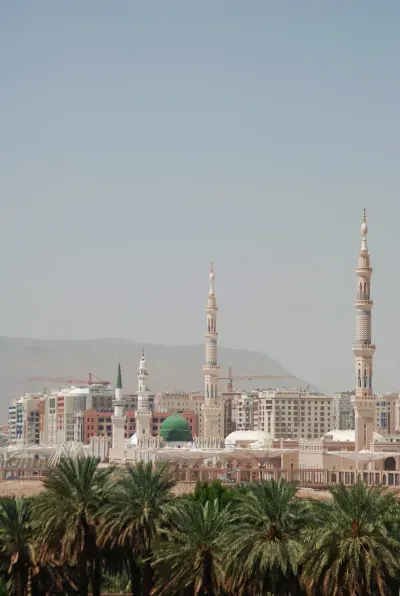
Abu Bakr al-Siddiq
A prosperous merchant and one of the earliest converts, Abu Bakr was Muhammad's most intimate companion — the one who accompanied him on the dangerous Hijra flight to Medina, hiding with him in the Cave of Thawr while Quraysh search parties passed outside. His title al-Siddiq ("the Truthful") was given by Muhammad himself. When Muhammad fell ill and could no longer lead prayers, he asked Abu Bakr to take his place — an act widely read as designating his successor. On Muhammad's death, Abu Bakr became the first Caliph, preserving the fragile Muslim community against the tribal rebellions of the Ridda Wars. It was Abu Bakr who initiated the collection of the Quran into a single written manuscript.
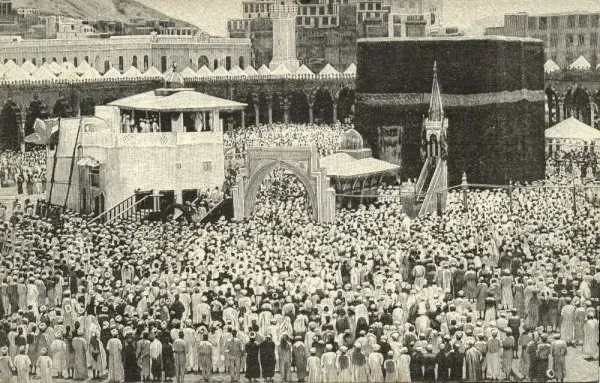
The Legacy of Muhammad
Muhammad’s final years brought pilgrimage, political agreements and the growth of a community beyond Medina. The first-person book reconstructs these events from Islamic traditions while distinguishing reported sayings from imagined reflection. Familiar versions of the Farewell Sermon combine several reports; they are not a single surviving verbatim address.
Get the Full Book
Read the story of Muhammad — 8 chapters of historical narrative.
Dramatised first-person narrative; not an autobiography.