
Winston Churchill
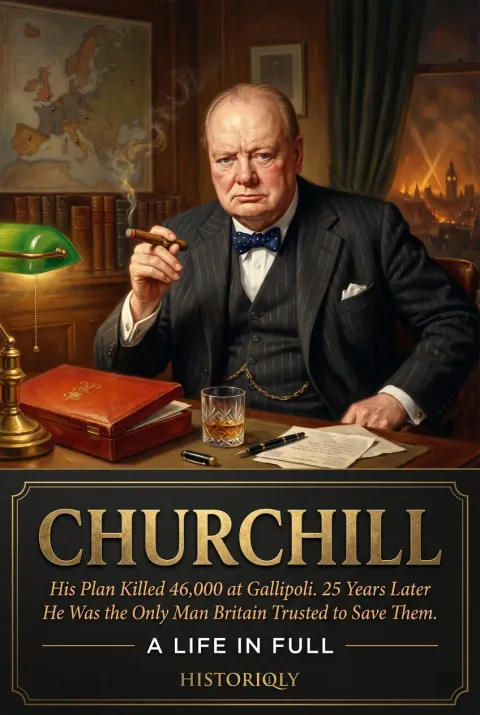
War, Empire and the Burden of Leadership
Get the full EPUB
Drop your email and the EPUB downloads straight to your device. We'll also ping you when the next chronicle lands — unsubscribe any time.
Your email is already on file — enjoy the read.
Download the EPUBOn 4 June 1940, Churchill addressed the House of Commons after the evacuation from Dunkirk. More than 338,000 Allied soldiers had escaped, but much of their equipment had been abandoned and France remained under attack. He had been Prime Minister for less than a month. His speech acknowledged the defeat while committing Britain to continue the war, with support from the Dominions, the empire and other Allied forces. His record included Gallipoli as well as warnings about Hitler; neither his appointment nor his determination guaranteed victory.
“We shall fight on the beaches, we shall fight on the landing grounds, we shall fight in the fields and in the streets, we shall fight in the hills; we shall never surrender.”
1874–1965
Born at Blenheim Palace on November 30, 1874, the eldest son of Lord Randolph Churchill and the American heiress Jennie Jerome. Died on January 24, 1965 — exactly seventy years to the day after his father. Ninety years that spanned the cavalry charge at Omdurman to the nuclear age.
8+ years
Served as Prime Minister twice: from May 1940 to July 1945, leading Britain through the Second World War, and again from October 1951 to April 1955. He had also held senior ministerial posts during the First World War.
43
A prodigious author who published forty-three books totalling millions of words, including the six-volume The Second World War and the four-volume A History of the English-Speaking Peoples. Won the Nobel Prize in Literature in 1953.
3,000+
Delivered over three thousand speeches in a parliamentary career spanning sixty-four years. His wartime broadcasts reached millions and are widely credited with sustaining British morale when defeat seemed certain.
Wartime Prime Minister, orator, Nobel Prize-winning author, painter
Defining Events
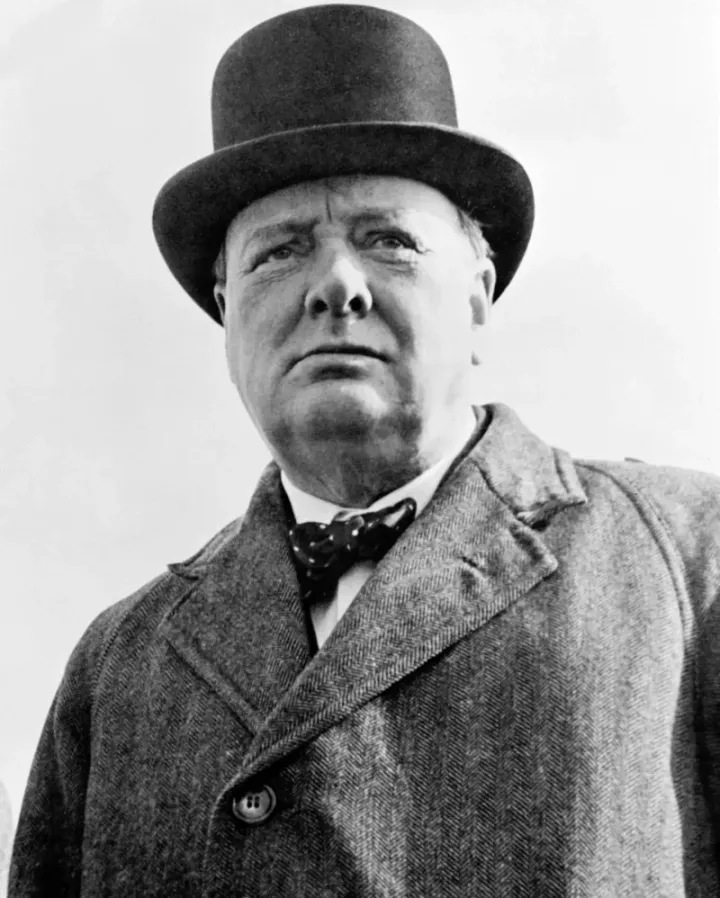
The Dunkirk Speech
With 338,000 Allied soldiers rescued from the beaches of Dunkirk but France on the brink of collapse, Churchill delivered one of the most famous speeches in the English language. "We shall fight on the beaches, we shall fight on the landing grounds, we shall fight in the fields and in the streets, we shall fight in the hills; we shall never surrender." The words were not mere rhetoric — they were a declaration of policy. Britain would continue the war with its allies and imperial resources. Churchill warned that the evacuation itself was not a victory.
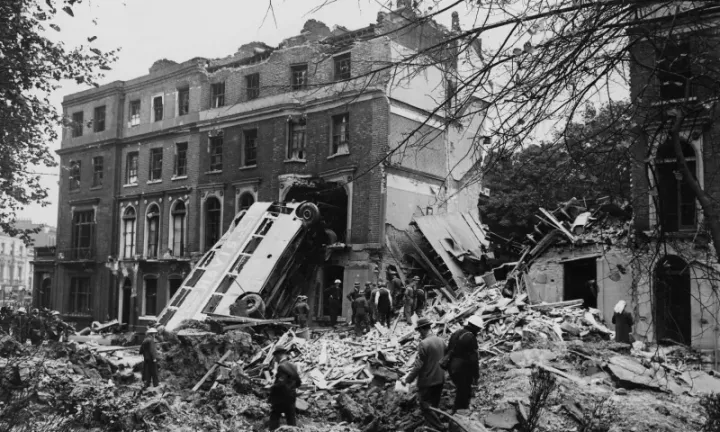
The Battle of Britain
When the Luftwaffe launched its air campaign to destroy the Royal Air Force and clear the way for invasion, Churchill rallied the nation with the words: "Never in the field of human conflict was so much owed by so many to so few." Pilots from Britain and other countries depended on ground crews, radar, observers and a coordinated command system. Churchill helped sustain support for continued resistance, though civilians experienced the danger and strain in different ways. Hitler postponed Operation Sea Lion indefinitely. Britain had survived.
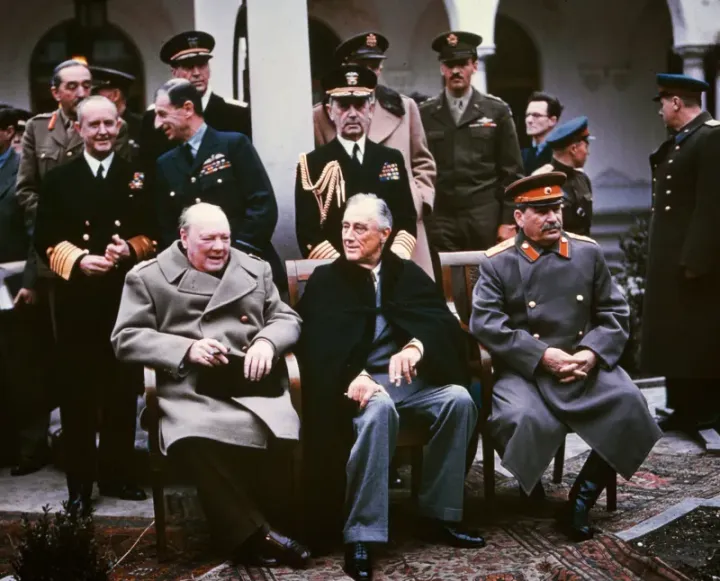
The Yalta Conference
In February 1945, Churchill met Roosevelt and Stalin at the Livadia Palace in Crimea to decide the fate of post-war Europe. Churchill argued for free elections in Poland and a balance of power that would prevent Soviet domination of Eastern Europe, but Soviet military control sharply limited Western influence. Roosevelt remained an active negotiator despite his poor health. The agreements left unresolved differences over the meaning and enforcement of free elections.
Timeline
Born at Blenheim Palace
Born prematurely on November 30 at Blenheim Palace, Oxfordshire — the ancestral seat of the Dukes of Marlborough. His father, Lord Randolph Churchill, was a rising Conservative politician. His mother, Jennie Jerome, was a wealthy American socialite whose father had made a fortune on Wall Street.
First Taste of War
Commissioned as a second lieutenant in the 4th Queen's Own Hussars. Travelled to Cuba as a war correspondent during the Cuban War of Independence — his first experience of combat. Developed his lifelong love of cigars during this trip.
The Charge at Omdurman
Rode with the 21st Lancers at Omdurman during the Anglo-Egyptian conquest of Sudan. His account, The River War, followed his first book about the Malakand campaign. The battle exposed the devastating inequality of firepower between the armies.
Boer War and Escape
Went to South Africa as a war correspondent. Captured by the Boers while riding an armoured train. Escaped from a prisoner-of-war camp in Pretoria, evaded capture for three hundred miles, and reached Portuguese East Africa. The escape made him a national hero and launched his political career.
First Lord of the Admiralty
Appointed First Lord of the Admiralty at thirty-six. Modernised the Royal Navy — promoting oil-fuelled capital ships and naval aviation. He later supported early tank development during the war.
Gallipoli Disaster
Churchill was a leading advocate of the Dardanelles operation. The naval attack and subsequent Gallipoli land campaign failed at great cost to both sides. He left the Admiralty in May, retained a cabinet post until November, then went to the Western Front. He commanded a battalion in early 1916.
Becomes Prime Minister
Appointed Prime Minister on the day Germany invaded France and the Low Countries. Told the House of Commons: 'I have nothing to offer but blood, toil, tears, and sweat.' By late June, France had signed an armistice and Allied troops had escaped from Dunkirk. Britain continued the war with the Dominions, imperial forces and other allies.
Victory in Europe
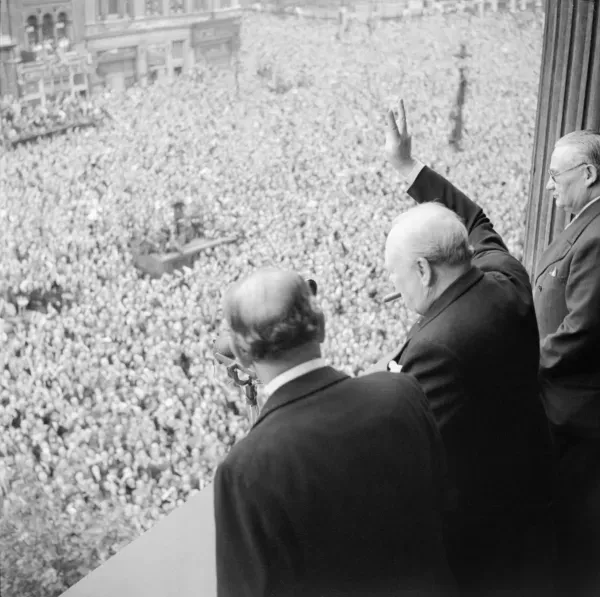
VE Day. Germany surrendered unconditionally. Churchill addressed the nation from the balcony of the Ministry of Health: 'This is your victory.' The crowd roared back: 'No — it is yours!' Two months later, in one of history's most ironic verdicts, the British people voted him out of office in a Labour landslide.
Key Figures
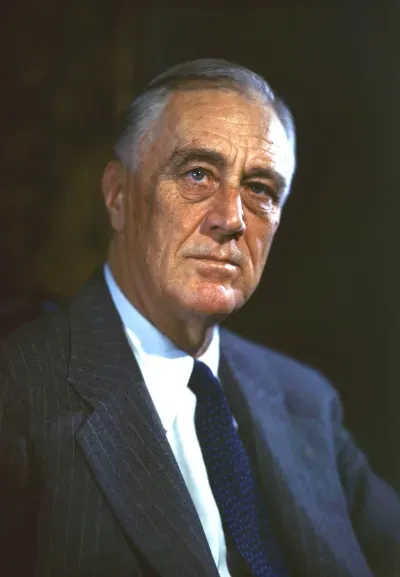
Franklin D. Roosevelt
The President of the United States and Churchill's most important ally. Their relationship, forged through hundreds of letters and cables, sustained the Atlantic alliance that won the war. Churchill courted Roosevelt relentlessly — crossing the Atlantic in wartime, meeting at Casablanca, Quebec, Tehran, and Yalta. Roosevelt provided Lend-Lease, the arsenal of democracy that kept Britain fighting when its treasury was exhausted. Their friendship was genuine but unequal: Roosevelt held the power, and Churchill knew it. When Roosevelt died on April 12, 1945, Churchill wept and told the Commons he had lost a dear and cherished friend.
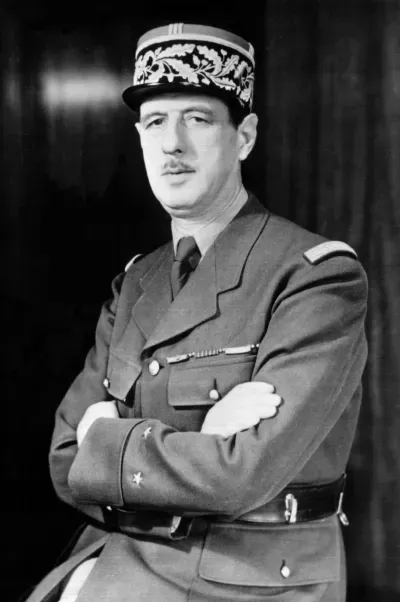
Charles de Gaulle
The leader of the Free French, a man of immense pride and towering self-belief, who arrived in London in June 1940 with nothing but his uniform and his conviction that he was France. Churchill gave him a platform, a microphone, and resources — and received in return a stream of demands, complaints, and public defiance. Yet he respected de Gaulle's refusal to accept defeat, and de Gaulle never forgot that Churchill was the first leader to recognise him when the rest of the world had written France off.
The Legacy of Winston Churchill
Churchill died on 24 January 1965. His state funeral on 30 January marked the place his wartime leadership held in British public memory.
The speeches of 1940 remain powerful expressions of resistance. They belong beside the work of servicemen and civilians across the Allied countries, and beside scrutiny of the imperial policies he defended. His contemporaries challenged those policies; they cannot be dismissed as objections invented by later generations. The book reconstructs a voice rather than claiming direct access to his mind.
Get the Full Book
Read the story of Winston Churchill — 8 chapters of historical narrative.
Dramatised first-person narrative; not an autobiography.