
Zheng He
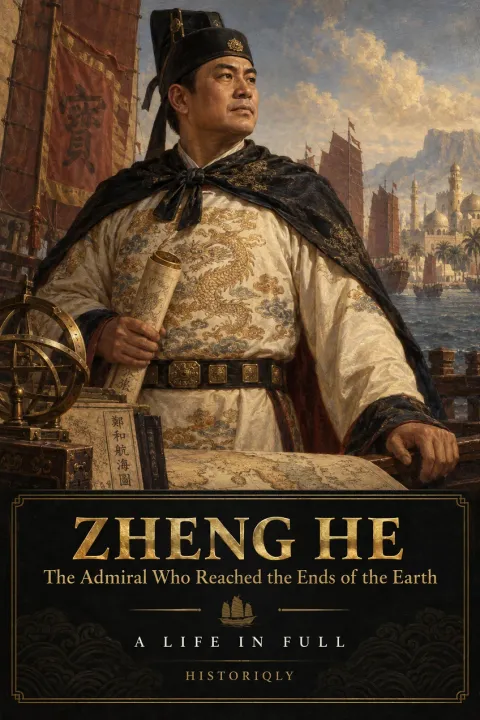
The Admiral Who Reached the Ends of the Earth
Get the full EPUB
Drop your email and the EPUB downloads straight to your device. We'll also ping you when the next chronicle lands — unsubscribe any time.
Your email is already on file — enjoy the read.
Download the EPUBBetween 1405 and 1433 Zheng He helped lead seven large Ming expeditions through existing Asian and Indian Ocean maritime networks. The voyages combined gifts and diplomacy with armed assertions of imperial authority. Their ending did not end Chinese seafaring, nor did all knowledge of them disappear: inscriptions and travel accounts survive.
“We have traversed more than 100,000 li of immense water spaces and have beheld in the ocean huge waves like mountains rising sky-high.”
c. 1371–1433
Born Ma He in Yunnan Province to a Hui Muslim family. Captured as a boy during the Ming conquest, castrated, and made a palace eunuch. Died at sea on the return leg of his seventh voyage, aged approximately sixty-one or sixty-two.
7 voyages
Seven Ming expeditions sailed between 1405 and 1433. July 11, 1405 is associated with the initial imperial order, rather than a securely documented dawn departure into the open ocean.
317 ships
The first voyage fleet comprised 317 vessels and approximately 27,800 men — sailors, soldiers, diplomats, translators, doctors, astronomers, and Muslim clerics. The flagship treasure ships (baochuan) were by any measure the largest wooden vessels ever built.
30+ kingdoms
Over seven voyages, the fleet made contact with more than thirty kingdoms across Southeast Asia, South Asia, the Persian Gulf, the Red Sea, and East Africa — establishing tributary relationships that bound half the Indian Ocean world to the Ming court.
Commander of the Ming treasure fleets; led seven voyages from China to Southeast Asia, India, Arabia, and East Africa
Defining Events
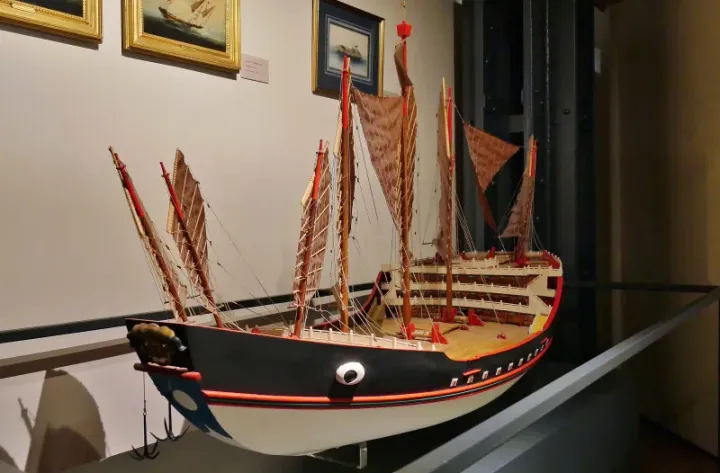
The Treasure Ships
The flagship baochuan — treasure ships — were the engineering wonder of the age. The History of Ming records the largest at 44 zhang long and 18 zhang wide; modern scholars estimate 60 to 90 metres, still three to five times the length of Columbus's Santa María, which would sail the Atlantic eighty years later. Nine-masted, divided by watertight bulkheads, crewed by hundreds, they were not merely ships but floating palaces — carrying silk, porcelain, and the imperial prestige of the greatest power on earth.
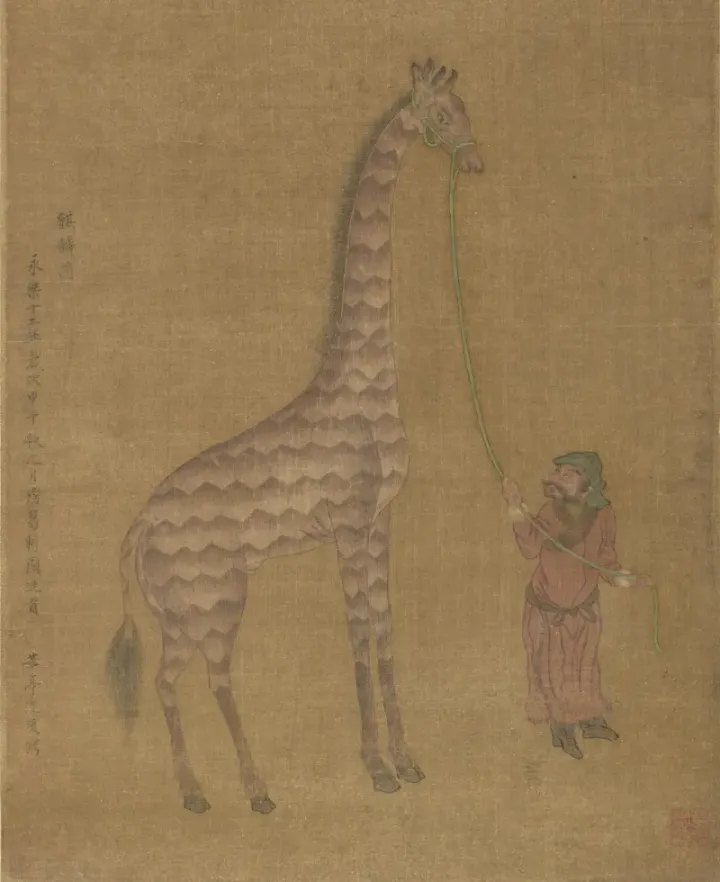
The Tribute Giraffe
In 1414 an embassy from Bengal presented the Ming court with a giraffe. This African animal had travelled through wider diplomatic and commercial networks. Its association with the auspicious qilin made it a potent image of Yongle’s rule, preserved in court painting.
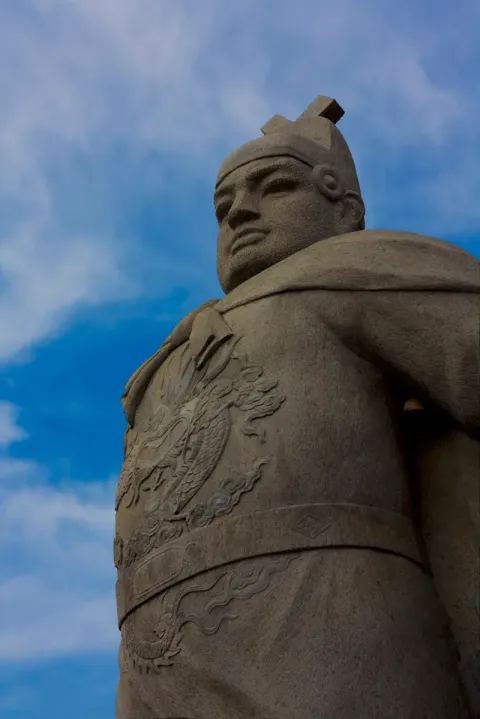
The Changle Stele
Before departing on his seventh and final voyage, Zheng He erected a stone stele at the Temple of the Celestial Spouse in Changle, Fujian — one of the few surviving statements in his own voice. In it, he describes crossing 'more than 100,000 li of immense water spaces,' seas where 'huge waves like mountains rose sky-high,' and a fleet that sailed 'rapidly like that of a star, traversing those savage waves as if we were treading a public thoroughfare.' It is the inscription of a man who knew, at sixty, that he was about to sail for the last time.
Timeline
Born in Yunnan
Born as Ma He in Kunyang, Yunnan Province, to a Hui Muslim family descended from Sayyid Ajjal Shams al-Din Omar, a Khwarezmian governor of Yunnan under the Mongols. His father Mir Tekin and grandfather Charameddin had both completed the hajj to Mecca. Growing up, Ma He heard their stories of distant lands — the first maps drawn on a child's imagination.
Capture and Castration
When Ming forces under Fu Youde reconquered Yunnan from the remnant Mongol administration, Ma He — approximately ten years old — was among the boys captured. He was castrated and pressed into service as a palace eunuch, assigned to the household of Zhu Di, Prince of Yan, at Beiping. The act that unmade him as a man would make him as an admiral: service to the most ambitious prince in China.
The Jingnan Campaign
When Zhu Di launched his civil war to seize the throne from his nephew the Jianwen Emperor, Ma He fought at his side throughout the Jingnan Campaign. He distinguished himself defending the reservoir at Zhenglunba in 1399 — an early engagement that helped secure the capital's water supply. When Zhu Di's armies took Nanjing in July 1402, Ma He was among the officers who had proved loyal through four years of war.
Renamed Zheng He
On Chinese New Year, February 11, 1404, the newly crowned Yongle Emperor formally conferred the surname Zheng upon Ma He — one of the highest honours an emperor could bestow on a eunuch. Henceforth Ma He was Zheng He: admiral, diplomat, and the instrument through which the Ming dynasty would announce itself to the world.
The First Voyage
Commissioned in 1405, the first expedition reached Indian Ocean ports including Calicut and returned in 1407. On the homeward passage, Ming forces defeated and captured Chen Zuyi at Palembang. Precise fleet complements vary in the sources and later reconstructions.
Battle in Ceylon
During the third voyage, King Alagakkonara of Ceylon — ancient Sri Lanka — refused to deal with the Ming fleet and threatened an attack. Zheng He moved first. Landing a force of two thousand soldiers, he captured the king and several key members of the royal family and brought them to Nanjing. The Yongle Emperor, demonstrating the magnanimity the voyages were meant to project, released Alagakkonara and installed a more cooperative ruler. Ceylon was pacified without a prolonged occupation.
Reaching the Persian Gulf
The fourth voyage reached Hormuz and carried the interpreter Ma Huan, whose writing records ports and customs. The fleet’s recorded mission to Mecca belongs to the final expedition, not this voyage. Bengal’s embassy presented a giraffe to the Ming court in 1414.
East Africa
The fifth voyage extended contacts with East African ports. Envoys and animals travelled to China through these networks. Local rulers pursued their own interests in exchanges that combined commerce, imperial prestige and the fleet’s armed power.
The Seventh and Final Voyage
The final expedition began in stages during 1431–1432 and returned in 1433. Zheng He’s death is commonly associated with it, but the exact date, place and burial circumstances remain uncertain.
Key Figures
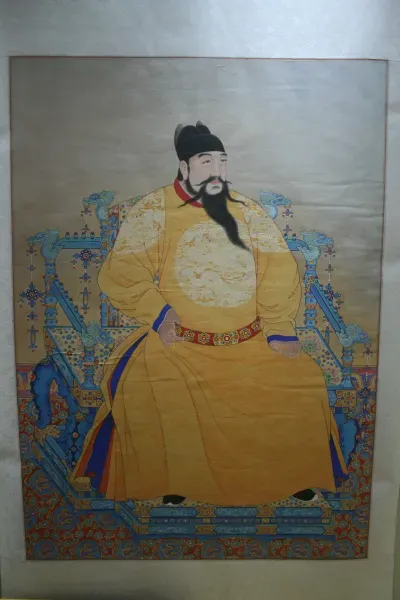
Emperor Yongle (Zhu Di)
The Yongle Emperor — third ruler of the Ming dynasty, usurper, builder of the Forbidden City and the Grand Canal — was the force behind every voyage. His relationship with Zheng He was one of absolute mutual trust: rare between any emperor and any servant, rarer still between an emperor and a eunuch. Yongle commissioned the treasure fleets to announce Ming supremacy to the world. When he died in 1424, his son suspended the voyages immediately. Without Yongle, there were no voyages. Without Zheng He, there was no way to execute them.
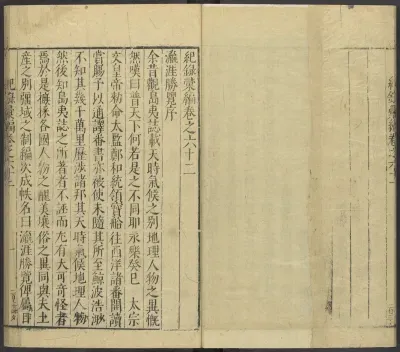
Ma Huan
A Chinese Muslim from Zhejiang, fluent in Arabic and Persian, Ma Huan sailed with Zheng He on the fourth, sixth, and seventh voyages as chief interpreter. His masterwork, the Yingya Shenglan — 'Overall Survey of the Ocean's Shores,' finalized in 1451 — is the single most important eyewitness account of the voyages. He recorded the geography, laws, trade goods, religions, customs, and flora and fauna of every port visited with the precision of a trained scholar. Without Ma Huan, Zheng He's voyages would be little more than a list of dates in the imperial records.
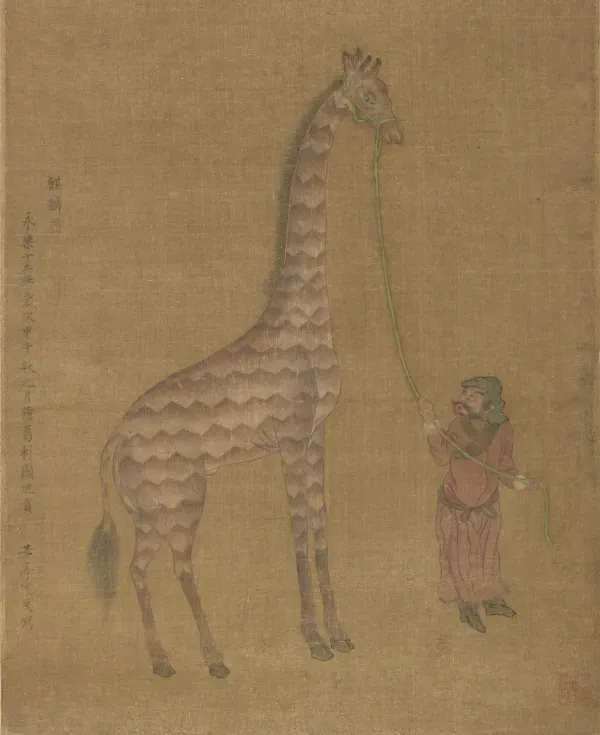
The Legacy of Zheng He
The final expedition returned in 1433. The uncertain details of Zheng He’s death should be distinguished from the later history of his tomb and remembrance. Court-sponsored voyages ended, but Chinese maritime activity continued. Accounts of Liu Daxia suppressing records do not establish that all navigational knowledge vanished. Surviving travel texts and inscriptions preserve a complex story of exchange, imperial ambition and force.
Get the Full Book
Read the story of Zheng He — 8 chapters of historical narrative.
Dramatised first-person narrative; not an autobiography.